Antonio Tejero Molina, the Spanish Civil Guard lieutenant colonel who infamously led the failed coup attempt on February 23, 1981, by storming the Congress of Deputies in Madrid, has died at the age of 91. His death marks the conclusion of a deeply contentious and polarising life that left an indelible scar on Spain's transition to democracy following the Franco dictatorship.
The 1981 Coup Attempt: A Day of National Crisis
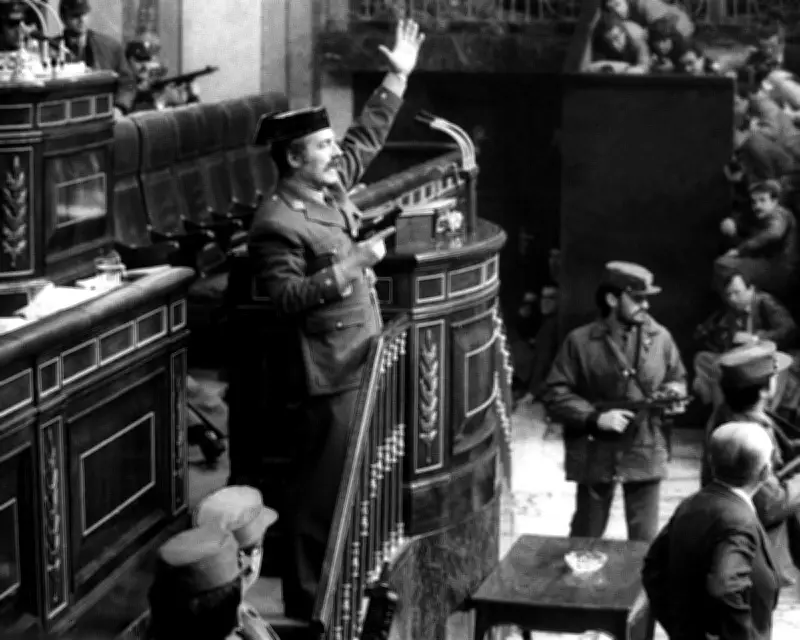
On that fateful day, Tejero, brandishing a pistol and wearing his distinctive tricorn hat, burst into the Spanish parliament with approximately 200 Civil Guards, interrupting a vote to confirm Leopoldo Calvo-Sotelo as prime minister. The dramatic event, broadcast live on television, saw lawmakers taken hostage for nearly 18 hours, plunging the nation into a state of shock and uncertainty. Tejero's actions were part of a broader military plot, known as the 23-F coup, aimed at overthrowing the young democratic government and restoring a Francoist-style regime.
Background and Motivations of a Controversial Figure
Born in 1932 in Alhaurín el Grande, Málaga, Tejero rose through the ranks of the Civil Guard, a militarised police force, during the Franco era. He was a staunch defender of the Francoist ideology and viewed Spain's post-Franco democratic reforms with deep suspicion and hostility. Prior to the 1981 coup, Tejero had been involved in earlier plots against the government, including a 1978 scheme to kidnap the cabinet, which led to his dismissal from the Civil Guard, though he was later reinstated. His motivations were rooted in a belief that democracy was leading Spain into chaos and that a return to authoritarian rule was necessary to preserve national unity and traditional values.

Aftermath and Legacy of the Failed Coup
The coup attempt ultimately failed due to a lack of broader military support and King Juan Carlos I's decisive televised address in defence of democracy. Tejero surrendered on February 24, 1981, and was subsequently tried and convicted, serving 15 years in prison before being released in 1996. Despite his release, he remained an unrepentant figure, rarely speaking publicly but occasionally expressing nostalgia for the Franco regime. His death reignites debates about Spain's turbulent transition to democracy and the lingering shadows of its authoritarian past. Historians note that while the coup strengthened democratic institutions in the long run, it exposed vulnerabilities and deep divisions within Spanish society at the time.
Personal Life and Later Years
Tejero was married and had children, largely living out of the public eye after his release from prison. He maintained a low profile, but his notoriety ensured he remained a symbol of anti-democratic sentiment in Spain. In his later years, he faced declining health, and his passing was confirmed by family sources without specifying the cause of death. The Spanish government has not issued an official statement, reflecting the sensitive nature of his legacy in a country still grappling with the memories of its dictatorial history.
Reflections on a Divisive Historical Chapter
Antonio Tejero's life and actions continue to evoke strong emotions in Spain, serving as a reminder of the fragility of democratic processes and the challenges of reconciling with a contentious past. His obituary underscores the complex narrative of a nation that has worked to build a stable democracy while confronting the ghosts of its authoritarian era. As Spain moves forward, figures like Tejero remain pivotal in understanding the ongoing journey toward national healing and political maturity.