
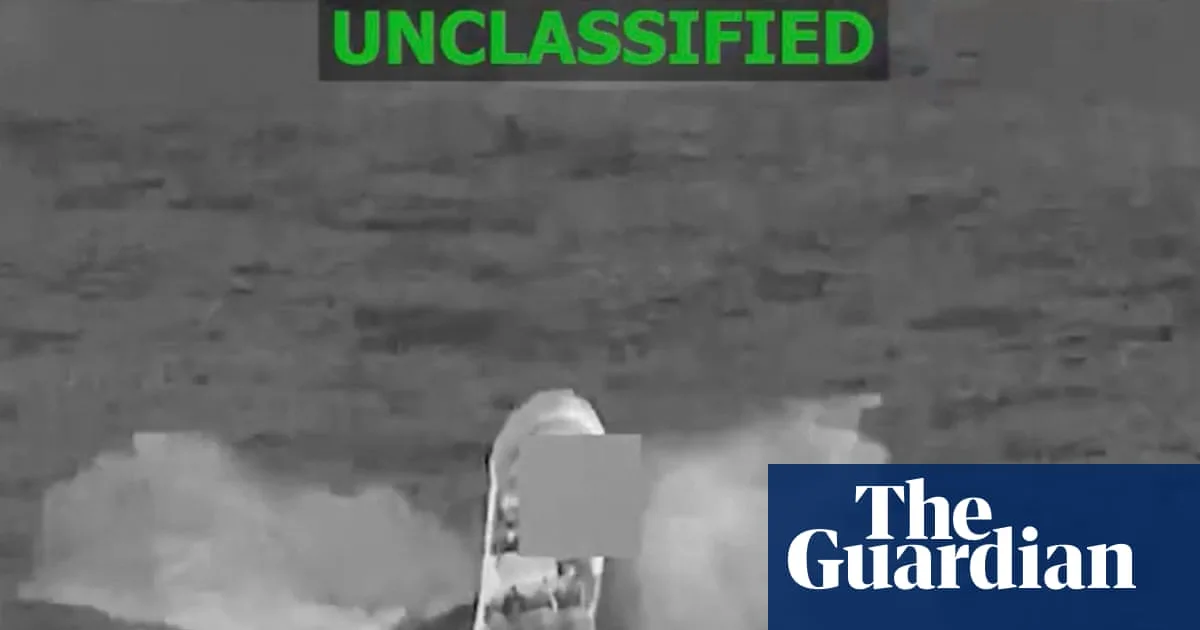
The US military has killed two suspected drug smugglers in a strike in the eastern Pacific, the Pentagon announced on Monday. The operation, carried out by the US Southern Command, marks the latest in a series of attacks that have drawn criticism from legal experts as extrajudicial killings.
The strike was directed by General Francis L Donovan, the newly appointed commander of Southern Command, who was sworn in last Thursday. He replaces Admiral Alvin Holsey, who retired amid reported disagreements over the boat-strike policy. The Pentagon said the boat was “transiting along known narco-trafficking routes” and that the US Coast Guard is searching for a lone survivor.
According to Pentagon statements tallied by the Intercept, the death toll from 38 such strikes has reached at least 130. The announcement was accompanied by video footage of the attack.
Separately, US forces boarded a sanctioned tanker, the Aquila II, in the Indian Ocean after tracking it from the Caribbean Sea. The operation is part of an oil quarantine aimed at Venezuela, said Defence Secretary Pete Hegseth. Hegseth vowed to capture all fleeing tankers, stating, “I don’t care if we got to go around the globe to get them; we’re going to get them.”
The Aquila II, a Panamanian-flagged tanker under US sanctions for shipping illicit Russian oil, was not formally seized but is being held pending a decision on its fate. The ship, owned by a Hong Kong-based company, had been “running dark” with its transponder off, a tactic used by smugglers. It was among at least 16 tankers that fled Venezuela last month, according to TankerTrackers.com co-founder Samir Madani.
The Pentagon described the boarding as a “right-of-visit, maritime interdiction,” noting that the vessel “ran, and we followed.” US Navy destroyers USS Pinckney and USS John Finn, along with the mobile base ship USS Miguel Keith, were operating in the Indian Ocean during the operation.




