Hawaii Legislature Advances Bill to Expand Traffic Camera Enforcement
A significant legislative proposal is progressing through the Hawaii state legislature that would dramatically broaden the scope of automated traffic camera enforcement. House Bill 2033, a comprehensive transportation measure, has received tentative approval from the state House and is now under consideration in the Senate. This bill aims to empower existing camera systems to issue citations not only for speeding and red-light violations but also for motorists operating vehicles with expired safety checks and lapsed vehicle registrations.
Expanding Surveillance Capabilities
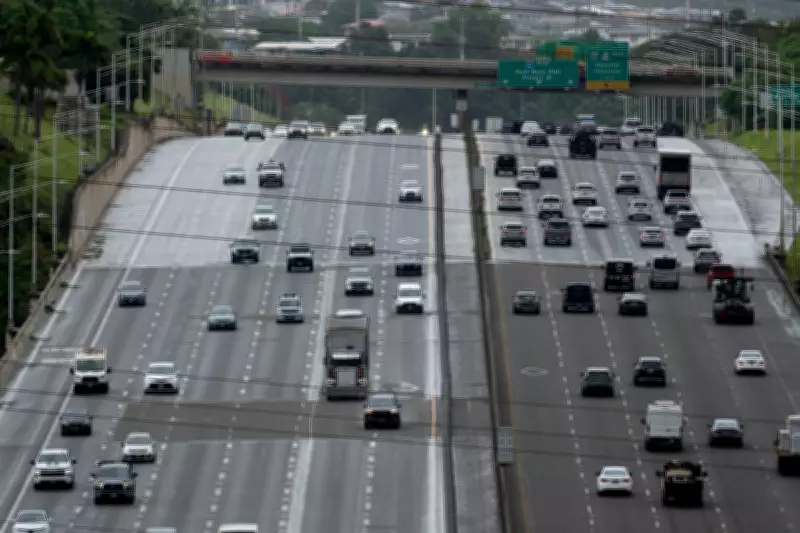
The automated traffic enforcement cameras, currently operational at ten key intersections in downtown Honolulu, have been actively issuing citations for speeding and red-light infractions since November 1st. Under the proposed legislation, these high-tech systems would be authorized to identify and ticket vehicles displaying expired registration decals and safety inspection stickers. Additionally, HB 2033 would permit the installation of cameras at any intersections deemed "high-risk" on county or state roadways, significantly expanding the network's reach.
House Transportation Committee Chair Darius Kila, representing the Leeward Oʻahu communities of Nānākuli and Māʻili, has been a vocal proponent of the measure. He reports receiving weekly complaints from constituents about vehicles with registration stickers that expired years ago, some dating back to 2009 or 2016. Kila emphasizes the public safety risk, noting that accidents involving such vehicles can become complicated if the owner's contact information is outdated, potentially allowing them to evade responsibility.

Technological and Operational Details
Shelly Kunishige, communications manager for the Hawaii Department of Transportation, which requested the bill, clarified the technical aspects. The existing cameras at the ten Honolulu intersections can read safety check stickers but lack the resolution needed to reliably identify expired registration decals. If HB 2033 passes, enforcement for both expired registrations and safety checks would be implemented at new intersections equipped with higher-resolution cameras. The department plans to conduct thorough evaluations for new camera placements, followed by educational campaigns and warning periods before issuing actual citations at any new locations.
The bill also includes provisions to authorize cameras on school buses. These would document violations when motorists illegally overtake buses that are stopped with flashing lights to allow children to board or disembark, addressing a critical child safety concern.
Privacy and Equity Concerns Raised
The expansion has not been without controversy. Community advocate Nikos Leverenz, the sole member of the public to testify on HB 2033 thus far, raised significant concerns about data privacy and the potential disproportionate impact on under-resourced communities. He warned the House Judiciary and Hawaiian Affairs Committee that experiences in other states demonstrate automated enforcement often disproportionately affects poorer neighborhoods. Leverenz criticized the lack of clear state guidelines regarding data retention, access, and usage, pointing to Washington State's more cautious approach with its driver privacy legislation.
"In an era of uncontested and unconstrained mass electronic surveillance," Leverenz stated, "Hawaii should be very wary of providing surveillance mechanisms and data that can be commandeered or otherwise facilitate prospective federal enforcement actions." He urged policymakers to seriously consider the broader privacy implications before rushing into what he termed "massive data collection" without adequate statutory safeguards.

Official Rebuttals and Legislative Progress
In response to these concerns, Representative Kila defended the program's intent. He asserted that the Department of Transportation bases camera placements strictly on traffic data indicating high rates of speeding and accidents, not on demographic or economic factors. "Data is not discriminatory upon income, right?" Kila argued. He also sought to allay privacy fears, explaining that the cameras only record vehicles that commit violations, not all passing traffic, and that access to the collected data is restricted to the DOT, law enforcement, and the operating contractor.
Kila has also supported a separate measure, Senate Bill 2697, which would authorize police to impound vehicles whose registration has been expired for more than three years, indicating a multi-pronged legislative approach to the issue.
The Senate Transportation, Energy and Intergovernmental Affairs and Education committees have already approved HB 2033 with amendments following a public hearing. The bill now advances to the Senate Judiciary and Ways and Means Committees for further review and consideration, marking a critical next step in its journey toward potentially becoming law.