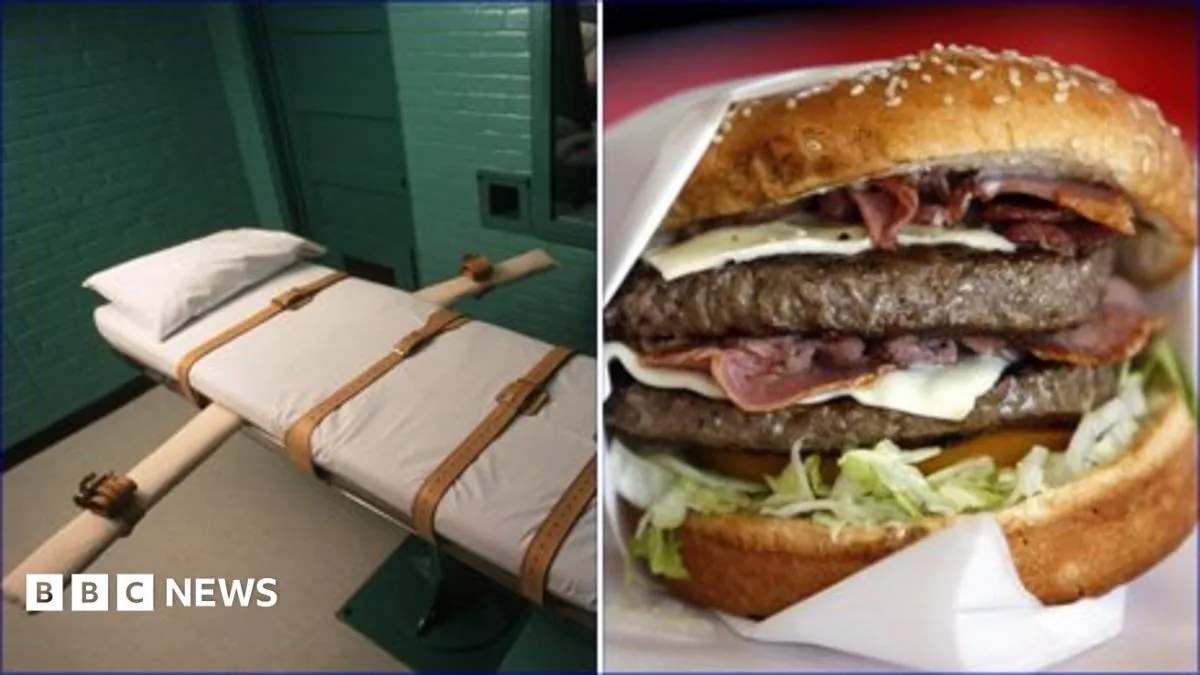
The state of Texas has abolished the practice of offering death row inmates a choice of last meal, following public outrage over an extravagant request from a white supremacist executed on Wednesday. Lawrence Brewer ordered two steaks, a triple-meat cheeseburger, a cheese omelette, fried okra, three fajitas, a pint of ice cream and a pound of barbecue meat, but ate none of it.
The Texas Department of Criminal Justice responded to a complaint from State Senator John Whitmire by ending the tradition. From now on, condemned inmates will receive the same cafeteria food as other prisoners. Whitmire said his push was motivated by moral concerns, not financial ones.
Legal experts say the last meal ritual is intended to soften society's discomfort with state-sanctioned killing. Virginia death penalty lawyer Jon Sheldon, who has sat with three condemned men before their executions, noted that few inmates actually eat the meal. 'It's either not ordered, or it's ordered and it's not eaten,' he said.
Other states have varying policies. Florida budgets $40 per last meal, while Oklahoma allows only $15, subject to warden approval. A review of Texas requests from 1982 to 2003 found that grilled or fried foods like burgers and steaks were most popular, suggesting a nostalgic connection to home.
Some inmates decline the meal for spiritual reasons or in defiance. David Clark, executed in Texas in 1992, chose to fast. Alcohol and cigarettes are typically prohibited. The ritual captures public imagination because it humanises the condemned, said Fordham University professor Deborah Denno.