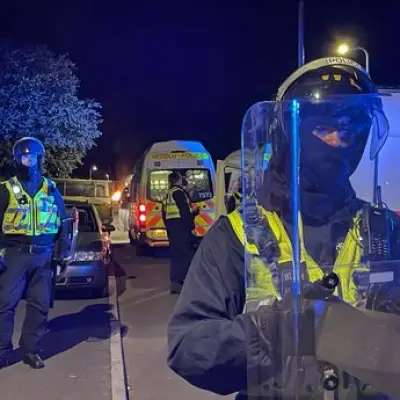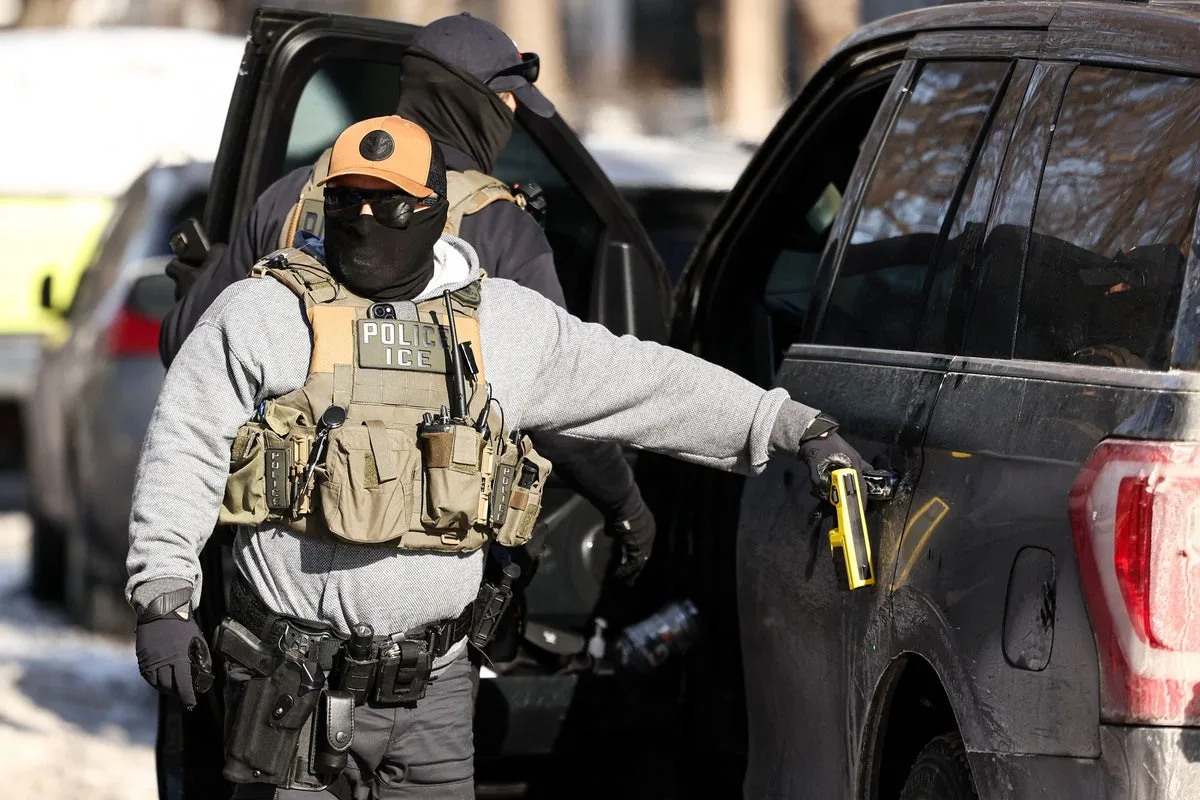
Washington state has enacted a new law barring all law enforcement personnel, including Immigration and Customs Enforcement (ICE) agents, from wearing masks while on duty. Governor Bob Ferguson, a Democrat, signed the bill into law on Thursday after it passed the Democratic-controlled House and Senate by comfortable margins.
“Law enforcement’s job is to protect us — yet, ICE is hiding from public accountability,” Ferguson said in a statement. “For the safety of both the public and law enforcement, Washingtonians must know they are interacting with legitimate law enforcement officers.” The law bans all non-transparent face coverings such as ski masks, gaiters, tactical masks, and balaclavas, though religious exemptions are allowed.
The measure also allows individuals detained by masked officers who flout the law to take legal action, including seeking compensation. Democratic state Senator Javier Valdez, who sponsored the bill, said: “Masked enforcement has sown fear, terror, and distrust in our communities. This new law ensures that anyone exercising power over another person is fully accountable and visible.”

Several Washington state Republicans have voiced strong opposition, arguing it heightens doxxing risks for officers and predicting courts would likely strike it down. GOP state Representative Jeremie Dufault said the bill makes “a ‘do nothing’ statement at the expense of the safety and privacy of our law enforcement officers,” citing the supremacy clause of the US Constitution.
Washington is now one of several states to block officers from covering their faces. California passed the No Secret Police Act last year, which limited when federal enforcement agents can wear masks during deportation operations; that law is currently being arbitrated in court. Washington’s legislation differs in that it bars all law enforcement officers from wearing masks, not only federal agents.
The focus on masked officers comes after President Donald Trump began orchestrating a nationwide immigration crackdown, deploying federal agents, many wearing face coverings, to multiple US cities. Historically, ICE agents rarely wore masks, but began doing so in April following a rise in threats. A Pew Research Center survey released on January 29 found that 61% of Americans believe it is definitely or likely unacceptable for officers to wear face coverings that obscure their identity.