
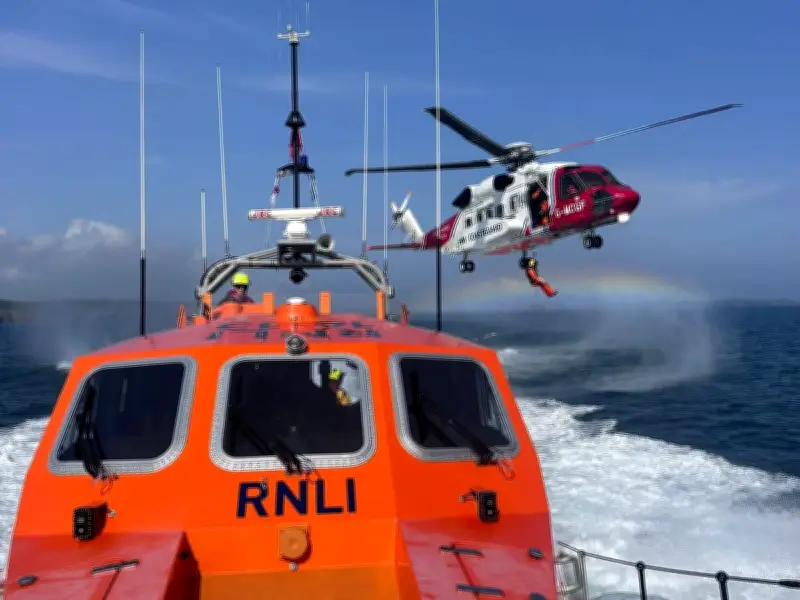
Coastguard rescue officers in Wales could be forced to reduce or stop their life-saving volunteering after the Maritime and Coastguard Agency (MCA) announced it will no longer pay them for emergency call-outs, the GMB Union has warned.
Pay cut labelled 'cruel' by union
Simon Wigley, a Coastguard rescue officer with the Teifi Coastguard rescue team in Cardigan, said the announcement has left volunteers feeling "deflated". The team comprises 24 members.
"We feel deflated. What are they doing to us, and why? It feels like the easiest option," he said. "At the moment, we're paid for call-outs and training, which takes up a lot of our time, particularly during the winter months, we also complete additional voluntary training."
Wigley explained that the money compensates them for time away from home and work. "We often attend incidents during the night and into the early hours of the morning, which can leave us sleep-deprived and make it difficult to work the following day," he added. Now, they could potentially do this for nothing. "That's hard to understand because we're Category 1 emergency responders," he pointed out. "Alongside the ambulance, police and fire services, yet we'll be expected to do the job without any remuneration."
He emphasised they are not seeking employee status, which would bring tax and holiday pay implications. "We simply want a stipend to help with the hours we lose at work while responding to emergencies."
Impact on volunteers and service
According to a leaked MCA survey cited by the GMB, one in four coastguard rescue officers in Wales would be forced to reduce their hours or stop volunteering altogether if pay is removed.
Wigley described the role as "physically, mentally and psychologically demanding. We see things that you can not erase. We find ways to cope and move forward, some stick with you. But we're motivated by helping people on what is often the worst day of their lives."
MCA's legal justification
An MCA spokesperson said: "The decision to move the Coastguard Rescue Service to a revised volunteer model follows a legal judgment, which meant we needed to change how the service operates. We deeply value and recognise the significant service coastguard rescue officers provide along our coastline and we will continue to work towards a model that supports our Coastguards and helps to keep the public safe."
An employment tribunal found that by paying hourly remuneration beyond expenses, the MCA had inadvertently created a 'worker' relationship with Coastguard rescue officers. Since the MCA's current model does not account for worker status, it is legally required to make changes. Under the new model, volunteers will still receive training, equipment, operational support, uniforms, and PPE, but no hourly pay.
Union warns of existential threat
Nicola Savage, GMB national officer, said: "These cruel cuts are going to rip the heart out of a life saving emergency service millions of people rely on. Coastguards across the UK risk their own lives to keep us safe - the very least they should expect is paying for their time and expenses. If the MCA pushes ahead with these unprecedented cuts, the Coastguard that has protected us for more than 200 years could cease to exist as we know it."




