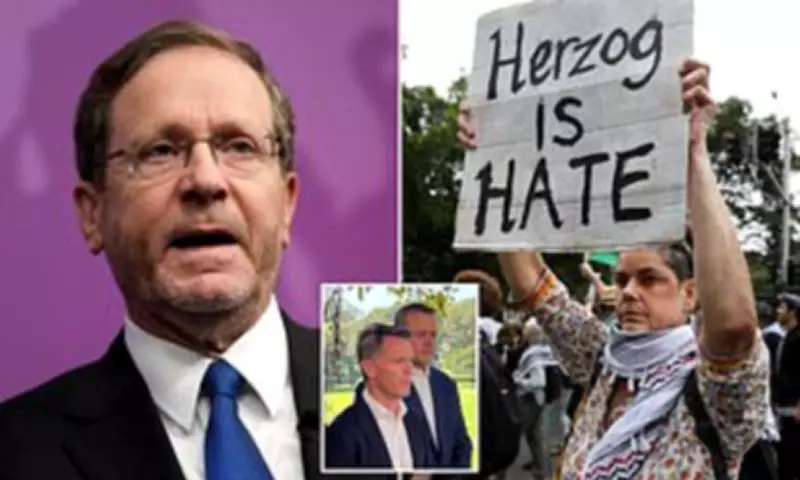
Police in Sydney have been granted enhanced powers to restrict movement in the city centre during the upcoming visit of Israeli President Isaac Herzog, with authorities expressing hope that the event can proceed peacefully. The New South Wales government has formally approved special event public safety arrangements, significantly increasing the number of officers deployed for the visit, which commences on Monday.
Protest Plans and Police Response
Thousands of demonstrators are preparing to rally against the contentious visit, intending to defy existing protest restrictions and potential arrest after failing to reach an agreement with police officials. The Palestinian Action Group has proposed a march from Town Hall through the streets of Sydney's Central Business District, a route that has been explicitly declared unauthorised by authorities.
Commissioner Mal Lanyon confirmed to reporters on Saturday that the planned protest route remains unauthorised, setting the stage for potential confrontations. However, a group of thirteen Members of Parliament, including four representatives from the Minns government, have written directly to Commissioner Lanyon urging him to permit the march to proceed as planned.

Political Appeals for Calm
Labor backbencher Stephen Lawrence, who signed the parliamentary letter, emphasised the need for measured responses during this sensitive period. "It is time for cool heads to prevail ... the role of state government is to ensure community safety," Lawrence stated. "A safe, peaceful procession to parliament is achievable, I believe, and I call on police to truly and constructively engage with the organisers."
Rallies have been organised across all Australian state capitals ahead of President Herzog's five-day national tour, with Sydney serving as his initial destination. Protesters and human rights experts have repeatedly called for the cancellation of his invitation, citing what they describe as his culpability in Israel's military actions and humanitarian situation in Gaza.
Controversial Statements and International Scrutiny
The controversy surrounding Herzog's visit stems partly from previous statements in which he suggested Palestinians bore collective responsibility for the Hamas attack on Israel on October 7, 2023. A United Nations Human Rights Council commission of inquiry concluded in September that such remarks might reasonably be interpreted as inciting genocide, though Herzog has strongly denied these allegations, maintaining his comments were taken out of context.
NSW Premier Chris Minns has defended the presidential visit, highlighting its deep significance for the state's Jewish community as they continue mourning and recovering from the terrorist attack at Bondi Beach on December 14. To facilitate crowd management and safety protocols, Herzog's arrival in Sydney has been officially declared a major event under special legislation.
Balancing Rights and Security
Premier Minns has clarified that the special arrangements do not constitute a blanket ban on protests or marches, emphasising that individuals retain the right to express their views lawfully. However, he has made clear that any risk of conflict, violence, or public disorder will not be tolerated under the current circumstances.
"We cannot allow a situation where mourners and protesters come into close contact on city streets without strong police presence," Minns told reporters on Saturday. "This is about keeping people safe, lowering the temperature and ensuring Sydney remains calm and orderly."
Enforcement Measures and Penalties
Individuals who fail to comply with lawful police directions during the event could face substantial penalties, including fines reaching up to $5,500 or exclusion from designated major event areas. Police Minister Yasmin Catley reinforced this position, stating, "We expect people to follow police directions and if someone chooses to break the law or ignore police instructions, police will respond."
When questioned about whether expanding police powers might inadvertently escalate tensions, Premier Minns argued the measures are specifically designed to prevent violent clashes. He referenced approximately two hundred previous Palestinian Action Group protests during which several counter-demonstrators were detained and arrested by NSW Police.

"That's not because the NSW Police are picking one side or another but they were fearful of a clash - in this case, a clash against protesters," Minns explained, highlighting the operational challenges facing law enforcement.
Political Participation in Protests
Adding another layer of complexity, government backbenchers Sarah Kaine and Stephen Lawrence have publicly announced their intention to join Monday's protests, creating a unique situation where sitting members of the governing party will participate in demonstrations occurring under special police powers authorised by their own government.
The convergence of international diplomacy, domestic security concerns, protest rights, and political divisions ensures that President Herzog's Sydney visit will unfold under intense scrutiny, with all parties hoping for peaceful resolutions despite the underlying tensions surrounding the Israeli-Palestinian conflict and its global reverberations.