US Supreme Court's 'Reckless' Ruling on Conversion Therapy Sparks Outcry
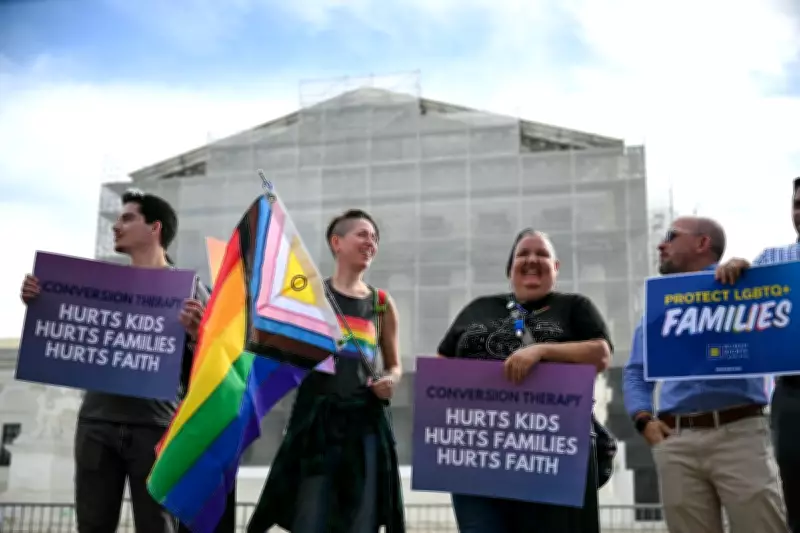
The US Supreme Court has delivered a nearly unanimous decision in favour of a Colorado therapist who challenged state law prohibiting mental health providers from using "conversion therapy" against LGBT+ young people. Advocates have condemned the ruling as "painful" and "reckless," warning it will have far-reaching consequences across the nation.
Dissent Warns of Catastrophic Fallout
In a powerful dissent, liberal Justice Ketanji Brown Jackson stood alone against the court's majority, expressing grave concerns about the decision's potential impact. "Ultimately, because the majority plays with fire in this case, I fear that the people of this country will get burned," she wrote. Jackson emphasised that licensed professionals previously had to adhere to strict standards, and she criticised the majority for failing to adequately consider the long-term, disastrous implications. "The fallout could be catastrophic," she added, highlighting the uncertainty and risks now facing vulnerable youth.
Impact on States and Youth Safety
This ruling is likely to affect more than 20 states with similar laws that ban attempts to change a young person's sexual orientation or gender identity. Jaymes Black, CEO of the Trevor Project, a leading crisis intervention group for LGBT+ youth, described the decision as a "tragic step backward" that imperils thousands of lives. Research from the organisation shows that LGBT+ youth subjected to conversion therapy are over twice as likely to attempt suicide compared to their peers, a statistic supported by condemnations from major medical and mental health bodies.

Majority Opinion and Free Speech Arguments
The 8-1 ruling, authored by conservative Justice Neil Gorsuch and released on Transgender Day of Visibility, centred on First Amendment rights. The justices argued that Colorado's law infringed on the free speech of therapist Kaley Chiles, a conservative Christian who claimed the regulation targeted speech rather than conduct. Gorsuch wrote, "The First Amendment stands as a shield against any effort to enforce orthodoxy in thought or speech in this country." However, critics like Kelley Robinson, president of the Human Rights Campaign, labelled the decision "reckless," asserting it "means more American kids will suffer" and that the court has "weaponized free-speech to prioritise anti-LGBTQ+ bias over children's safety."
Personal Testimonies and Survivor Stories
Carl Charles, a counsel at Lamda Legal who endured conversion therapy at age 15, shared his harrowing experience, stating the practice "destroyed important relationships and created shame and fear that took time and effort to undo." He noted, "For many survivors, it is a reverberating life-long harm," while expressing gratitude for his ability to overcome the trauma as a transgender man. Charles underscored that many young people lack the familial or community support needed to withstand such unethical practices, emphasising the urgent need for protective measures.
This developing story continues to unfold, with advocates and legal experts monitoring the implications for LGBT+ rights and youth welfare nationwide.