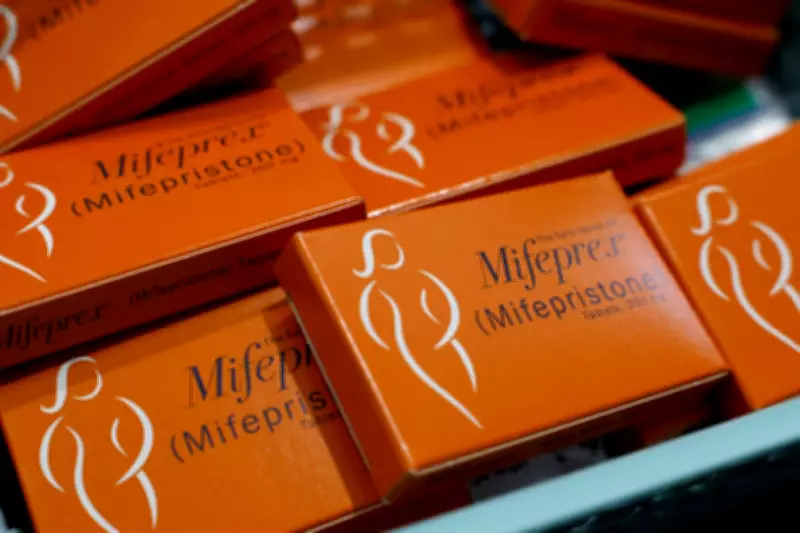
The US Supreme Court has extended a short-term order to continue allowing nationwide access to mail-order mifepristone, an abortion medication, via a shadow-docket decision on Monday. This move comes after the US Court of Appeals for the Fifth Circuit in Louisiana ordered a ban on shipping mifepristone through the mail on 1 May. Justice Samuel Alito, who handles emergency requests from the Fifth Circuit, had granted a temporary stay on 4 May that was set to last until at least Monday's decision. The emergency appeal was filed by two manufacturers of mifepristone.
Alito extended his 4 May order, permitting the distribution of the pill via telehealth and mail until at least 14 May, while the court considers its next steps. Louisiana had sued the US Food and Drug Administration (FDA) last fall, aiming to end the agency's rules on remote prescribing of mifepristone, arguing that these rules interfered with the state's ban on abortion. Former FDA leaders, researchers, and lobbyists submitted amicus briefs in the case, but notably, the US government did not participate.
In 2023, the FDA eliminated the requirement for in-person prescribing of mifepristone, thereby enabling remote dispensation via telehealth. In 2024, the Supreme Court ruled on a similar case, FDA v. the Alliance for Hippocratic Medicine, which challenged the FDA's rules on drug dispensing. The court determined that the coalition of anti-abortion groups lacked standing because they could not demonstrate how they were harmed. The same law firm that represented the 2024 case, Alliance Defending Freedom, is now representing Louisiana in its current lawsuit.

The case, Louisiana v. FDA, argues that because mifepristone can be mailed to anyone in the state, this practice circumvents Louisiana's abortion ban. The state contends that the FDA's 2023 decision was not based on science, which would violate the Administrative Procedure Act. Additionally, Louisiana claims that the FDA rules violate the Comstock Act, an obscure anti-obscenity law from 1873. The FDA requested more time to conduct a safety review of the medication; a judge ruled in April that the case would be placed on hold until that review is complete, but Louisiana appealed against that decision.
This case has potential repercussions for the entire pharmaceutical industry. It would allow a single state to regulate medications for the entire country, going beyond the FDA's authority. While each state may regulate access to abortion, the FDA has the power to regulate medications nationwide. Abortion providers have contingency plans in place to offer an alternative medication regimen to patients. Misoprostol alone can terminate pregnancies, though it takes longer and may cause more discomfort for some patients.