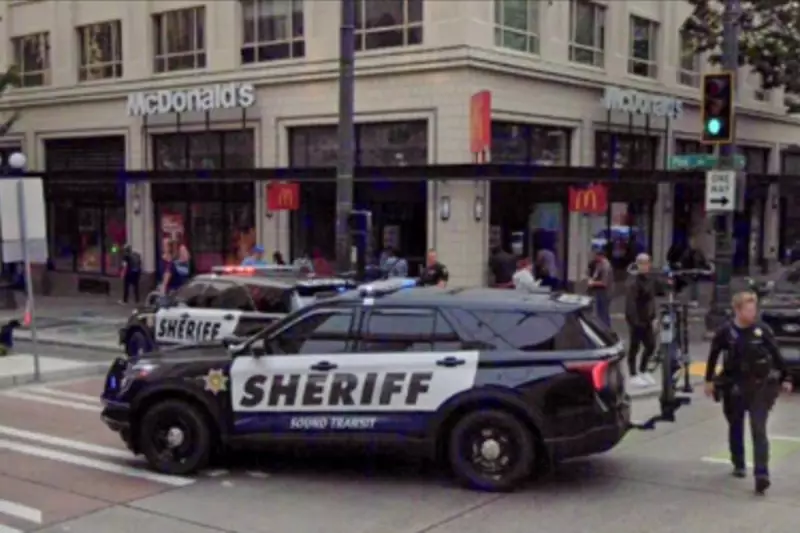
A McDonald's restaurant in downtown Seattle has taken the drastic step of permanently banning customers from eating inside, implementing a so-called 'no door' policy in direct response to severe and persistent crime at the location.
The Birth of 'McStabby's': A Restaurant's Violent Reputation
The branch, situated at the intersection of 3rd Avenue and Pine Street, has become infamous locally for its high levels of violence, earning it the grim nickname 'McStabby's' among residents. The issues are long-standing and severe. In January 2020, a fatal shooting at the premises injured seven other people. Since then, the site has continued to be a hotspot for criminal activity, including repeated stabbings and open drug use.
One police officer reported that there had been three stabbings at this single McDonald's outlet already this year. The dining area was first closed during the Covid-19 pandemic for health reasons. However, following the 2020 shooting, the decision was made to keep it shut permanently for safety.

A Fortified Fast Food Outpost
The physical changes to the restaurant are a stark visual representation of the problem. The doors to the former dining room are now sealed shut with sheets of plywood. Customers can no longer enter to order or eat. Instead, service is conducted solely through a makeshift takeout hatch cut into the boarding, transforming the global fast-food giant's outlet into a fortified, takeaway-only operation.
This 'no door' policy is an extreme adaptation to local conditions, effectively turning the restaurant into a service counter with no public interior space. It highlights the challenges businesses face in areas struggling with significant public safety issues.
Reflecting a Broader Seattle Crime Problem
The situation at this specific McDonald's is not an isolated incident but a symptom of wider concerns in the city. Official crime statistics for Seattle paint a troubling picture. Last year, the city recorded:
- Over 3,100 aggravated assaults
- Nearly 1,440 robberies
- 30 murders
These figures contextualise the decision by McDonald's management, showing that the restaurant's issues are part of a larger urban crime wave affecting the community. The permanent closure of a dining room in a major city centre location is a powerful indicator of how crime can directly alter the commercial landscape and customer experience.
The story of 'McStabby's' serves as a potent case study in how persistent violent crime forces businesses to implement extraordinary security measures, fundamentally changing their operation and relationship with the public.