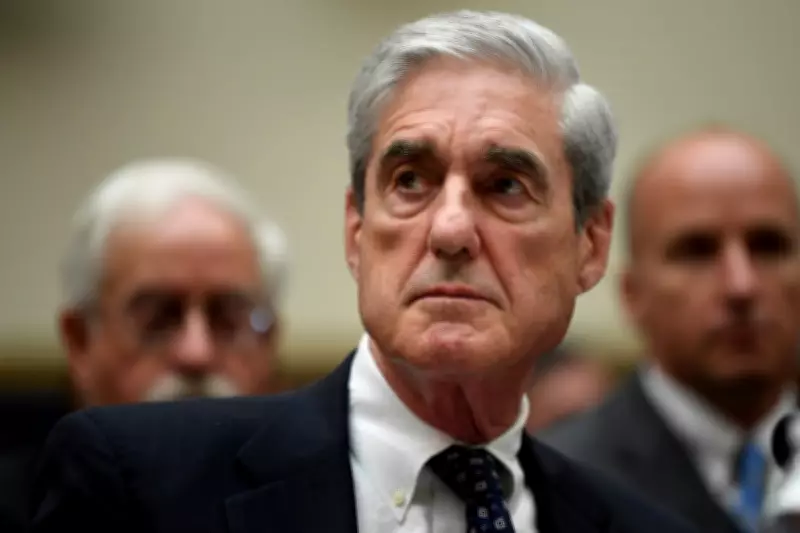
Former FBI Director Robert Mueller, Key Figure in Trump-Russia Probe, Dies at 81
Robert S. Mueller III, the former FBI director who transformed the agency after the 9/11 attacks and later served as special counsel investigating ties between Russia and Donald Trump's 2016 presidential campaign, has died at the age of 81. His family announced his passing in a statement on Saturday, requesting privacy during this difficult time.
A Legacy of Public Service and Law Enforcement
Mueller's tenure as FBI director began just one week before the catastrophic September 11, 2001, terrorist attacks, thrusting him into a position where he had to rapidly overhaul the bureau's mission. Nominated by Republican President George W. Bush, Mueller served for 12 years across administrations of both political parties, becoming the second-longest-serving director in FBI history after J. Edgar Hoover.
The 9/11 attacks forced an immediate shift in priorities from solving domestic crimes to preventing terrorism, a monumental task that required preventing nearly every potential plot. Mueller spearheaded this transformation, reallocating resources and enhancing intelligence capabilities to meet 21st-century threats.

The Trump-Russia Investigation and Its Aftermath
After several years in private practice, Mueller returned to public service in 2017 as special counsel for the Justice Department's investigation into alleged coordination between the Trump campaign and Russia. His stern, taciturn demeanor defined the nearly two-year probe, during which he brought criminal charges against six Trump associates.
Mueller's 448-page report, released in April 2019, detailed substantial contacts between the campaign and Russia but did not allege a criminal conspiracy. It also outlined Trump's efforts to influence the investigation, though Mueller declined to make a definitive judgment on obstruction of justice due to department policy against indicting a sitting president.
The report's ambiguous conclusions sparked political controversy, with Attorney General William Barr asserting that Trump did not obstruct justice—a view Mueller privately disputed. Mueller's subsequent congressional testimony disappointed many Democrats, as he offered brief, uncertain answers that contrasted with his formidable reputation.
Early Career and Personal Background
Born in New York City and raised near Philadelphia, Mueller was a Princeton graduate and Vietnam War veteran who earned a Bronze Star and Purple Heart. After military service, he pursued a law degree and built a distinguished career as a federal prosecutor, handling high-profile cases against figures like Manuel Noriega and John Gotti.
His commitment to public service was evident when he left a lucrative law firm job to join the homicide division in Washington, D.C., tackling drug-related murders. Even as FBI director, he remained deeply involved in investigative details, driven by a passion for building criminal cases.
Challenges and Controversies
Mueller's leadership was not without difficulties. The FBI faced scrutiny for obtaining phone records without proper authorization, communication failures regarding interrogation policies, and a costly, problematic transition to paperless systems. However, his tenure also saw successes in thwarting terror plots and prosecuting major criminals like Bernie Madoff.
He maintained an apolitical stance, nearly resigning over a surveillance program he deemed unlawful and famously joining James Comey in a 2004 hospital standoff to protect wiretapping rules. Congress later extended his term by two years at the Obama administration's request.
Final Reflections and Impact
In his final years, Mueller reflected on the weight of his responsibilities, particularly after attacks like the Boston Marathon bombing and Fort Hood shootings. He expressed deep concern for victims' families and the constant pursuit of preventing further tragedies.
His death prompted a sharp response from former President Trump, who posted on social media expressing satisfaction at the news. The FBI has not yet commented publicly on Mueller's passing, leaving his complex legacy to be assessed by history and the public he served for decades.