Exclusive: Reporter's Soham Killer Encounter and the Smell That Revealed Evil
Following the death of Ian Huntley, the Mirror speaks exclusively with former reporter Nathan Yates, whose perception of humanity was shattered irreparably after learning of the seemingly ordinary caretaker's evil deeds. In a candid interview, Yates details his personal interactions with Huntley during the search for missing schoolgirls Holly Wells and Jessica Chapman in Soham, Cambridgeshire, in August 2002.
The Initial Encounter and Huntley's Charade
Late summer 2002, the quiet village of Soham was thrust into a national tragedy as the entire community mobilized to find Holly Wells and Jessica Chapman, two 10-year-old girls whose disappearance would shatter trust in a way few crimes have before or since. Among the journalists gathering in the picturesque Cambridgeshire village was the Mirror's Nathan Yates, then a young reporter who arrived early on the scene.
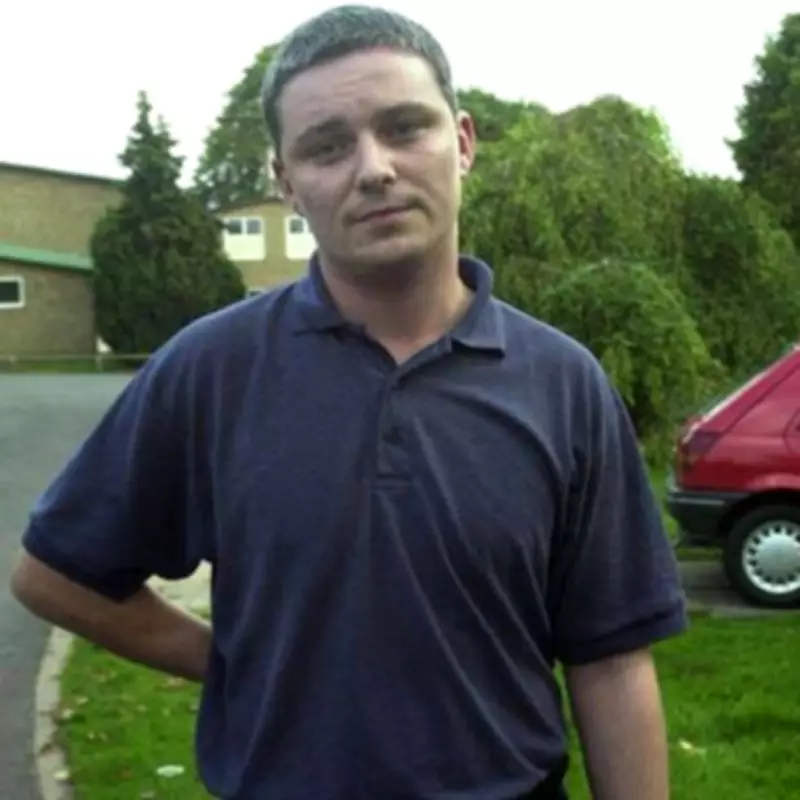
Yates recalls his first meeting with Huntley, who was out searching the fields with his dog, appearing genuinely concerned about the missing girls. "I got a call from the desk saying to go up to Soham because these two girls have gone missing," Yates told the Mirror. "When I got there, there was nobody else there, except for this bloke with his dog, who was looking for the two girls, and that was Huntley." At the time, Huntley was a 28-year-old caretaker living with his girlfriend, Maxine Carr, then 25, who had known the children through her work as a teaching assistant.

Yates, around the same age as Huntley, initially perceived him as a "nice enough bloke" doing the right thing by helping in the search. Huntley's charade was so convincing that he even tipped off reporters about press conferences held at Soham Village College, his workplace, making his face familiar to the media. However, as the story gained global attention, more seasoned reporters like Harry Arnold of the Mirror began to suspect Huntley's account of being one of the last people to see the girls alive.
The Turning Point: A Veteran Reporter's Instinct
Harry Arnold, a veteran reporter with 45 years of experience, immediately raised suspicions when Yates mentioned Huntley's claim. "He said straight away, 'Well, it must have been him then'," Yates remembered. Arnold's "nose for it" developed from covering hundreds of similar events, and he theorized that Huntley was involved. Police had already become suspicious, releasing Huntley's name to the press in an attempt to "rattle him up a bit."
Tragically, on August 17, 2002, the burnt bodies of Holly and Jessica were discovered in an irrigation ditch near an RAF base, 13 days after they went missing. The mood in Soham shifted palpably, and Yates began to reconsider his initial impressions. He visited Huntley and Carr at their home, 5 College Close, which has since been bulldozed to avoid becoming a macabre landmark.
The Revealing Smell of Disinfectant
During his visit, Yates was struck by the scrupulously clean state of the house. "The whole house really stank of disinfectant. Lemon scented, disinfectant that was really strong," he said. "Everything was spotless, and I remember thinking, 'Oh, she puts me to shame with the keeping the house tidy'. And then I started to think, well, maybe, they're trying to cover something up by scrubbing?"
With hindsight, Yates feels "completely gullible" for making ordinary assumptions about the cleanliness. The overpowering smell of disinfectant, in a home with "not a speck of dust" and everything "shiny and scrubbed," became the only hint that something was terribly wrong. This detail, often overlooked in initial reports, now stands out as a chilling clue to the horrors that occurred within.
Maxine Carr's Role and the Aftermath
Yates also reflected on Carr's involvement, noting that she seemed "just as genuine as he did" at the time, showing him little paintings the girls had made years before. Carr provided Huntley with an alibi for the night of the murders, despite being 100 miles away in Grimsby, where she was photographed partying with another man. She was later acquitted of aiding and abetting but served time for perverting the course of justice, receiving a new identity upon release.

"Whether she knew or not, it's hard to tell, isn't it?" Yates mused. "But I developed the idea afterwards, thinking about it, that she did. It's very hard to ever confirm that." The case concluded with Huntley being charged with two counts of murder in August 2002 and sentenced to two life terms with a minimum of 40 years in December 2003.
Lasting Impact on a Reporter's Perspective
The Soham murders left an indelible mark on Yates, who went on to write an award-winning book, Beyond Evil: Inside The Twisted Mind Of Ian Huntley, in an attempt to make sense of the tragedy. However, finding closure proved difficult, and he now avoids reading reports about Huntley. At the time of his interview with the Mirror, Yates was unaware that Huntley had succumbed to injuries from a brutal prison attack, a detail that underscores the enduring pain for those involved.
Yates concluded, "To actually have it confirmed, it was an enormous shock to me. And I've never really seen people quite the same since." His story serves as a poignant reminder of how evil can lurk behind an ordinary facade, forever altering one's view of human nature.