A tiny clue preserved in the hair of a toddler has been revealed as the breakthrough that solved the 15-year mystery of Rachel Nickell's brutal murder. The case, which shocked the UK in 1992, is now the subject of a new Netflix documentary, The Murder of Rachel Nickell, alongside a dramatised series, The Witness. Forensic scientist Angela Gallop, whose work has cracked numerous high-profile cases, explains how her team finally brought the killer to justice.
The Crime That Shook a Nation
On a sunny July afternoon in 1992, 23-year-old Rachel Nickell was walking through Wimbledon Common with her two-year-old son, Alex Hanscombe, and their dog, Molly. In a secluded wooded area, she was ambushed, sexually assaulted, and stabbed 49 times. Alex, the sole witness, was found clinging to his mother's body, having placed a piece of paper on her forehead as a makeshift bandage. He later recalled knowing instantly that she was gone. The murder devastated Alex and his father, André Hanscombe, but justice would take 16 years.
A Cold Case and a Tiny Clue
By 2002, the investigation had gone cold. The only evidence was a microscopic trace of male DNA, too small for the forensic technology of the time. Angela Gallop's team was brought in to re-examine the case. They had to pioneer a new methodology to analyse the minute sample. 'The technique used was very new and sensitive, but we never liked it,' Gallop told the Mirror. 'We got hints of male DNA, but we wanted more. It took two years to develop the technique properly.' After painstaking work, they obtained a strong DNA profile that matched Robert Napper, a paranoid schizophrenic and serial rapist already in custody for other crimes.

The Breakthrough: Hair and Paint Flakes
To solidify the case, Gallop's team re-examined crime scene items. They found footwear marks and forensic paint evidence linking Napper to the common. Crucially, microscopic paint flakes matching Napper's toolbox were discovered trapped in the hair of two-year-old Alex. The toolbox, found in Napper's flat, contained knives and other weapons. This evidence, combined with the DNA, was enough to convict Napper and exonerate Colin Stagg, an innocent man who had been wrongfully accused and spent 13 months in custody after a flawed police 'honeytrap' operation.
Justice Delayed but Served
In 2008, Napper pleaded guilty to manslaughter on the grounds of diminished responsibility and was detained indefinitely at Broadmoor Hospital. He was already serving time for the 1995 murders of Samantha Bisset and her four-year-old daughter, Jazmine. For Gallop, the match brought profound satisfaction. 'Colin Stagg had been professing his innocence for years. We were able to show he was telling the truth,' she said.
The Human Story
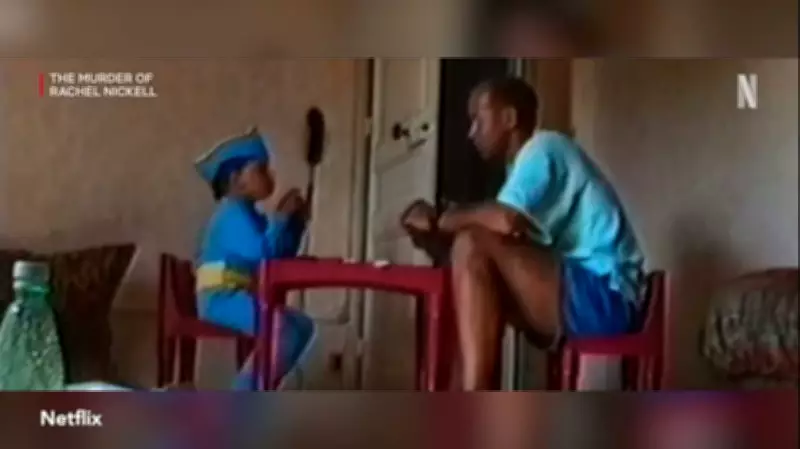
The Netflix documentary features never-before-seen home video footage of Alex, now 36, describing the murder to his father. In the footage, young Alex tells André, 'I saw him first,' and describes the man pulling a knife from a bag. He says, 'He knocked me over,' and that he witnessed the stabbing. 'There's his knife,' he says, pointing to a drawing. The series aims to show how father and son 'moved through the aftermath of unimaginable tragedy, from darkness into light.'
DNA: Not a Magic Bullet
Gallop is keen to stress that DNA evidence is rarely straightforward. 'Television makes it seem like you can swab a scene and get a result in 30 minutes,' she said. 'If it were that simple, the original scientists would have solved it long ago. You have to be clever, sometimes looking for one type of evidence to find another.' Her work on the Stephen Lawrence and Pembrokeshire Coastal Path murders involved analysing textile fibres before finding blood traces and DNA.
The Murder of Rachel Nickell documentary and the drama The Witness will be released on Netflix on June 4.