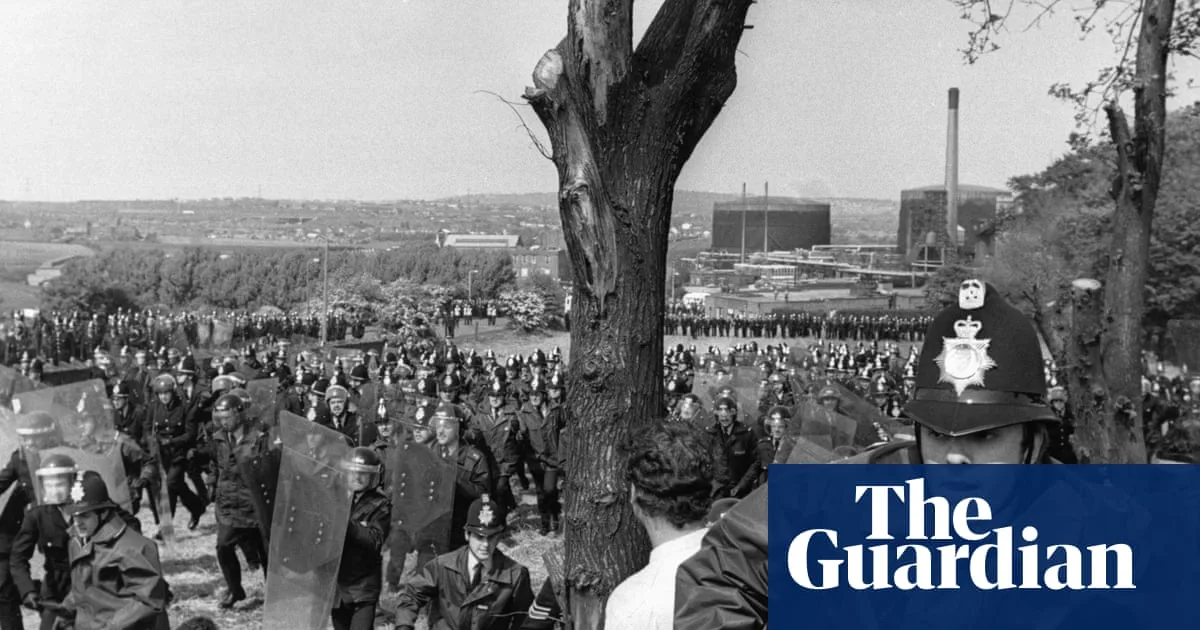
Campaigners for the newly announced inquiry into the 1984-85 miners' strike have warned that police behaviour during protests has not changed since the Orgreave clash, and that further injustices may occur. Speaking at a press conference after Labour announced a statutory inquiry into the violent policing at the Orgreave picket, the Orgreave Truth and Justice campaign said lessons had not been learned since the incident 41 years ago.
Chris Hockney, one of the campaigners, said: 'We look now at all the demonstrations, the rallies, the peaceful protests that are going on all the way through [history, since Orgreave] and happening now … if you look at what happened at Sarah Everard, if you look at what’s happening now in London on the Palestinian demos, if you look at what happens behind the scenes on ordinary pickets, police behaviour [has not changed]. Basically, they are there as agents of the state, and we end up seeing it time after time after time. And there will be further injustices perpetrated because the police do what they do.'
Under Margaret Thatcher's government, the Home Office and senior police officers created a secret tactical manual that redefined 'reasonable force' for protests, allowing mounted police charges into static crowds and the use of short shields and truncheons to 'incapacitate' non-violent protesters. These 'paramilitary' tactics have not been repealed despite never having parliamentary approval. Campaigner Chris Peace added: 'I think the issue is when policing gets political, and the policing at Orgreave was politically led.'

The clash at Orgreave coking plant on 18 June 1984 was described as a 'turning point' in police use of force against protests. Home Office documents have since revealed extensive government interference, including influencing, directing and financially supporting police actions against striking miners. However, South Yorkshire Mayor Oliver Coppard said the police are under 'completely new' leadership and that protest policing is now 'a million miles away' from Orgreave, though he acknowledged the inquiry is needed for 'truth, accountability and justice'.
In contrast, the Police Federation in South Yorkshire expressed concern, with chair Steven Kent stating local operations are at 'breaking point' due to cutbacks, and that the inquiry's costs would further strain resources. Kevin Horne, one of 95 miners arrested at Orgreave, said the inquiry would not 'make the wrong thing right' but could help mining communities 'get back to something normal again' and restore respect for the police.