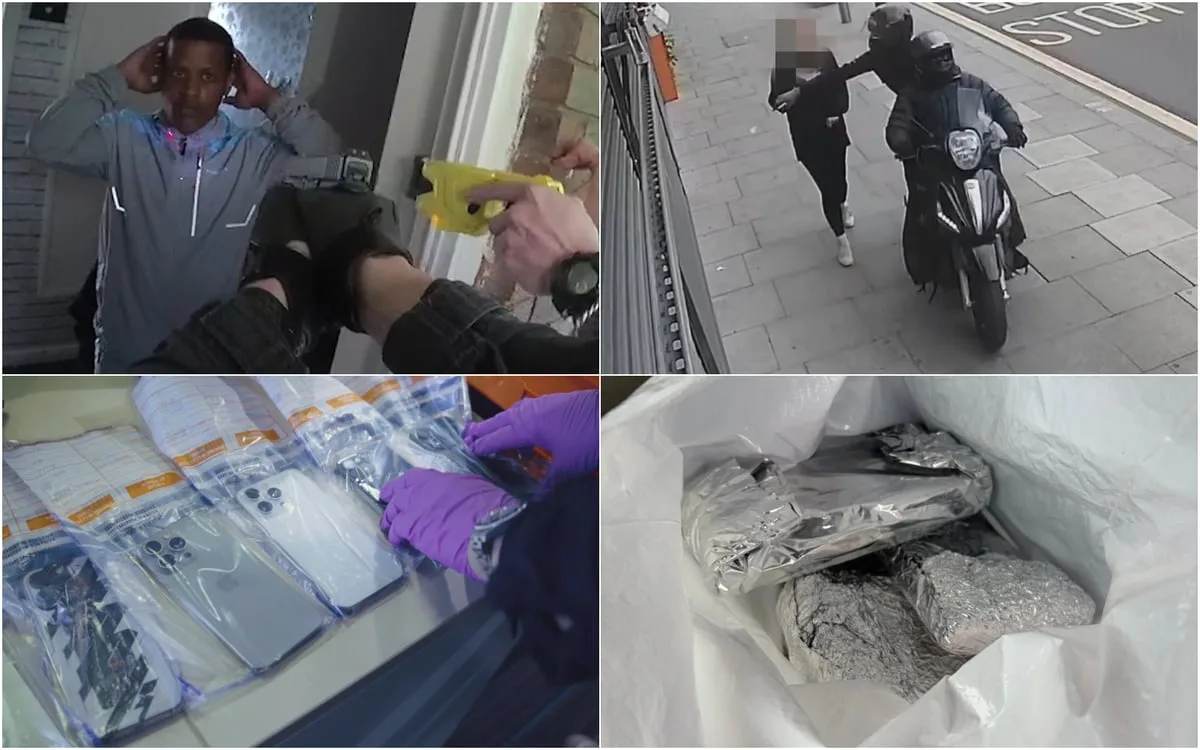
Mobile phone theft has been effectively decriminalised, with fewer than one per cent of offences resulting in a charge, according to alarming new statistics. The figures, obtained by the Liberal Democrats, show that almost nine in ten cases are closed without a suspect being identified, highlighting a systemic failure in law enforcement.
Shocking Statistics on Phone Theft
Across 17 police forces in England and Wales during the 2024-25 period, a mere 0.82 per cent of mobile phone thefts led to a charge. This equates to less than one in every hundred reported incidents seeing any legal consequence for the perpetrator. During this time, there were 86,000 phone thefts reported to forces, underscoring the scale of the problem.
Political Spotlight on the Issue
The issue gained political prominence after it emerged that Morgan McSweeney, the Prime Minister's former chief of staff, had his phone stolen last year. Initially, the investigation was closed with no suspect identified after a police call handler recorded the wrong location for the crime. However, Scotland Yard is now revisiting the case amid concerns that the phone contained key text messages between Mr McSweeney and Lord Mandelson.
Downing Street has refused to comment on whether important messages regarding Lord Mandelson's appointment as US ambassador have been lost as a result of the theft. This high-profile incident has brought the broader crisis into sharp focus.
Liberal Democrats Demand Action
Max Wilkinson, the Liberal Democrats' home affairs spokesman, told the Daily Telegraph: 'Morgan McSweeney having his phone stolen was just the tip of the iceberg. People could be forgiven for concluding phone theft has been effectively decriminalised.' He emphasised the severity of the situation, noting that criminal gangs are emboldened to strike in broad daylight, safe in the knowledge they have a less than one per cent chance of ever being caught.
Wilkinson added: 'A stolen phone isn't just an expensive item; it holds your entire digital life, from bank accounts to private messages. The fact that thousands of these cases are closed without a suspect even being named is a slap in the face to victims.' The Liberal Democrats are calling for a dedicated National Crime Agency unit to track down professional gangs and end what they term a 'daylight robbery' epidemic.
Police Performance and Regional Variations
Of the 17 forces that responded to Freedom of Information requests, the Metropolitan Police had the highest proportion of cases closed without a suspect being identified, at a staggering 95 per cent. Despite this, last month the force revealed it had reduced phone theft in London by more than 12 per cent in a year, from 81,365 incidents in 2024 to 71,391 in 2025.
Sir Mark Rowley, the Metropolitan Police Commissioner, recently issued an ultimatum to tech giants, giving them until June to 'design out' thefts by installing a kill switch that would render stolen phones unusable. He warned that failure to act could result in legislation forcing their hand.
Broader Crime Solving Concerns
Meanwhile, separate figures obtained by the Sun show that police failed to solve 92 per cent of all burglaries, with a third of forces not cracking a single case. Of 184,783 burglaries for which an investigation was concluded last year, 143,000 were closed without identifying a suspect.
Shadow home secretary Chris Philp called these figures 'totally unacceptable' and urged the Labour government to get a grip on the situation. The data paints a bleak picture of law enforcement's ability to tackle property crimes, with phone theft emerging as a particularly neglected area.
The combination of low charge rates, high-profile cases, and political pressure suggests that urgent reforms are needed to address what many are now describing as a decriminalised crime wave. As digital devices become increasingly integral to daily life, the stakes for victims continue to rise, making effective policing more critical than ever.