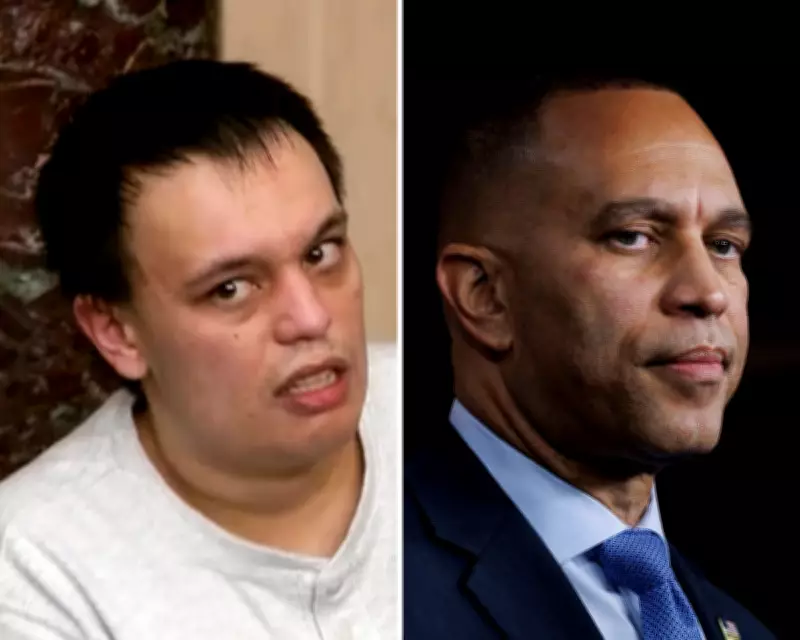
Christopher Moynihan, a 35-year-old man from Pleasant Valley, New York, has pleaded guilty to a misdemeanor harassment charge for threatening to kill House Minority Leader Hakeem Jeffries in a series of text messages. The guilty plea was entered during a hearing in Clinton, New York, with sentencing scheduled for April. Prosecutors confirmed the development, though Moynihan's representative could not be immediately reached for comment.
Threatening Messages Sent Last October
According to a complaint filed in New York state court in Clinton, Moynihan was charged in October after sending threatening text messages regarding an appearance Jeffries was scheduled to make in New York City. Jeffries, who represents New York in Congress, was the target of explicit threats.
The text messages stated, "Hakeem Jeffries makes a speech in a few days in NYC I cannot allow this terrorist to live. ... I will kill him for the future." The complaint noted that these messages placed the recipient in reasonable fear of the imminent murder and assassination of Hakeem Jeffries by the defendant.

Prosecutors Condemn Threats as Criminal Acts
District Attorney for Dutchess County, Anthony Parisi, issued a strong statement in response to the case. "Threats against elected officials are not political speech, they are criminal acts that strike at the heart of public safety and our democratic system," Parisi said. This underscores the legal stance that such behavior is unacceptable and poses a direct threat to democratic processes.
Background as a Pardoned January 6 Rioter
Previously, in February 2023, Moynihan was sentenced to 21 months in prison on charges including obstruction of an official proceeding, a felony. He was among more than 1,500 individuals charged in the insurrection at the US Capitol in Washington DC on January 6, 2021. The attack was an ultimately unsuccessful attempt by supporters of Donald Trump to prevent the official certification by Congress of Joe Biden's victory in the 2020 US presidential election.
In a controversial move, Trump pardoned nearly everyone criminally charged with participating in the Capitol attack when he began his second term last January. This act was seen as a show of solidarity with supporters who backed his false claim of victory in the 2020 election, raising questions about accountability and justice in such cases.
Implications for Public Safety and Democracy
This case highlights ongoing concerns about violence and threats against elected officials in the United States. The guilty plea serves as a reminder that such actions are taken seriously by law enforcement and the judicial system, regardless of prior pardons or political affiliations. It also brings attention to the broader issues of political extremism and the protection of democratic institutions from intimidation and harm.
As the sentencing approaches in April, observers will be watching closely to see how the court addresses this matter, balancing the need for public safety with considerations of rehabilitation and deterrence. The outcome may set a precedent for how similar cases involving threats against public figures are handled in the future.