Radical Policing Overhaul: 'British FBI' National Police Service Announced
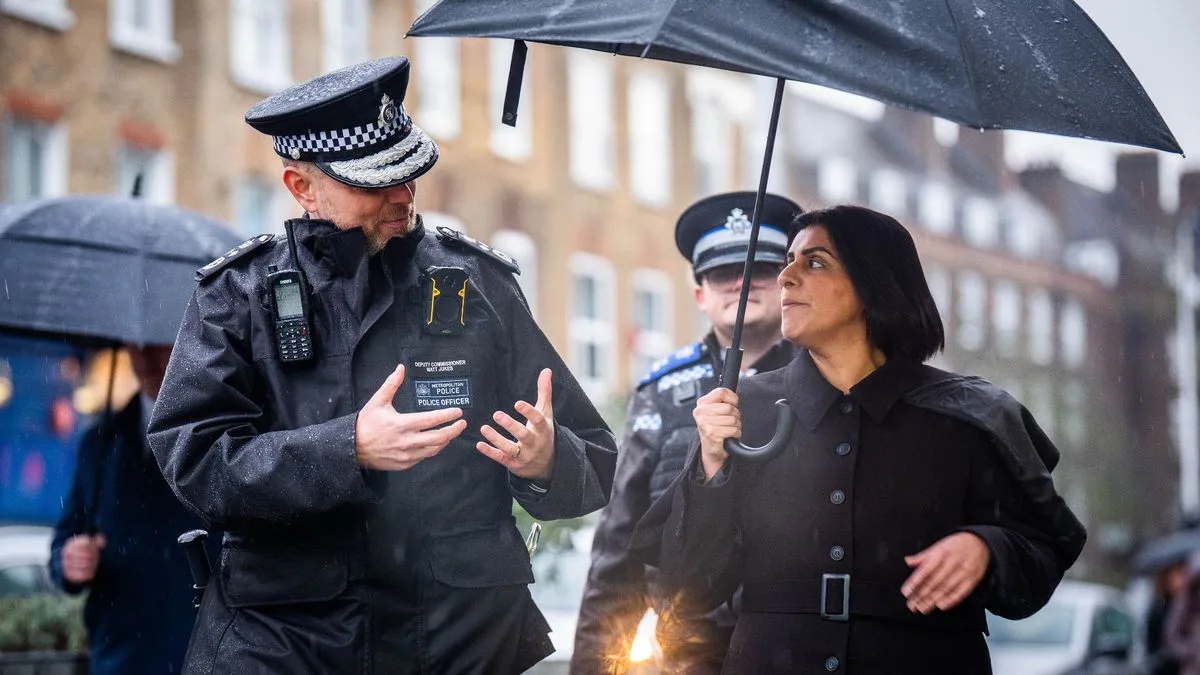
In a sweeping reform of law enforcement in England and Wales, Home Secretary Shabana Mahmood will tomorrow unveil plans for a new national police force being dubbed the 'British FBI'. The comprehensive restructuring represents the most significant change to policing structures in decades, aiming to create a more coordinated and effective response to modern criminal threats.
A Unified National Approach to Serious Crime
The newly proposed National Police Service (NPS) will consolidate the work of multiple existing agencies under one unified command structure. This includes absorbing the National Crime Agency (NCA), regional organised crime units, Counter Terror Policing, the National Police Air Service, and National Roads Policing into a single national entity.
The primary mission of this new service will be tackling serious and complex crimes that often transcend traditional police boundaries, including terrorism investigations, major fraud operations, and dismantling sophisticated criminal gangs operating across multiple regions.
Streamlining for Efficiency and Effectiveness
Ms Mahmood has described the current policing model as 'built for a different century' and argues that the creation of the NPS will allow local forces to refocus their efforts on community-level issues. 'Some local forces lack the skills or resources they need to fight complex modern crime such as fraud, online child abuse or organised criminal gangs,' the Home Secretary explained.
The white paper accompanying the announcement is expected to propose significant structural changes beyond the NPS creation, including:
- Reducing the number of police forces across England and Wales
- Abolishing the role of police and crime commissioners
- Implementing new systems for police officer recruitment and management
Political Response and Operational Concerns
Shadow Home Secretary Chris Philp has expressed reservations about the proposed changes, warning that 'more top-down reorganisation risks undermining efforts to catch criminals and it delivers no real improvement on the ground.' He emphasised that any reforms 'must not come at the expense of local and community policing'.
Despite these concerns, senior law enforcement figures have generally welcomed the proposals. National Crime Agency head Graeme Biggar described the current system as 'out of date' and called for 'a single, stronger national law enforcement body'. Meanwhile, representatives from the Metropolitan Police, Counter-Terror Police, and the National Police Chiefs' Council have cautioned that the transition 'must be delivered with care', stressing that success depends on 'maintaining strong connections with local policing'.
Enhanced Capabilities and National Response
The NPS will be led by a National Police Commissioner who will become the country's most senior police chief. Beyond its core investigative functions, the service will have responsibility for:
- Managing incidents of major national disorder, including riots and civil unrest
- Establishing a new national forensics service to address backlogs
- Creating regional crime hubs to target drug suppliers, serious fraud, and child sexual abuse
- Setting national standards for police training and equipment procurement
This last function represents a significant efficiency measure, with the NPS taking over technology procurement for all forces. This includes acquiring advanced systems like facial recognition technology through a centralised process rather than through 43 separate police forces.
Financial Implications and Efficiency Savings
The Home Office projects that centralised procurement through the NPS could save approximately £350 million by the next general election. This approach builds on existing successful frameworks, such as the national purchasing system for police uniform trousers which has already delivered substantial savings.
'We will create a new National Police Service - dubbed 'the British FBI' - deploying world-class talent and state-of-the-art technology to track down and catch dangerous criminals,' Ms Mahmood stated. 'In doing so, local forces will be able to spend more time fighting crime in their communities.'
The reforms come in response to evolving challenges, including lessons learned from the 2024 riots and increasing community tensions. Home Office sources indicate that a coordinated national response is now essential against a backdrop of increasingly complex and widespread incidents that traditional policing structures struggle to address effectively.