On a quiet road behind Lambeth Palace, the radio in an unmarked police car suddenly crackles with an urgent alert. A smartphone has just been snatched on Borough High Street. The suspect, described as a tall young man in a hooded tracksuit, fled the scene on an electric bicycle towards Waterloo Station.
A New Front in London's Crime Fight
Under normal circumstances, this would likely be another unsolved crime in a city where an astonishing 80,000 mobile phones are stolen each year—roughly 200 per day. With a charging rate of just one per cent, perpetrators often vanish with impunity. However, this particular thief picked the wrong night. He committed his crime as the Metropolitan Police was rolling out Operation Baselife, a revolutionary new initiative described by top brass as a 'return to old-fashioned policing'.
The operation sees more than 100 extra officers deployed in the West End and other central London crime hotspots. Teams, consisting of plain clothes officers, uniformed motorbike riders, and 'interceptor' units in unmarked cars and on high-powered e-bikes, flood areas at times when offences are statistically most likely. The goal is to create an ultra-hostile environment for criminals preying on tourists, shoppers, and revellers.

The Chase and Capture
From the back seat of a souped-up Skoda Octavia, this journalist witnessed the zero-tolerance approach in action. After the Borough High Street alert, the suspect's luck ran out. The area was crawling with Baselife teams. An undercover officer spotted him riding down The Cut, a busy road near Waterloo. A police motorcycle gave chase, while cars and foot patrols converged.
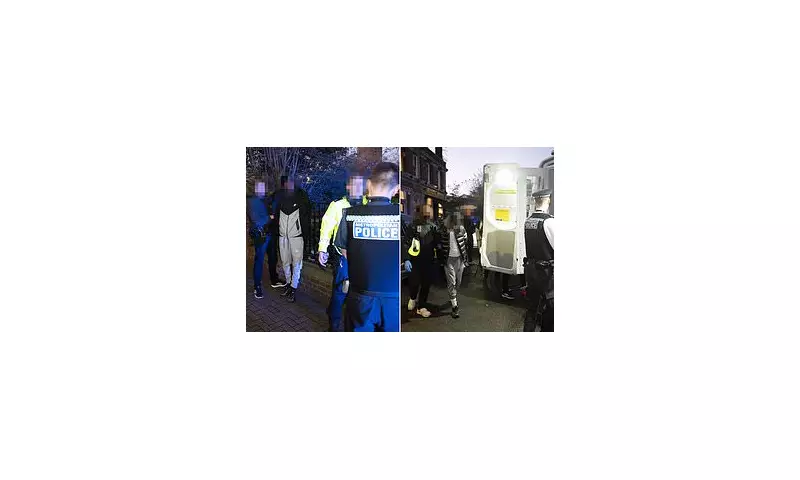
A short pursuit ended behind Waterloo station, where the suspect dumped his bike and ran into the Duke of Sussex pub. Police swiftly moved in. They arrested the suspected thief and detained two other similarly dressed young men found with him. A search revealed five smartphones and two bags of cannabis. The abandoned e-bike had been illegally modified to reach speeds of up to 50mph. Within half an hour, three suspects were in handcuffs and in a police van.
Scaling Up Success
This arrest was not an isolated incident. During a six-day trial in early November, Baselife officers made 146 arrests. When the operation resumed this week, aiming to run until Christmas, the total quickly surpassed 200. On one Wednesday alone, 37 people were detained, contributing to a weekly total of 139 arrests.
Other successes include the arrest of two prolific phone thieves caught by plain clothes officers attempting to steal from women at a Leicester Square ice rink. In a separate incident in Soho, a man was arrested for 'upskirting' after officers saw him filming women queuing for a toilet. His phone contained numerous similar intrusive videos.
Chief Inspector Jim Cole, who leads Operation Baselife, explains the strategy: 'A lot of what we are doing is quite simple: looking for people who are out of place... In some ways, it's old school policing. You stand there, holding a cold cup of coffee, waiting for something to develop.'
The operation is co-ordinated from the Met's high-tech Special Operations Room in Lambeth, a facility reminiscent of a spy film. Dozens of screens show live CCTV feeds from across central London. Staff can pull up footage from thousands of cameras to locate and track suspects in real time, directing units on the ground with precision.
The E-Bike Epidemic and Public Perception
Operation Baselife also highlights the changing face of street crime. Officers note that petrol scooters have been largely replaced by electric bikes as the criminal vehicle of choice. These bikes are silent, can travel on pavements and through parks, and illegal models can reach 60mph. Some criminals even sabotage rental Lime bikes to use them for free.
Inspector Tom Beresford, Cole's deputy, believes the operation is already impacting crime stats. On Black Friday (November 25), footfall on Oxford Street was up 179%, but recorded crime rose by only 13%. 'Criminals are on social media... when they hear that we are about, they might decide to go away for a few days,' he said.

The push comes at a critical time for the Met. A recent Policy Exchange report suggested public confidence is at an all-time low, with the force identifying culprits in just one in 20 robberies and one in 179 street muggings. Visible, proactive policing focused on so-called 'low-level' offences like phone theft is proving popular. 'It passes what I call the 'mum test',' says Beresford. 'It's the sort of thing my mum would want done.'
Of course, challenges remain. Traffic can hinder responses, and each arrest generates significant paperwork, taking officers off the front line. Yet, the message from Operation Baselife is clear: a coordinated, technology-backed, zero-tolerance approach can reclaim the streets. For now, thanks to this labour-intensive 'old-fashioned' tactic, London is a little bit safer.