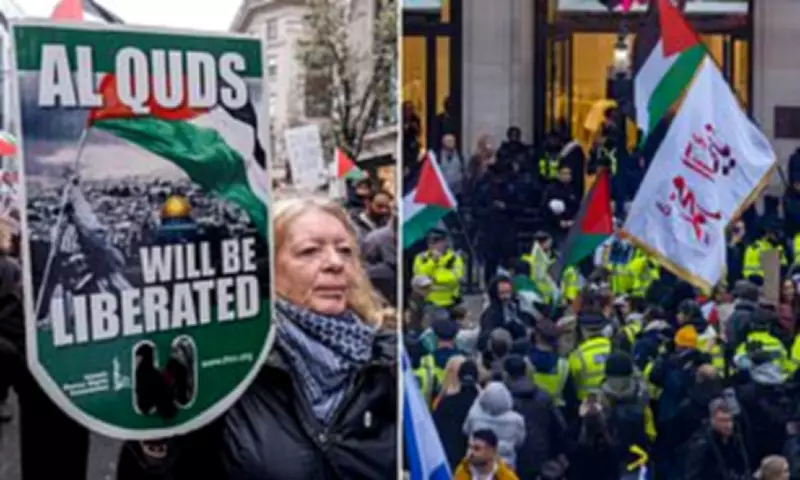
In a groundbreaking move, Scotland Yard will employ the River Thames as a natural barrier to prevent violent confrontations between pro-Iran demonstrators and counter-protesters at the contentious Al Quds rally scheduled for Sunday. This innovative strategy marks the first time such a tactic has been implemented by the Metropolitan Police, responding to heightened tensions and the potential for significant public unrest.
Unprecedented Security Measures
The decision to use the Thames as a divider comes after the planned march was downgraded to a static rally due to warnings from the Met Police about the risk of serious public disorder. Assistant Commissioner Ade Adelekan explained the rationale behind this unique approach, stating, 'We have not used this [tactic] before, but because this is a unique set of circumstances we need a unique plan to keep these groups apart.' He highlighted that the ongoing conflict in Iran has escalated concerns, with attendance potentially reaching up to 12,000 people, far exceeding numbers at previous Al Quds events.
Historical Context and Controversy
Past Al Quds rallies have been marred by controversy, with participants often carrying flags of Iranian-backed groups like Hezbollah and making inflammatory statements, such as calls for Israel to be 'wiped off the map.' In response, Home Secretary Shabana Mahmood approved a request by the Met to prohibit the march, marking the first such ban since 2012. However, she noted that it was not feasible to outlaw a static demonstration, leading to the current security arrangements.

Operational Details and Logistics
To manage the event, the Met Police will deploy more than 1,000 officers, supplemented by reinforcements from other forces. The pro-Iran Al Quds demonstrators will be stationed on the south side of the Thames at Albert Embankment, while counter-protesters will assemble across the water at Millbank. Lambeth Bridge will remain closed to all traffic except for emergency vehicles, ensuring controlled access and minimizing interaction between the two groups.
Assistant Commissioner Adelekan elaborated on the logistical benefits, saying, 'Dividing where the two groups assemble means they will use different transport hubs, plus they are divided by the river and we can control the bridges as well.' This comprehensive plan aims to reduce the likelihood of clashes by physically separating the factions and managing their movements through strategic barriers and police oversight.
Broader Implications for Public Safety
The use of the Thames as a barrier underscores the Met Police's proactive stance in addressing potential violence at large-scale demonstrations. This tactic not only addresses immediate security concerns but also sets a precedent for future events where geographical features can be leveraged to maintain order. The high attendance forecast, driven by international tensions, necessitates such robust measures to protect public safety and prevent disruptions in London.
As Sunday approaches, authorities remain vigilant, with the hope that this innovative strategy will ensure a peaceful resolution to what could otherwise be a volatile situation. The outcome may influence how police forces worldwide handle similar protests in urban settings with natural or man-made barriers.