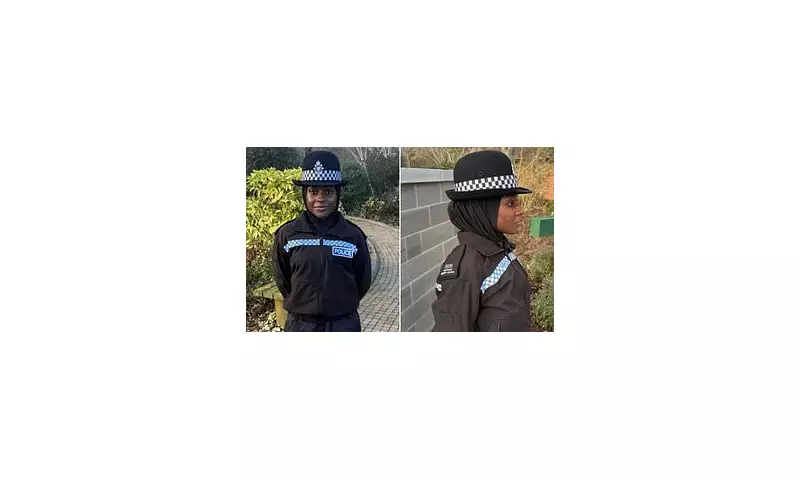
Police forces across the United Kingdom are beginning to adopt a new, specially designed hijab featuring a magnetic clasp, in a significant move aimed at attracting more female Muslim recruits and ensuring their safety on duty.
A Design Decades in the Making
The innovative 'Blue Light Hijabs' are the result of a collaboration between Leicestershire Police and De Montfort University. The project was spearheaded by Detective Sergeant Yassin Desai, who first proposed the idea of a safe and comfortable religious garment for officers twenty years ago. "It's actually taken years to develop properly," DS Desai stated.
The hijab's key safety feature is its two-piece design, connected by a magnetised quick-release clasp. This system is engineered so that if the lower section is pulled during a physical confrontation, it detaches without exposing the officer's hair, thereby preventing potential strangulation and protecting the wearer's modesty and dignity.

Combat Trials and National Rollout
Following extensive research and development spanning three years, the hijabs underwent successful combat trials at Enderby with serving female officers. "The bottom part was able to detach and the officer was able to keep her dignity," DS Desai confirmed.
The design was also influenced by work done at New Zealand's Massey University College in Wellington, after the team established a productive relationship with their counterparts. Leicestershire Police has already issued the new hijabs to every eligible officer within its force, and other UK police services are now placing orders.
The rollout is expected to extend beyond policing to include other emergency service workers such as paramedics and hospital staff.
Boosting Representation and Providing Role Models
The initiative addresses a clear need for greater diversity within UK police ranks. Currently, Muslims make up just 2.5 per cent of police officers, according to the Office for National Statistics, despite constituting an estimated six per cent of the national population.
DS Desai emphasised the wider impact of the new uniform: "More importantly it will help attract other Muslim females to become police officers. It will also help to provide role models to the community to show them they too can follow a career in policing."
The need for such a safety-focused design was highlighted earlier this year when PC Zara Basharat of West Midlands Police reported that her standard hijab was pulled off while she was policing pro-Palestine protests, alongside suffering racial abuse.
The final product, which uses material similar to standard police uniform, has been praised for looking professional while integrating crucial safety features, marking a pivotal step towards inclusivity in the emergency services.