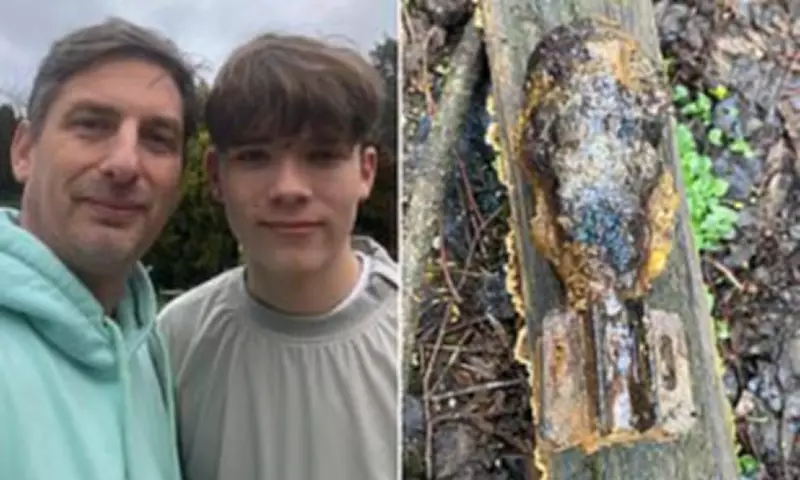
Father and Son's Magnet Fishing Adventure Uncovers Live WWII Mortar Bomb in Dorset
A routine magnet fishing expedition turned into a dramatic bomb disposal operation when a father and son duo pulled a live World War Two explosive from a river in Dorset. Richard Swaffield, 49, and his 15-year-old son Alfie made the startling discovery during their second outing with a new fishing magnet, gifted to Richard for his birthday just one week earlier.
Immediate Recognition of a Dangerous Device
The pair were exploring the waters of the River Stour in Canford Magna, Dorset, when their magnet latched onto something heavy. After about thirty minutes of retrieving miscellaneous items like a spanner, bolts, and assorted rubbish, Alfie alerted his father to an unusual find. "Alfie just said 'there's a bomb on there' and I looked at it and thought 'oh my goodness, there is,'" recounted Mr Swaffield, a property landlord who instantly identified the object as a Second World War mortar bomb.
A mortar bomb, also known as a shell, is an explosive projectile fired from a mortar weapon, commonly used to target enemy positions during wartime. The device is likely of British origin, given that German forces did not invade England during WWII and the River Stour was historically utilised for military training exercises.

Emergency Response and Controlled Explosion
Upon realising the danger, Mr Swaffield carefully removed the bomb from the magnet, placed it on a wooden sleeper, and immediately dialled 999 to alert authorities. He also warned nearby members of the public to keep a safe distance. Dorset Police responded swiftly, arriving at the scene within fifteen minutes and establishing a substantial 200-metre cordon around the area to ensure public safety.
Bomb disposal experts from the Royal Logistic Corps were promptly dispatched to handle the situation. The specialists conducted a controlled explosion on the live mortar bomb, which resulted in a significant crater forming in the ground, visibly marking the site of the detonation.
Official Statements and Historical Context
A spokesperson for Dorset Police confirmed the incident, stating, "At 10.57am on Thursday 19 February 2026, we received a report that a suspected ordnance had been found in the River Stour near Canford Magna." The controlled explosion was carried out efficiently, neutralising the threat without any injuries reported.
The River Stour's past as a military training ground during World War Two provides context for the bomb's presence, suggesting it may have been left behind from exercises decades ago. This discovery highlights the lingering remnants of wartime history that can still pose risks today, especially in areas with such historical military use.
Mr Swaffield reflected on the unexpected turn of events, noting, "My girlfriend bought me the magnet for my birthday on Sunday and it was only the second time I had used it." What began as a leisurely father-son bonding activity quickly escalated into a memorable encounter with a piece of dangerous wartime ordnance, underscoring the unpredictable nature of magnet fishing and the importance of caution when exploring historical waterways.