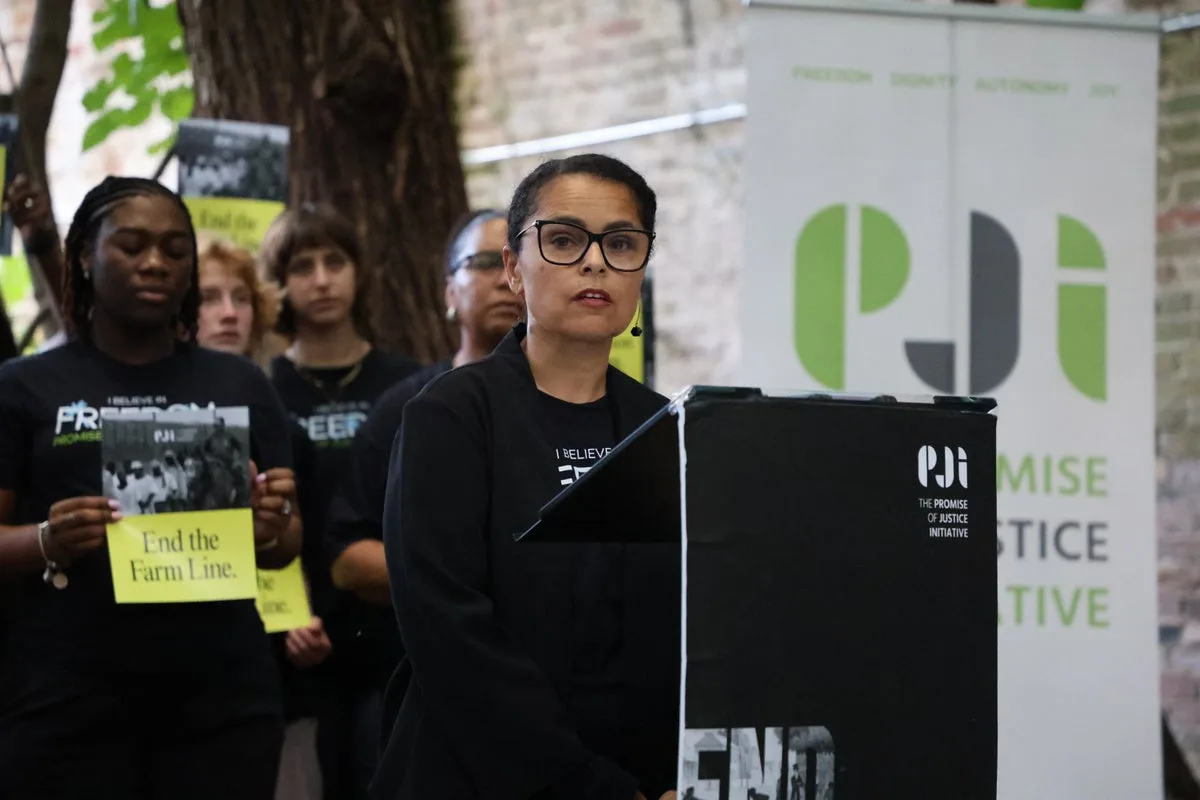
A federal judge has ruled that Louisiana cannot be forced to change working conditions on the 'farm line' at Angola prison, despite acknowledging that prisoners face dangerously harsh conditions, including labouring outdoors in extreme heat. The ruling, issued Tuesday by U.S. District Judge Brian Jackson in Baton Rouge, stems from a lawsuit filed by inmates and advocacy groups alleging that farm line work violates the Eighth Amendment's ban on cruel and unusual punishment.
In his 60-page opinion, Jackson said a recent decision by the conservative 5th U.S. Circuit Court of Appeals in a separate case, Parker v. Hooper, weakened the standard for proving cruel and unusual punishment. Under that ruling, if the state shows it took any action—no matter how ineffective—to address a potential violation, it is cleared of liability. Jackson reluctantly found that the Louisiana Department of Public Safety and Corrections met that bar by implementing remedial measures, even though he deemed them inadequate.
'Before Parker, the Court would have found Defendants liable under the Eighth Amendment for acting with deliberate indifference to the health and safety of incarcerated persons working the farm line,' Jackson wrote. 'Under the Parker ruling, however, the Court is constrained to find that Defendants’ implementation of remedial measures negates a finding of subjective deliberate indifference.'

The lawsuit was filed in 2023 by four Angola inmates and the New Orleans-based advocacy group Voice of the Experienced (VOTE). They were represented by the Promise of Justice Initiative (PJI) and Rights Behind Bars. The plaintiffs argued that farm line work, especially in excessive heat, violated the Eighth Amendment and parts of the Americans with Disabilities Act and the Rehabilitation Act. PJI executive director Samantha Kennedy called the decision 'a victory without a remedy,' noting that while the court agreed the conditions were unconstitutional, no permanent relief was ordered.
PJI senior attorney Samantha Pourciau acknowledged that the litigation secured gains such as more frequent breaks, access to water and shade, and expanded protections for inmates with heat-sensitive medical conditions. However, she warned that without a permanent injunction, these improvements could be reversed. 'Incremental change, when it is the difference between heat stroke and survival, is real. We do not diminish it, but permanent protection has not been won,' Pourciau said.
Louisiana’s Department of Corrections expressed satisfaction with the ruling. Press secretary Falon Brown stated that the department's heat pathology policies include risk-mitigation measures like rest breaks, shade, fans, and water. Farm line workers at Angola, who pick crops under armed guard, earn as little as 2 to 4 cents per hour after three years of unpaid work. The prison also uses the farm line as a form of punishment.