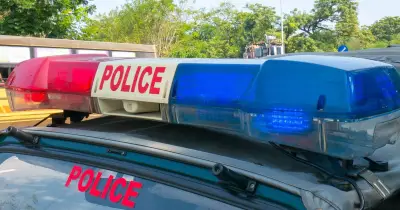
Western Australia Police have launched a five-month mobile trial of real-time facial recognition technology, the first of its kind for law enforcement in Australia. During a press conference on 2 July at Perth's Mirrabooka bus station, a camera mounted on a police van scanned the crowd and flagged a woman wanted for failing to appear in court. Officers arrested her on the spot, providing a live demonstration of the system's capability.
Police Commissioner Col Blanch described the technology as a tool to increase public safety, stating, "This is not about mass surveillance. This is about specifying those in the community who are wanted by police." He argued that the system is less intrusive than standard CCTV because it does not retain data on ordinary citizens, instead pixelating those not in the database.
How the technology works
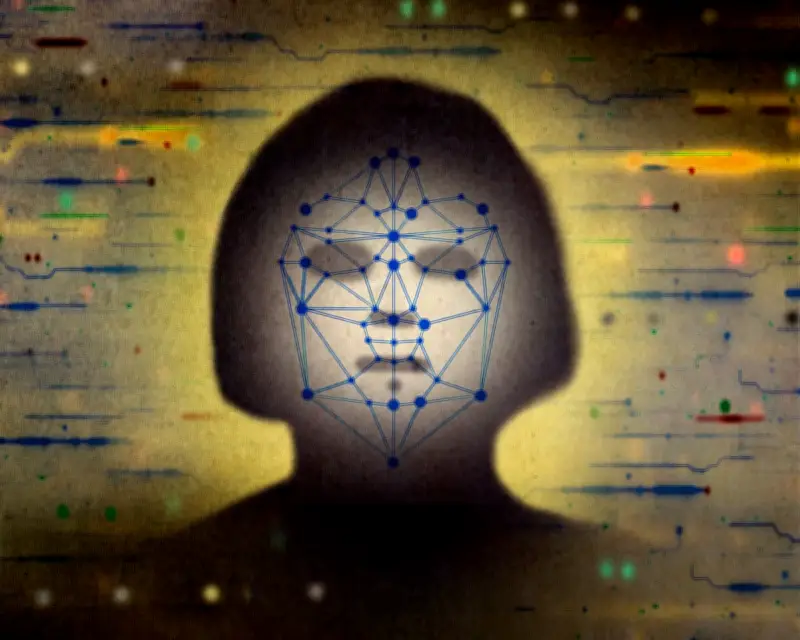
The system uses a camera mounted on a marked police van to scan hundreds of faces per minute. It cross-references each face against a database of approximately 4,000 individuals, including those with outstanding arrest warrants, registered child sexual abuse offenders, and missing persons. When a match is found, officers receive an alert and manually verify the identification before intervening.

In its first week, the single van scanned more than 130,000 faces in crowded public spaces. This resulted in 33 alerts, leading to 19 arrests, two welfare checks, and the identification of 21 registered sex offenders who were "engaged with" by officers.
Privacy and regulatory concerns
The trial has drawn criticism from privacy experts and regulators. The Office of the Information Commissioner WA (OIC WA), the state's independent privacy watchdog, said it was not consulted during the trial's design. In a statement, the OIC WA warned of "collective privacy harms" and noted that even short-term data collection constitutes a privacy obligation.
According to the 2026 Australian Community Attitudes to Privacy Survey, 45% of Australians now consider facial recognition their biggest privacy risk, up from 27% in 2023. Public comfort with police using biometrics in public safety has slipped to 57%.
Professor Dali Kaafar, executive director of the Macquarie University Cyber Security Hub, called the commissioner's comparison to standard CCTV a "false equivalence." He said, "The whole point of live facial recognition is that it identifies people, and generic CCTV doesn't. The underlying reality is that every face in the crowd is being captured, processed and biometrically matched against a database."
Accuracy and algorithmic bias
Police acknowledged two false alerts during the first week, relying on a "human in the loop" to verify matches. However, experts warn that real-world conditions degrade accuracy. Professor Katina Michael, an expert in biometric surveillance at the University of Sydney, noted that accuracy drops to 90-95% in uncontrolled conditions due to variable lighting, crowd density, camera angles, motion blur, and weather. She said, "Error rates increase according to the amount of 'noise' in the environment."
Dr. Adam Andreotta, a business ethics lecturer at Curtin University, highlighted the consequences of even a 10% error rate: "When thousands of people walk by, a 10% mistake rate means a significant number of innocent people could be stopped, questioned or detained for things they didn't do."
Algorithmic bias is a primary concern. Independent tests by the US National Institute of Standards and Technology (NIST) have shown that many facial recognition algorithms have higher false-match rates for women, younger people, and individuals with darker skin tones. Professor Kaafar stated, "Multiple studies show African and Asian faces are wrongly matched at rates 10 to 100 times higher than white faces on some systems." In Australia, this bias could disproportionately affect Aboriginal and Torres Strait Islander communities, who are already overrepresented on police databases.

Function creep and legal frameworks
Critics and regulators worry about "function creep"—the gradual expansion of the technology's use. The OIC WA warned that shifting to covert deployments or integrating the system into fixed CCTV networks would "significantly increase privacy risks." Commissioner Blanch has not ruled out using the van at public protests, stating it would depend on intelligence regarding significant risks of harm.
Professor Michael noted that Australia lacks federal or state legislation specifically governing police live biometric surveillance. She said, "Without binding limits on watchlist criteria, data retention and permitted use cases set in laws and regulations, this expansion is a foreseeable risk, not a hypothetical one."
The trial will test the state's Privacy and Responsible Information Sharing Act 2024 (PRIS Act), the first Australian law to explicitly regulate personal information in automated decision-making. Under the act, WA Police must assess risks of bias, harm, and discrimination and complete a formal privacy impact assessment (PIA) for high-risk projects. The OIC WA is actively monitoring the trial and requesting information from police to ensure compliance.
Commercial vs. public surveillance
The legal landscape for facial recognition in the private sector is evolving. Retailers Bunnings and Kmart faced scrutiny when the national privacy commissioner ruled they breached customer privacy by using facial recognition to curb theft. However, the ruling against Bunnings was overturned on appeal in February.
Unlike retail customers, people in public spaces cannot easily opt out. Dr. Andreotta said, "You can't just tell people it is happening via a sign. If the public doesn't fully understand the long-term risks of biometric collection and function creep, they aren't giving meaningful consent."
The OIC WA noted that compromised biometric data, unlike credit card numbers, cannot be easily changed or replaced, making it a "higher-risk category of personal information." The WA government has pledged to publicly upload results from each deployment as they become available.