London Transport Crime Skyrockets Post-Pandemic, Creating 'Crisis' Situation
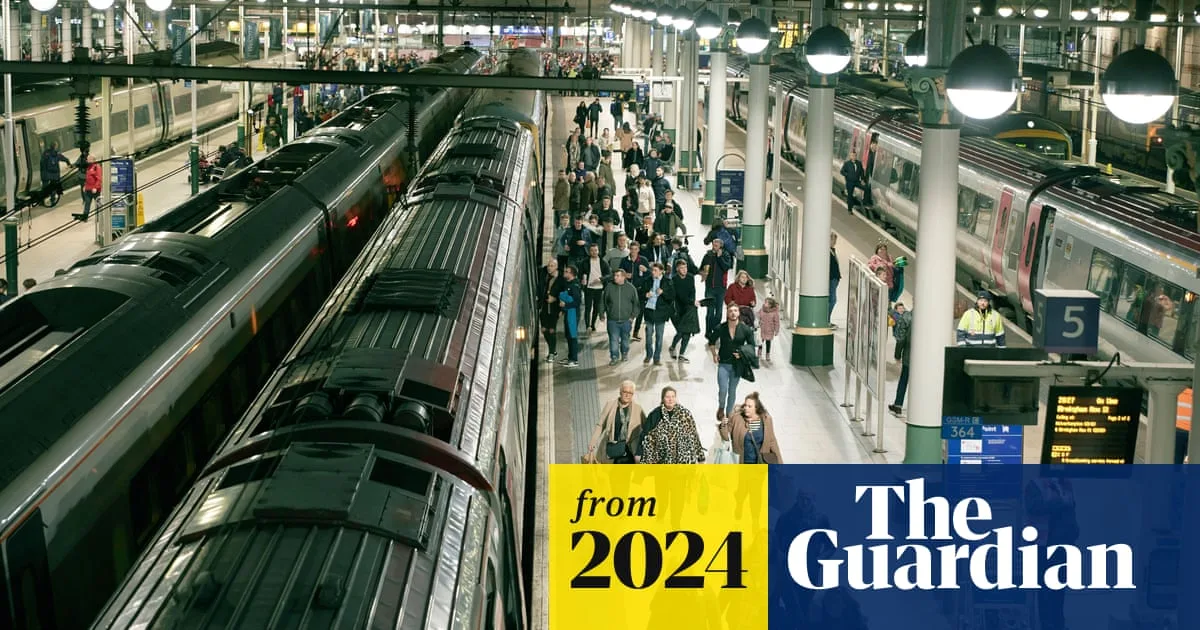
A shocking new report from the London Assembly's Police and Crime Committee has revealed that crime across London's public transport network has surged by almost 50 percent since the pandemic, with particularly alarming levels of violence against women and girls described as 'unacceptable'. The findings paint a devastating picture of safety concerns that are fundamentally changing how Londoners move around their city.
Statistical Evidence of a Growing Crisis
The committee's investigation uncovered that approximately 48,000 crimes were reported across Transport for London services in 2025 alone. This represents a staggering 46 percent increase compared to the pre-pandemic average of 16,544 incidents. Committee chair Marina Ahmad stated unequivocally: 'While we expected to find a problem, what we found was a crisis.'
The crime surge has been particularly pronounced on certain parts of the network. Between 2023 and 2025, crimes on the Underground rose by 12.5 percent, while incidents on the Elizabeth Line - London's newest rail addition - skyrocketed by 60.4 percent. Overground crime increased by 15 percent in the same period. Although bus crime dipped slightly by three percent, overall network crime has risen almost eight percent in just three years.
Violence Against Women and Hate Crime Epidemic
The report places particular emphasis on two troubling categories: violence against women and girls (VAWG) and hate crime. In 2025, these accounted for nearly a fifth of all public transport crime reports, with 4,593 VAWG incidents and another 1,724 hate crime occurrences documented.
Perhaps most concerning is the extremely low rate of successful prosecutions. Only a handful of these incidents ever led to charges, with suspects not identified in 58 percent of VAWG cases and 66 percent of hate crime incidents. London TravelWatch estimates the true scale of the problem may be far greater, suggesting as many as 80 percent of incidents go unreported because victims lack confidence in authorities to take effective action.
Real-World Consequences and Commuter Anxiety
The impact on Londoners' daily lives has been profound. Tricia Hayes of London TravelWatch informed the committee that seven in ten Londoners are now choosing not to travel, or avoiding certain times of day, due to personal security concerns. This anxiety may partially explain why official TfL statistics show passenger journeys fell by 2.4 percent in the second half of 2025.
Recent polling reveals the depth of public concern: 45 percent of travelers say they're either 'very' or 'fairly' worried about being harassed while commuting, and more than half express little to no confidence in TfL, the Metropolitan Police, or the British Transport Police to address these issues effectively.
Recent High-Profile Cases Highlight Systemic Problems
The report comes amid several disturbing cases that have captured public attention. Just last week, serial predator Craig Anderson, 38, was jailed for sexually assaulting four women at London Underground and mainline stations. Prosecutors described him as a man who 'did not take no for an answer', while police noted he smirked throughout his interview and refused to answer questions. He received a 22-month sentence.
In January, Stanislaw Pozniecki was jailed for four years after approaching a sleeping woman on a Jubilee Line train, assaulting her, and then offering her £20 to sleep with him. When arrested at Wembley Park station, he seemed more concerned about missing the last train than about his criminal actions.
Incidents are increasingly being documented on social media, including a recent video showing a group of teenagers refusing to stop vaping on an Elizabeth Line train, sparking a brawl that spilled onto the platform. The British Transport Police is investigating this incident.
Systemic Failures and Official Responses
A BBC investigation has revealed additional systemic problems, finding that the British Transport Police struggles to identify sex offenders due to faulty or non-existent CCTV cameras. Of 562 investigations into alleged sex offences in 2025 involving CCTV evidence, 250 either had no available footage or footage of unusable quality.
In response to the crisis, the Assembly committee has recommended that TfL, the BTP, and the Metropolitan Police establish a joint rapid response task force specifically for hate crime and VAWG incidents as they occur. They also call for an annual survey on how these agencies respond to such crimes.
Transport authorities insist they are taking the challenge seriously. Siwan Hayward, TfL's Director of Security, Policing and Enforcement, stated: 'The safety of everyone using the transport network is an absolute priority for us. We have a strong police and enforcement presence on our services and in our stations to prevent crime and are determined to continue working together to make the transport network a hostile place for offenders.'
Commander Clair Kelland, public protection lead for the Met, acknowledged in a statement: 'As this report highlights there is more to be done to make women feel safer on transport in London, which is why we will continue to work closely with TfL, BTP and local partners.' The Met is currently training officers in how to better respond to VAWG incidents.
The BTP maintains that tackling hate crime and VAWG remains its 'top priority', highlighting their text 61016 service which allows discreet, free crime reporting. A spokesperson noted: 'Last year we received a 20 percent increase in reports, showing us that more passengers know how to report crime to us and have the confidence to do so, knowing they will be believed and taken seriously.'
TfL has launched several initiatives, including a campaign encouraging bystanders to 'act like a friend' and intervene safely in incidents, and a dedicated taskforce established last year specifically to tackle hate crime and VAWG.
The situation has prompted some campaigners to call for more radical solutions, including the return of 'ladies only' carriages reminiscent of the early days of railways. Camille Brown quipped in her online petition to TfL, referencing the BTP's slogan: 'We always see it, we do say it, but it's still not sorted.'
The Mayor of London's office was contacted for comment regarding the report's findings and recommendations.