Forensic Experts Challenge Authenticity of Kurt Cobain's Suicide Note
Kurt Cobain Suicide Note Authenticity Questioned by Experts

Forensic Investigation Questions Authenticity of Kurt Cobain's Suicide Note

A suicide note discovered impaled with a red pen into the soil of a potted plant has long been accepted as Kurt Cobain's final message to the world. The Nirvana frontman died tragically on April 5, 1994, at the age of 27 from a shotgun wound at his Seattle residence. The King County Medical Examiner officially ruled his death a suicide at the time.

Written in red ink on a restaurant placemat, this document served as one of the key pieces of evidence cited by Seattle Police investigators in their conclusion that Cobain took his own life. Now, a private forensic team has raised serious questions about the authenticity of specific sections of this critical note.

Discrepancies in Handwriting Analysis

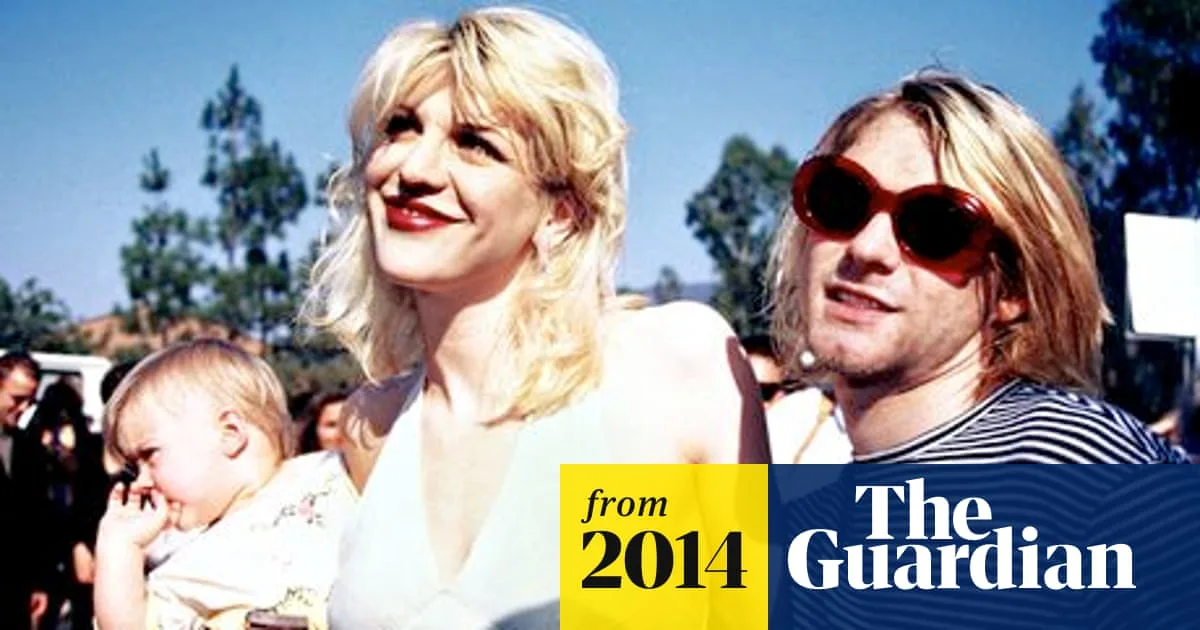
The forensic team has specifically challenged the final lines of the note, where Cobain appears to bid farewell to his wife Courtney Love and their daughter Frances Bean Cobain. These concluding sentences read: 'Please keep going Courtney,' 'for Frances,' 'for her life which will be so much happier,' 'without me,' followed by the repeated declaration 'I LOVE YOU. I LOVE YOU.'

Wide Pickt banner — collaborative shopping lists app for Telegram, phone mockup with grocery list

Independent researcher Michelle Wilkins, who collaborated with the forensic team, told the Daily Mail: 'If you examine the document closely, the handwriting characteristics in the last four lines demonstrate noticeable differences. The script appears larger and more scrawled compared to the preceding text. Our analysis suggests Kurt Cobain likely did not author those particular lines.'

By contrast, the opening section of the note, addressed to Cobain's imaginary childhood companion 'Boddah,' reads more like a philosophical farewell to the music industry rather than a personal message directed toward his immediate family. This portion states: 'I've tried everything… I've tried to get what I wanted out of life, and it just hasn't worked.'

Expert Examination and Findings

Handwriting analyst Mozelle Martin conducted a detailed forensic comparison between authenticated samples of Cobain's writing and the contested suicide note. Although her findings have not undergone formal peer review, Martin claims to have identified significant variations in letter formation and writing rhythm within the final four lines.

Martin stated that she undertook this analysis with the specific goal of encouraging Seattle Police to officially reopen the Cobain case as a potential homicide investigation rather than maintaining the suicide classification. She explained her methodology to the Daily Mail: 'When analyzing the contested Kurt Cobain suicide note, forensic handwriting comparison revealed a distinct behavioral fracture. The body of the note aligned consistently with Cobain's known writing patterns, while the final four lines displayed significant anomalies.'

Using a standardized five-point comparison scale, where a rating of five indicates 'definitely not' authored by the individual, Martin assigned the likelihood that Cobain wrote the final lines a score of 4.75. According to her interpretation, this strongly suggests he did not compose those specific farewell messages.

Martin emphasized the probabilistic nature of forensic examination: 'While the data strongly supports that the final lines were not authored by Cobain, I cannot state with absolute certainty that he did not write them, because I was not physically present. Ethical forensic examination deals in probabilities rather than absolute certainties.'

Additional Expert Perspectives

Certified document examiner James Green also conducted an independent analysis comparing the main body of the note with the controversial final four lines. Employing standard forensic methodologies including the ACE process—Analyze, Compare, and Evaluate—consistent with Academy Standards Board protocols, Green identified several significant discrepancies.

While Green stopped short of definitively identifying a second author, he noted that the final lines appear larger than the rest of the document, potentially indicating they were added during a separate writing session. He presented two plausible theories: either Cobain wrote the main portion in one sitting and later returned to add the concluding words, or another individual entirely composed and appended those final lines.

Pickt after-article banner — collaborative shopping lists app with family illustration

Green acknowledged that certain letter forms throughout the four lines show similarities to Cobain's established handwriting. Capital letters such as 'P,' 'K,' and 'C,' along with lowercase characters including 'a,' 's,' 'p,' and 'g,' generally align with his known writing style. However, subtle variations in slant, size, and shape introduce reasonable doubt regarding single authorship.

The examiner concluded that while the handwriting could theoretically have been produced by Cobain himself, a skilled imitator could have successfully replicated many of these distinctive features.

Official Response and Ongoing Speculation

A spokesperson from the Seattle Police Department previously informed the Daily Mail that authorities have no plans to reopen the investigation. 'Our detective concluded that he died by suicide, and this continues to be the position held by this department,' the representative stated definitively.

Forensic experts have highlighted additional unusual aspects of the note beyond the handwriting questions. The signature at the document's bottom reads 'Kurt Cobain'—the use of his complete legal name rather than a more intimate sign-off like 'Kurt' or 'Love you' strikes many observers as highly irregular for a farewell message directed toward a spouse and child.

Combined with the dramatic presentation of the letter—pinned to a placemat and stabbed into the soil of a potted plant—these peculiar details have fueled persistent speculation that the note may have been deliberately staged or crafted for theatrical effect. Observers have long remarked upon the performative nature of this display, which gained national attention through coverage on programs like Unsolved Mysteries, drawing further scrutiny to the unusual circumstances surrounding Cobain's final communication.