ISIS Wives Escape Syrian Prison Camp Amid Violent Clashes
The wives of Islamic State members orchestrated a dramatic breakout from a Syrian prison camp on Tuesday, exploiting violent clashes between Kurdish-led troops and the national army. The al-Hol camp in eastern Syria, housing mostly women married to ISIS militants, descended into chaos as residents rioted and dismantled fencing.
Security Vacuum Enables Mass Escape
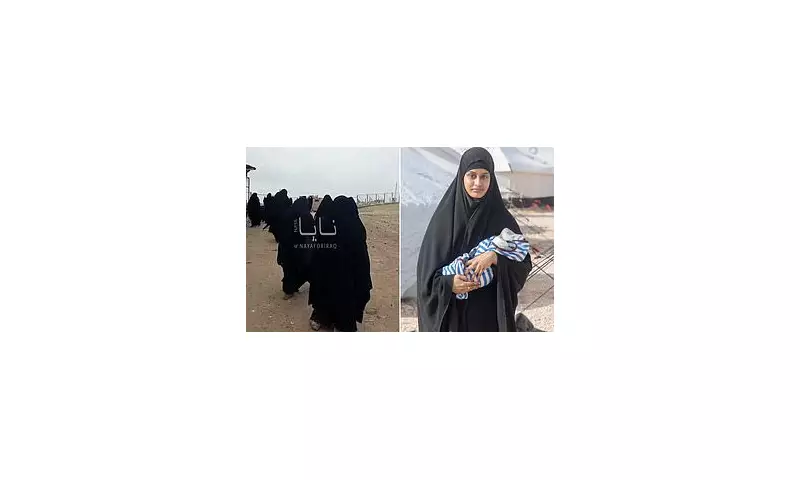
Kurdish-led Syrian Democratic Forces (SDF) were forced to abandon the al-Hol facility following intense fighting with Syrian government troops. This created a security vacuum that allowed dozens of women, all wearing distinctive black burqas, to emerge from the camp. Social media footage captured the moment they knocked down perimeter fencing while other clips showed female residents shouting and throwing rocks at military vehicles.
The SDF controls multiple detention sites across northeastern Syria, including al-Hol and the al-Roj prison camp where British-born ISIS bride Shamima Begum is currently held. Together these facilities house more than 9,000 ISIS fighters and approximately 40,000 women and children connected to the terrorist organization.

Shamima Begum's Case Under International Scrutiny
The prison break has ignited renewed concerns about Begum's potential release from detention. The 26-year-old Londoner, who traveled to Syria at age 15 to join ISIS, was stripped of her British citizenship in 2019 on national security grounds. Her case has since become a protracted legal battle reaching international courts.
Earlier this month, the European Court of Human Rights formally requested clarification from the UK Home Office regarding whether revoking Begum's citizenship violated human rights and anti-trafficking laws. This intervention has sparked significant political backlash, with Home Secretary Shabana Mahmood vowing to defend the government's original decision.
Political Reactions and Legal Battles
Conservative MP and Shadow Home Secretary Chris Philp has demanded guarantees that Begum will not be permitted to return to the UK, describing ISIS as "a violent terrorist regime that brutally murdered their opponents and raped thousands of women and girls." He urged the government to fight the case "tooth and nail" in upcoming parliamentary discussions.
Begum's legal journey has seen multiple setbacks in British courts:
- She lost an appeal against her citizenship revocation in February 2023
- The Court of Appeal rejected her case in February 2024
- The Supreme Court denied her challenge in August 2024
Despite these domestic defeats, her lawyers successfully brought the matter before the European Court of Human Rights, which has now compelled the Home Office to address four specific questions about her citizenship status.
Broader Security Implications
This incident follows another major security breach earlier in the week, when approximately 1,500 ISIS detainees reportedly escaped from the Shaddadi prison camp, also under SDF control. The Syrian interior ministry has accused Kurdish forces of deliberately allowing prisoners to flee, while the SDF attributes the security collapse to "international indifference toward the issue of the ISIS terrorist organization."
The Syrian defense ministry has stated its readiness to assume control of al-Hol and other prison facilities, accusing the SDF of using detainees as "bargaining chips" in ongoing negotiations. Meanwhile, the Kurdish-led group claims it has redeployed forces to areas facing greater threats from government troops.
Geopolitical Context and Ceasefire
The prison break occurs amid broader geopolitical shifts in northeastern Syria, where the SDF has lost nearly all its territory to forces loyal to President Ahmed al-Sharaa. The two sides have been engaged in intense clashes for two weeks following failed negotiations about merging their military forces.
Despite the violence, both parties announced a new truce agreement after Kurdish forces withdrew from al-Hol. This fragile ceasefire comes as international observers express growing concern about the stability of detention facilities holding thousands of ISIS affiliates and their families across the region.