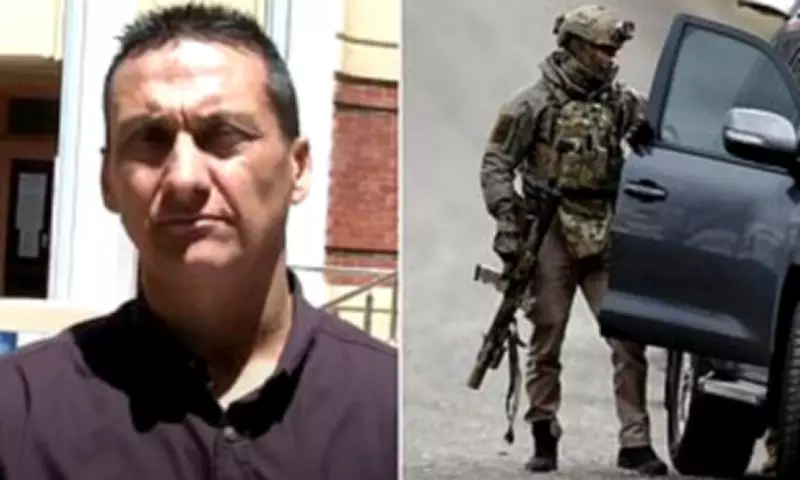
Informant in Cop Killer Case Could Receive $1 Million Reward
The individual who reportedly provided authorities with crucial information leading to the location of cop killer Dezi Freeman before he was shot dead on Monday may now be eligible for a substantial $1 million reward. This development follows a dramatic conclusion to a seven-month manhunt that involved hundreds of police officers and defence force members across Victoria.
Fugitive Located in Remote Structure
Police ultimately killed the fugitive after locating him in a shipping container-like structure near Walwa in northeast Victoria. It is understood that law enforcement received specific intelligence from someone described as close to Freeman, which directed them approximately 188 kilometres northeast from his last known position at Porepunkah in Victoria's high country.
At a press conference confirming Freeman's death, subject to formal identification, Victoria Police Chief Commissioner Mike Bush deliberately avoided commenting on the precise tip-off that led to the discovery. Commissioner Bush also emphasised that any details concerning the reward distribution would remain strictly confidential to protect those involved.

Violent Crimes Prompt Historic Reward
The background to this case involves horrific violence. On August 26, Freeman shot and killed Detective Leading Senior Constable Neal Thompson, aged 59, and Senior Constable Vadim de Waart-Hottart, aged 34, while also injuring a third officer at Porepunkah. In response to these brutal attacks, Victoria Police announced a $1 million reward for information leading directly to Freeman's arrest less than two weeks later.
This reward represented one of the largest sums ever offered in Australian law enforcement history. The search operation itself mobilised approximately 450 police officers and defence force personnel, reflecting the seriousness with which authorities pursued the fugitive. Despite this massive effort, the 56-year-old Freeman managed to evade capture for months until the recent breakthrough.
Police Strategy and Public Appeals
During the extensive manhunt, police spokespersons publicly acknowledged uncertainty about Freeman's whereabouts while appealing for community assistance. Official statements indicated that investigators remained open to several possibilities, including that Freeman might be receiving assistance, surviving alone in difficult terrain, or having died by self-harm.
Detective Inspector Dean Thomas of the Homicide Squad highlighted the unprecedented nature of the reward in September, noting that while rewards for murder investigations are not unusual, this specific offer was unique because it targeted arrest rather than conviction. Detective Inspector Thomas described the $1 million figure as life-changing money that could motivate someone with crucial information to come forward.
He stressed that public assistance would be essential to resolving the case safely, urging anyone with sightings, community rumours, or suspicious activity reports to contact Crime Stoppers immediately. Authorities specifically instructed the public to call emergency services if they directly encountered Freeman, given his violent history and potential danger.
Community Concerns and Intensive Searches
Meanwhile, friends of Freeman expressed concerns to media outlets that the substantial bounty might inadvertently trigger dangerous confrontations between the gunman and civilians. They noted that while Freeman's conflicts historically involved authority figures, cornering him in remote bushland could lead to a deadly escalation with tragic consequences.
Police launched renewed search efforts last month, deploying over 100 officers including interstate specialists for a five-day operation in Mount Buffalo National Park. This followed earlier targeted searches in adjoining areas focused on finding evidence or Freeman's remains. Multiple specialised units participated, including the Search and Rescue Squad, Public Order Response Team, and Drone Unit, alongside NSW Police resources.

Detective Inspector Adam Tilley encouraged local residents during this phase to share any potentially relevant information, maintaining that three scenarios remained equally plausible: Freeman being dead, harboured by someone, or surviving alone outside the search area. He affirmed that police would continue intelligence-based searches and maintain a community presence indefinitely.