Hawaiian authorities are launching a stringent crackdown on illegal fireworks, armed with new legislation passed in the wake of a catastrophic explosion last New Year's Eve that claimed six lives.
Tragedy Sparks Legislative Action
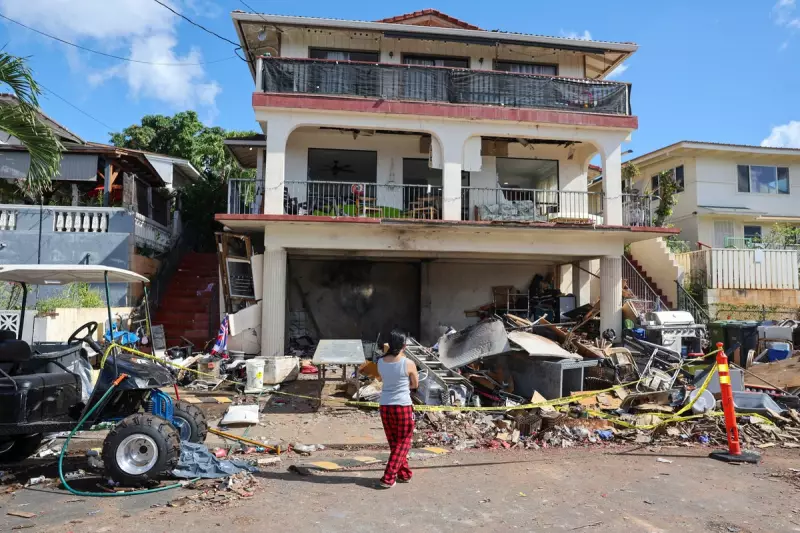
The push for change followed a horrific incident on 31 December 2025 in the Aliamanu neighbourhood. Crates of illegal pyrotechnics tipped over and ignited at a house party, causing a series of terrifying explosions that lit up the sky. The blasts killed six people, including a three-year-old boy, and left more than a dozen others with severe burns.
State Representative Scot Matayoshi said he began drafting legislation the morning after the tragedy. "It affected me a lot," Matayoshi stated. "I couldn't imagine being the neighbour of someone who had basically bombs in their house going off and hurting and killing my kids." He ultimately authored two of five new anti-fireworks bills.

New Powers for Police and Steeper Penalties
The new laws, enacted in July, grant police significantly enhanced powers. Officers can now issue on-the-spot $300 citations to anyone caught setting off illegal fireworks. For repeat offenders, or those whose actions cause serious injury or death, the consequences escalate to felony charges and potential prison time.
Mike Lambert, Director of Hawaii's Department of Law Enforcement, acknowledged the challenge. "We have no delusions that you can have a tragedy New Year's, you can sign a law in July and then not have anything go off the following year," he said. However, he hopes the combination of the recent memory of the accident and the threat of enforcement will deter many.
Matayoshi highlighted a shift in attitude, noting that ten citations had been issued by early December—a marked improvement from zero in previous years. He anticipates this number will rise sharply on New Year's Eve itself.
A Deep-Rooted Cultural Problem
The crackdown targets a persistent issue in the islands. While firecrackers have long been a popular way to mark the new year, the problem has evolved. Over the last decade, powerful professional-grade aerial fireworks, designed for stadium displays, have become commonplace in residential areas.
Lambert pointed out the extreme danger, noting these devices have a 274-metre (900-foot) blast radius but are being detonated in tightly packed neighbourhoods where homes are just feet apart.
The impact extends beyond physical danger. Army veteran Simeon Rojas, who suffers from PTSD after serving in Iraq and Afghanistan, said the sudden explosions trigger flashbacks. "It does rock my heart," he admitted, explaining he now stays indoors with his wife and children on New Year's Eve for safety.
Signs of Progress and Ongoing Challenges
Authorities point to some encouraging signs. A recent amnesty event saw residents voluntarily turn in 227 kilograms (500 pounds) of illegal fireworks. The Department of Law Enforcement has also ramped up inspections at ports, a critical step as many illegal fireworks entering Hawaii have links to organised crime networks.
However, the legal process from the 2025 blast continues. None of the 12 people arrested in connection with the fatal explosion have yet been formally charged, with Honolulu police confirming they are still working with prosecutors.
As the islands approach another New Year's Eve, the hope is that the memory of last year's tragedy, coupled with the tangible threat of fines and felony charges, will lead to a quieter, safer celebration for all residents.