Gerry Adams Faces Historic Court Grilling Over IRA Allegations
In a landmark legal proceeding, former Sinn Fein president Gerry Adams spent five hours on Tuesday being questioned about his alleged membership in the Irish Republican Army (IRA). The 77-year-old politician, appearing in an English court for the first time on such matters, steadfastly denied any involvement with the paramilitary group during the Troubles.
Survivors Seek Symbolic Justice
Three survivors of IRA bombings have brought this civil case against Adams, seeking what they term 'vindicatory damages' of just £1. The plaintiffs—John Clark, Jonathan Ganesh, and Barry Laycock—were injured in separate attacks in London and Manchester in 1973 and 1996. They allege that Adams, due to his purported senior position within the IRA, bears direct responsibility for these incidents.
For these survivors, Adams' testimony represents a culmination of years of effort to hold someone accountable for the violence that changed their lives forever.
Courtroom Drama and Historical Testimony
The High Court has already heard from eleven witnesses, including former soldiers and police officers involved in intelligence operations. These witnesses consistently identified Adams as a leading IRA figure over five decades, with some describing him as the organization's 'de facto leader.'
On Tuesday, for the first time, this evidence was presented directly to Adams himself. The public gallery and an overflow room at the Royal Courts of Justice were packed with reporters and observers, creating an atmosphere of intense scrutiny.
The Beret Controversy and Benny Hill Reference
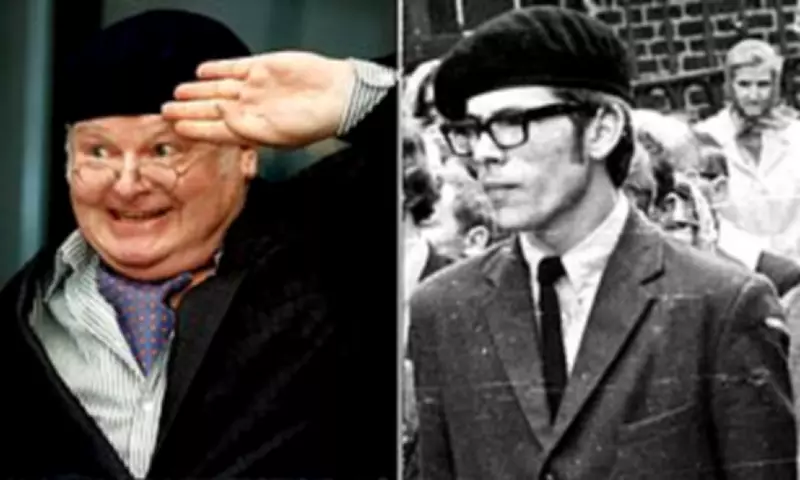
One particularly contentious moment involved a photograph from 1971 showing Adams wearing a black beret at the funeral of an IRA volunteer. When this image was presented as evidence—with prosecutors suggesting the beret was 'part of the uniform' of the IRA—Adams dismissed it as 'no big deal.'
In a remark that drew stifled laughter from the courtroom, Adams insisted that 'Benny Hill wore one too,' referencing the famous British comedian known for his television sketches.
Adams' Sworn Denials
In his sworn witness statement, Adams categorically denied any IRA affiliation: 'I was never a member of the IRA or its Army Council. I have never held any rank or role within the IRA, including on the IRA's Army Council. I have never held a 'command-and-control role' in the IRA and have never been a senior, let alone most senior, figure in the IRA.'
Confronting Testimony from Beyond the Grave
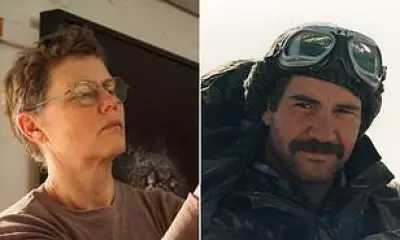
During testy exchanges with Sir Max Hill KC, a former director of public prosecutions representing the claimants, Adams was confronted with posthumous testimony from former associates. This included statements from Brendan Hughes, a former IRA commander and Adams' friend, and Dolours Price, who was imprisoned for her role in the 1973 Old Bailey bombing. Both individuals named Adams as an IRA leader before their deaths.
When questioned about his early release from Long Kesh prison in 1972 to attend ceasefire talks with the British government alongside known IRA figures, Adams claimed this was solely in his capacity as a Sinn Fein representative. Sir Max responded sharply: 'Mr Adams, you are rewriting history.'
Political Activist or IRA Volunteer?
Adams emphasized his lifelong political activism, stating: 'I joined Sinn Fein at 16 and have been a political activist for 60 years. I never 'turned politician'. I was always politically engaged and I am not and was not a member of the IRA.'
He rejected suggestions that he and former Northern Ireland deputy first minister Martin McGuinness were 'IRA volunteers turned politicians,' maintaining his exclusive identity as a political figure.
Passionate Defense of Peace Process
At times, the testimony expanded beyond specific allegations to examine Adams' broader political goals. During one impassioned moment, with his shirt sleeves rolled up, Adams stood and banged his hand on the wood-panelled dock of Court 16 to defend his role in the peace process.
'I hope to live in a united Ireland but, if I do not, I will go to my grave content I have played a role in bringing about a united Ireland,' he declared.
Terminology and Territorial Disputes
Adams also corrected Sir Max when the barrister referred to England as 'the mainland.' 'Stop calling it the mainland,' Adams said. 'I'm from the island of Ireland. This is our nearest offshore island.'
When asked if bombing Britain had 'worked' for him, Adams responded: 'No, we put together a peace process. It was given to John Major's government ... on a plate. There is no reason whatsoever in any person's language why the people who live on the island of Ireland cannot be free from British rule.'
Complex Relationship with IRA Actions
Adams expressed nuanced views about the IRA's activities: 'I don't stand by everything the IRA did. They were my neighbours. If your neighbour was under occupation... some would form themselves to some form of resistance.'
He added: 'I don't distance myself from the IRA. I have been very clear there were dastardly things done that should not have been done.' Adams concluded that he is now 'glad there is peace.'
Adams' Demeanor and Final Remarks
Throughout most of the proceedings, Adams maintained a relatively upbeat demeanor. 'I like English people,' he told the court. 'I don't like the ones that come in uniform or in the dead of night. There is no reason we can't work together for common interests.'
Adams will continue his testimony today. Notably, he has chosen not to call any additional witnesses to corroborate his claims. The trial continues as this historic civil case unfolds in London's Royal Courts of Justice.