Germany Unveils €1 Million Reward in Hunt for Far-Left Extremists Behind Major Berlin Blackout
The German government has taken the extraordinary step of offering a €1 million (£870,000) reward for information leading to the capture of far-left extremists responsible for Berlin's most significant post-war power outage. This unprecedented bounty was announced as part of a broader raft of measures unveiled on Tuesday aimed at tackling left-wing militancy, including enhanced data collection and storage capabilities for security agencies.
Chaos in the Capital: Berlin's Lengthy Power Outage
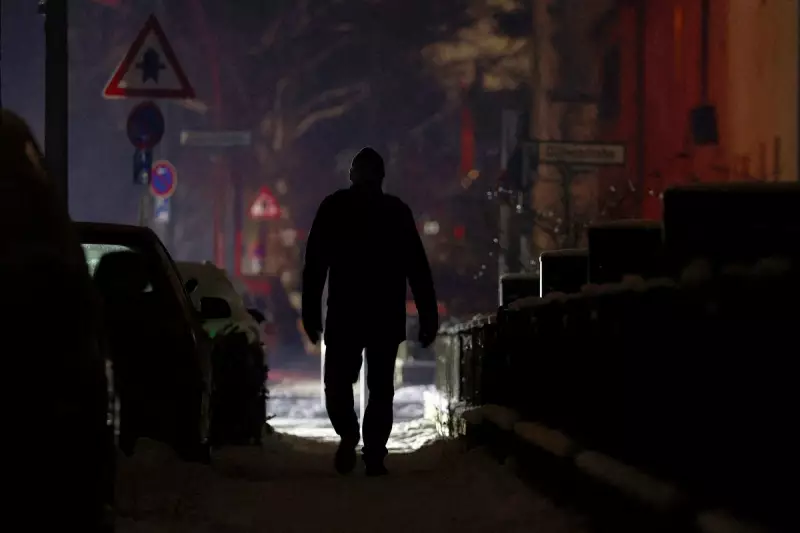
The dramatic blackout, which plunged approximately 50,000 residents in Berlin's affluent southwestern districts into darkness and cold for several days in early January, has been described as an act of terrorism by city officials. The outage, commencing on 3 January and lasting four full days, represents the longest such disruption in the German capital since the Second World War.
It was triggered by a fire that destroyed a critical cable duct running over a canal, severing power to around 45,000 households and 2,000 businesses. With bitter winter temperatures gripping the city, the situation descended into chaos, forcing the German army to be deployed to support residents as heating systems failed, train services halted, and mobile phone networks collapsed.

The Vulkan Group Claims Responsibility
The far-left extremist organisation known as the Vulkan Group, which is officially listed as a left-wing extremist entity by Berlin's intelligence services, promptly claimed responsibility for the sabotage. In a lengthy, politically-charged letter published online titled "cutting off power to those in power", the group stated its aim was to "cause significant damage to the gas industry and the greed for energy."
Berlin's Mayor, Kai Wegner, was swift to condemn the attack on high-voltage power lines as a clear act of terrorism. This incident is not the Vulkan Group's first claimed action; the organisation also took responsibility for an attack on a power pylon near the Tesla factory outside Berlin in 2024, though no arrests have been made in connection with the recent blackout.
Unprecedented Government Response and New Security Measures
Iris Spranger, the Senator for Interior Affairs in Berlin, confirmed the substantial reward during a session of the Berlin State Parliament's Interior Committee. "This is a one-off case," she told lawmakers. "I cannot recall the federal government ever offering a reward of this magnitude under similar circumstances." She emphasised that the government considered this an exceptional but appropriate measure given the severity of the crime.
Concurrently, Germany's Interior Minister, Alexander Dobrindt, insisted that the government would significantly intensify efforts to combat left-wing militants. "Our security agencies will be significantly reinforced in the fight against left-wing extremism," he stated. The domestic intelligence agency is set to allocate more staff specifically to left-wing militancy, and new legislation is being prepared to expand the digital investigative powers of security authorities.
These proposed measures are expected to cover automated data analysis, biometric facial recognition, and the extended storage of IP addresses, marking a substantial shift in the state's approach to monitoring and countering extremist threats.
Political Reactions and Broader Implications
The incident has sparked serious political debate regarding the motivations behind such attacks. Franziska Giffey, a politician with the Social Democratic Party, highlighted the need for a thorough investigation. "The question is, are these just left-wing activist groups acting on behalf of ideology, or is there more to it than that? That absolutely must be investigated," she told POLITICO.

The German government's dual strategy of a high-value financial incentive for public information and a reinforced, technologically advanced security apparatus underscores the gravity with which it views the threat posed by left-wing extremist groups like the Vulkan Group. This response sets a new precedent in Germany's ongoing struggle to maintain security and infrastructure integrity against politically motivated sabotage.