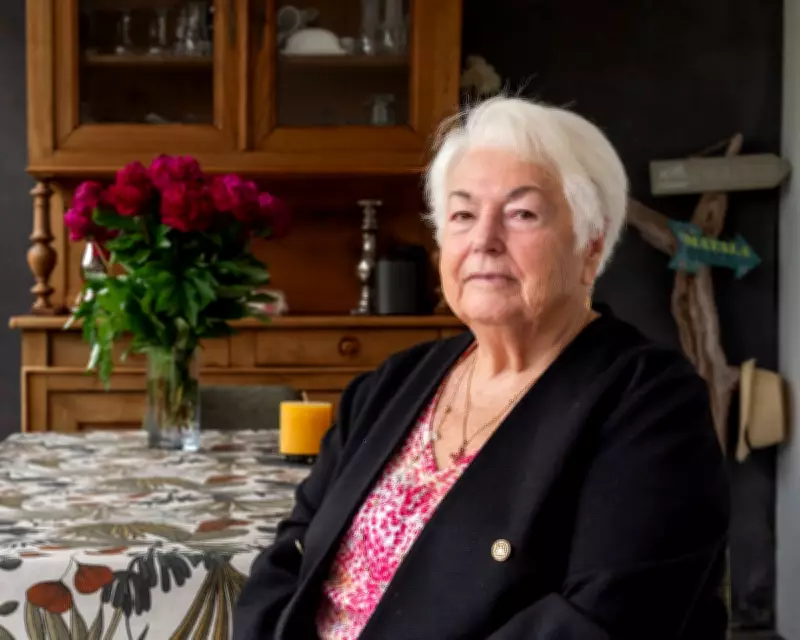
Marie-Thérèse Ross-Mahé, an 85-year-old French citizen, has spoken out about her traumatic detention in a Louisiana immigration facility, describing strict rules, constant shouting from guards, and the cries of children held alongside her.
A Late-in-Life Love Story Turned Nightmare
Ross-Mahé traveled to the United States last year to reunite with her 1950s sweetheart, William B. Ross, a former US soldier she met while working as a secretary at NATO in France. After both became widowed, they rekindled their romance and married in April 2025. She moved into his home in Anniston, Alabama. However, when William died in January, a dispute over his estate arose. His sons redirected his mail, causing Ross-Mahé to miss an immigration appointment.
Arrest and Detention
On 1 April, five men identifying as immigration officers banged on her door and windows at 8 am, handcuffed her, and placed her in a vehicle while she was still in her bathrobe, slippers, and pajamas. She was transferred two days later to a facility in Basile, Louisiana, where she was held with 58 other women, mostly mothers. “Some of them didn’t know where their children were,” she said. “I think it’s terrible for a woman not to know where her children are.”

Life Inside the Facility
Ross-Mahé described the prison as clean with acceptable food, but the treatment was degrading. “The guards could not speak without yelling,” she recalled. “Everybody was talking loudly, so everybody could hear what they were saying. But when silence came, you could hear children crying and even babies crying.” Despite the harsh conditions, she experienced moments of solidarity. “During the night, if my bedcover slipped away, I felt a small hand putting it back,” she said. “I didn’t know who it was, but they pampered me because I was older than them.” The other women called her “Grandma,” and she still wears a handmade friendship bracelet given by a fellow detainee.
International Intervention
The French government took up her case, with Foreign Minister Jean-Noël Barrot publicly calling for her release and criticizing ICE methods as “not in line” with French standards. The probate judge overseeing the inheritance dispute also called for an investigation, accusing one of William’s sons of using his federal position to prompt Ross-Mahé’s detention. Ross-Mahé said relations with her stepsons were warm before William’s death but “transformed” afterward. The stepson has denied any involvement.
US Government Response
The US Department of Homeland Security stated that Ross-Mahé had overstayed her visa and that ICE facilities are “regularly audited and inspected” to comply with national standards. It added: “All detainees are provided with proper meals, quality water, blankets, medical treatment, and have opportunities to communicate with their family members and lawyers. ICE has higher detention standards than most US prisons that hold actual US citizens.”
Aftermath and Changed Views
Family members report that Ross-Mahé is struggling with memory gaps and emotional distress. She is receiving support and intends to seek treatment for symptoms consistent with post-traumatic stress. She continues to think about the women she met, mostly from South America, and says her experience has changed her view of the US. Her husband was a Trump supporter, and they used to watch Fox News together. Now, she is shocked by how immigrants are treated. She once saw the US as a “country of freedom,” but now says the women she met “did not deserve to be detained. Their only fault was to be South American.”