French schoolchildren have been met with a violent police response during recent protests over poor learning conditions, resulting in severe injuries and mass arrests, drawing international condemnation and raising questions about the government's approach to dissent.
Injuries and Arrests During Protests
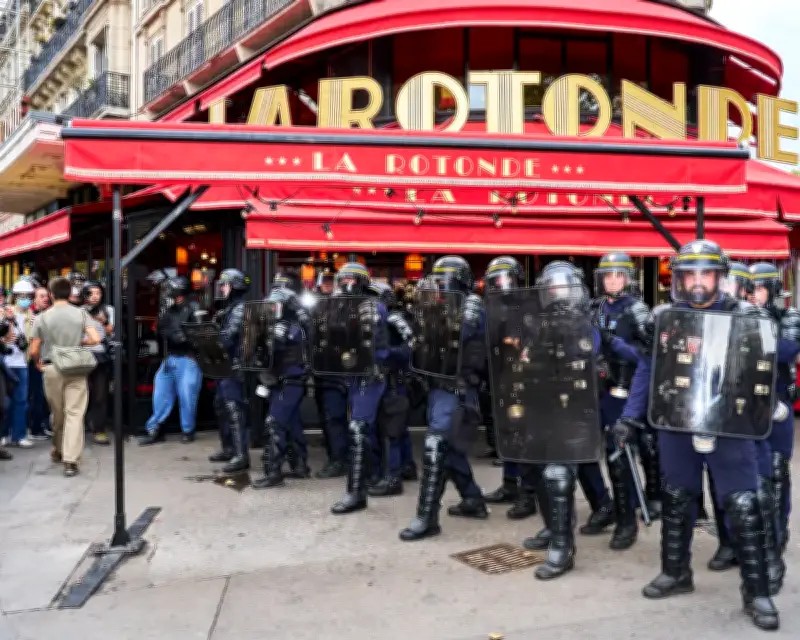
A 14-year-old boy named Eden suffered a fractured jaw and lost teeth after being struck by a teargas grenade. Maël, 16, lost sight in one eye, allegedly from a rubber-bullet launcher. Evan, 15, had his hand blown off by a stun grenade. In Dunkirk, a police SUV allegedly drove at groups of pupils repeatedly, with an officer heard saying, "Come closer, we'll smash their fucking faces in." Children in police custody have reported traumatic experiences with severe psychological and physical effects.
By 8 October, 6,877 people had been taken into police custody, about 80% of them children. On 1 October alone, police made 1,949 arrests, exceeding the highest single-day total since 1961, according to historian Éric Anceau. The Syndicat de la magistrature, a judges' union, says the numbers reflect a determination to crush the movement. Teachers and parents have formed human chains to protect children from the overwhelming police deployment.
International Condemnation and Legal Scrutiny
The human rights organisation Ligue des droits de l'Homme has condemned the "brutalisation of young people" and the threat to their freedom of expression. A UN special rapporteur has called on French authorities to respect protesters' physical safety. Amnesty International has called for a suspension of rubber-bullet launchers at school protests. Climate activist Greta Thunberg travelled to France to support pupils.
France, self-styled as the home of human rights, now faces international legal scrutiny typically seen in authoritarian regimes. The government has invoked a doctrine from its Operational Guide to Urban Violence, treating pupils as internal enemies, rather than addressing the protests as legitimate social protest.
Funding and Conditions in Schools
Students demand €10bn investment for better learning conditions. Economists Élise Huillery and Romane Paris propose investing €11.8bn annually, funded by tax reform on large inheritances, raising €12.7bn in 2026 by taxing only the wealthiest 1% of heirs. This could raise teachers' pay, improve support, and expand university places.
Learning conditions have deteriorated, especially in disadvantaged areas. More than 20m teaching hours were lost in state secondary schools in 2024-25, nearly one in 10 lessons, with over 15m hours lost due to no replacement teachers. In Seine-Saint-Denis, two-thirds of school doctor posts were vacant in 2023. In 2025, 49 suicides were recorded among education staff.
Some schools have unsafe drinking water, rats, cockroaches, filthy toilets, overflowing septic tanks, power cuts, missing furniture, and poor insulation, with temperatures below 14C in winter and 40C in heatwaves. In Mayotte, a school built for 900 pupils accommodates 2,300.
Parcoursup and the Path Forward
The Parcoursup university application system is seen as discriminatory, leaving 126,000 applicants without a place this year. Sociologist Olivier Fillieule says policing protests requires risk assessment, and accepting temporary disorder when immediate intervention risks more should guide policing, noting restraint used with farmers' blockades.
Police have opened internal investigations into 36 allegations of officer violence, but interior minister Laurent Nuñez said he gave forces "no instructions to exercise restraint." This response to young people's dissent is shameful and has no place in a democracy, as such violence towards citizens undermines the principles of a democratic society.