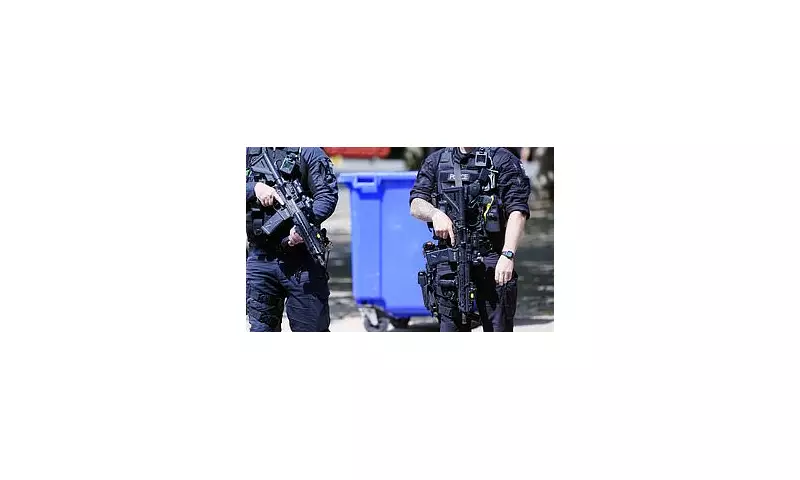
The Metropolitan Police's elite Flying Squad, a unit with a 107-year history of tackling violent crime, is being stripped of its firearms in a controversial cost-cutting measure. The move, part of efforts to fill a £260 million funding gap, has left detectives within the specialised unit 'devastated'.
A Historic Unit Faces a Radical Change
Established in 1918, the Flying Squad was originally tasked with surveillance and intelligence-gathering on robbers and pickpockets, famously using a horse-drawn carriage with covert spy holes. It evolved into the force's first 'mobile' detective unit, making 396 arrests in its first nine months. The squad cemented its formidable reputation by apprehending almost all those involved in the 1963 Great Train Robbery.
Barry Phillips of the Flying Squad Association, representing past and present officers, condemned the decision to disarm the unit. He warned that armed criminals 'will be laughing their socks off' at the prospect of facing unarmed officers. 'This decision to take away guns is the end of the squad as we know it,' he stated, arguing it reduces the iconic team to a 'run-of-the-mill' unit.

The Financial Pressure Behind the Decision
Met Commissioner Sir Mark Rowley has highlighted the 'eye-watering cuts' faced by his already overstretched force. The disarming of the Flying Squad is one part of a wider cost-cutting scheme that has also seen:
- 1,700 officers and staff cut from the force.
- The loss of dedicated officers in schools and the Royal Parks division.
- Only two 24-hour police station front counters remaining open across the entire capital.
Evolving Crime and a Changing Role
The Flying Squad's focus has shifted in recent years as crime patterns have changed, with more resources directed towards drugs, fraud, and cyber crime. Armed robberies are now primarily dealt with by specialist firearms officers, while the Flying Squad is more commonly deployed to handle kidnappings and courier hold-ups.
Mr Phillips acknowledged this changing landscape but insisted the squad remains vital. He argued that many investigations currently handled by other Met units could be performed by the Flying Squad, preserving its expertise. The unit recently demonstrated its effectiveness by charging a man and recovering a stolen £270,000 Banksy artwork in just four days last month.
Despite this success, the removal of its firearms raises serious questions about the unit's future capability and symbolic power as the Met navigates severe financial constraints.