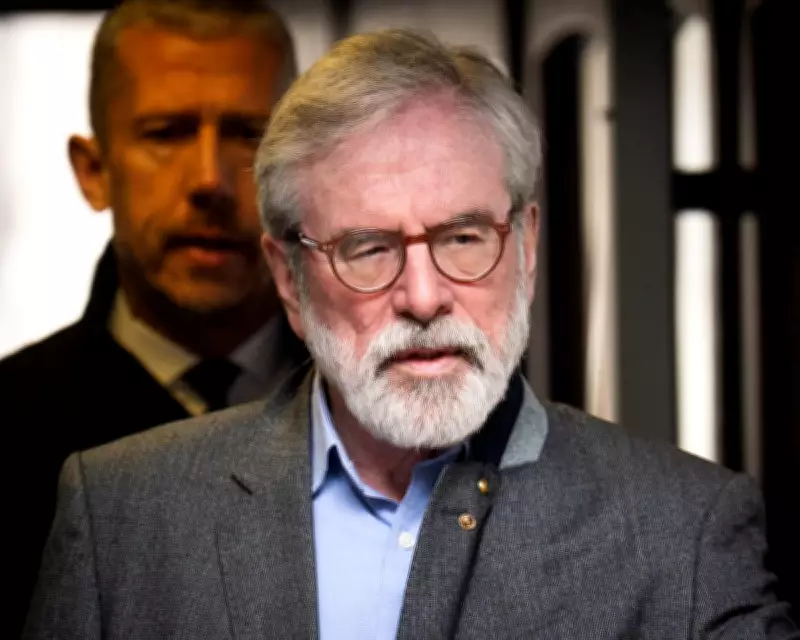
Gerry Adams, the former Sinn Féin leader, arrived at the Royal Courts of Justice in central London on Thursday, where a civil trial is hearing explosive testimony from ex-police officers. Two former members of the Royal Ulster Constabulary have taken the stand, asserting under oath that Adams was the leader of the Irish Republican Army, a claim he has consistently denied throughout his political career.
Civil Suit Seeks Symbolic Damages
Adams is being sued for symbolic vindicatory damages of just £1 each by three plaintiffs: John Clark, Jonathan Ganesh, and Barry Laycock. These individuals allege that Adams was culpable for three separate IRA bombings in which they sustained injuries. The plaintiffs argue that his leadership role made him responsible for the organisation's actions during the Troubles. Adams has repeatedly denied ever being a member of the IRA or serving on its army council, maintaining his innocence in this high-profile case.
Former Detective's Testimony
Tim Hanley, a retired detective from the Royal Ulster Constabulary, provided a written witness statement that left little room for ambiguity. "There is no question in my mind that Adams was the leader of the PIRA [Provisional IRA]; that's what all the intelligence concluded," Hanley stated. He elaborated that Adams led the organisation from the early 1970s throughout the Troubles, only taking a step back in the mid-2000s. Hanley drew a stark comparison, noting, "The PIRA is like the mafia; you never really leave it."

During cross-examination, Edward Craven KC, representing Adams, challenged Hanley's credibility. Craven accused him of "greatly exaggerating both the quantity and quality of evidence" regarding Adams. Hanley firmly denied these allegations. When questioned about why Adams was not arrested earlier if there was reasonable suspicion, Hanley cited finite police resources and operational realities, explaining that suspects often opted for no-comment interviews, making prosecutions difficult.
Anonymous Intelligence Officer's Account
A second witness, anonymised as "witness B" and a former RUC special branch intelligence officer, testified from behind a screen in court. In his written statement, he asserted, "A great deal of intelligence which I read communicated, both explicitly and implicitly, that Adams was a senior member of the IRA army council and the de facto leader of the IRA." He added that all his colleagues in the special branch shared this belief.
Under questioning from Adams' barrister, James Robottom, witness B was asked why Adams was not arrested until 2014 if such intelligence existed, given that IRA membership was a criminal offence. Witness B responded that Adams was "consistently being looked at" for evidence meeting the criminal burden of proof. He noted that prosecutions for IRA membership were rare, usually added on when individuals were caught with weapons or explosives. When pressed on intelligence accuracy, he admitted, "A huge amount of it is wrong. Sometimes the sources are trying to mislead you."
Legal and Historical Implications
This civil trial delves into one of the most contentious aspects of Northern Ireland's history, revisiting the roles of key figures during the Troubles. The testimony highlights the challenges of prosecuting based on intelligence versus admissible evidence in court. As the case continues, it raises questions about accountability, memory, and the legacy of conflict in the region.
The trial is set to resume on Monday, with further proceedings expected to scrutinise the evidence and testimonies presented. Observers note that the outcome could have significant symbolic weight, even with minimal financial damages at stake.