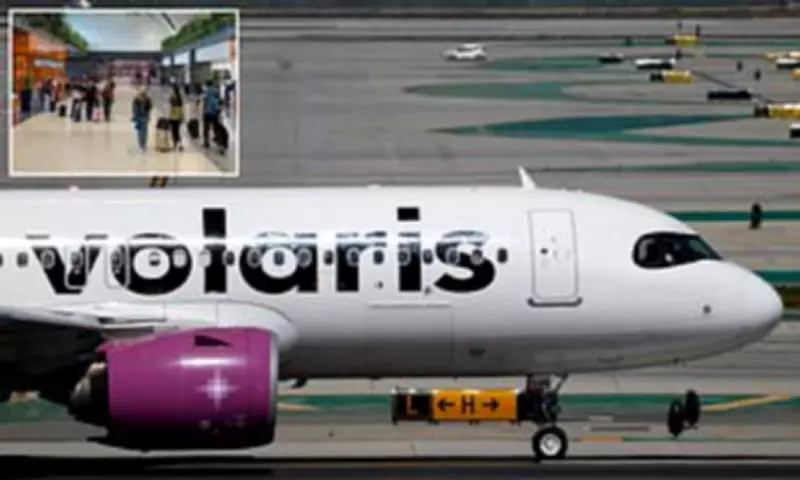
An elderly woman died suddenly while flying from Illinois to Mexico after a mid-air medical emergency, prompting an emergency landing. María Yolanda Guerrero Medina, 72, from Morelia, died aboard Volaris flight 7771 from Chicago Midway International Airport to General Francisco Mujica International Airport on Saturday. She was traveling with her husband.
Medical History and Incident
Medina had lived with kidney failure and diabetes for approximately 12 years, according to Spanish-language network Univision and newspaper El Norte. The exact details surrounding the fatal emergency remain unclear.
She reportedly began to deteriorate rapidly as the plane entered Mexican airspace less than two hours into the flight, which departed at 3:13 pm. After other travelers alerted flight staff to her condition, the captain contacted authorities and requested authorization for an unscheduled landing.

Emergency Landing Response
The aircraft landed at Monterrey International Airport in Mexico just before 5:30 pm, according to FlightAware data. Medical and security staff were already in place on the runway. Emergency personnel determined shortly after landing that Medina had no vital signs, with a preliminary report pointing to natural causes of death.
The sudden medical emergency prompted an intense mobilization at the Monterrey airport terminal that lasted several minutes, as authorities carried out procedures and protocols to respond to the situation.
Aftermath and Continuation of Flight
According to WLS News, the aircraft was replaced with another plane so the remaining passengers could continue their journey to their destination. The Daily Mail has reached out to Volaris and Monterrey International Airport for comment.
In-Flight Death Statistics and Procedures
While the chances of dying on a plane remain low, a 2023 study found the mortality rate to be 0.21 deaths per million passengers from in-flight medical emergencies, according to Flight Delayed. For perspective, 2.2 billion travelers flew in 2021, meaning there were roughly 460 deaths aboard aircraft that year.
Deaths thousands of feet in the air are most often sudden, with the most common causes being pulmonary embolisms, cardiac arrests, and respiratory issues.
Handling of Deceased Passengers
Last year, Ben Vos, who has worked at an airport mortuary for 35 years, told the Daily Mail what happens when travelers die abroad or onboard a flight. Along with a representative who handles border control and a coroner, Vos will enter the plane after passengers have disembarked. The deceased passenger will be placed into a body bag and removed from the aircraft through a rear emergency exit behind the wings and transported to the mortuary without other passengers noticing. This ensures respect and privacy for the deceased and their loved ones.
A former flight attendant previously revealed that dealing with an in-flight death is very stressful and can be traumatic for everyone involved. Jay Robert told HuffPost: 'A death on board at 35,000 feet is one of the most feared situations for flight attendants, often because it follows a medical emergency, which is already very stressful to manage. When a medical emergency results in death, it can be a very traumatic experience for everyone on board, especially if the passenger is young.'