Families of Black Police Victims See Familiar Pattern in Minneapolis Shootings
The fatal shootings of white protesters Alex Pretti and Renee Good by federal officers in Minneapolis have followed a distressingly familiar script for Black Americans who have endured similar tragedies. As authorities moved swiftly to disparage the victims, only to be contradicted by emerging evidence, families of Black individuals killed by police are experiencing a profound sense of déjà vu.
A Painful Echo of Past Injustices
Black families who have lost loved ones to police violence say the killings in Minnesota have resurrected painful memories of their own battles for justice. In these cases, law enforcement agencies often spin narratives suggesting officers had no alternative but to use lethal force, while making little effort to correct subsequent misstatements that could compromise fair judicial processes.
Timothy Welbeck, director of the Center for Anti-Racism at Temple University, noted it took the deaths of Pretti and Good to again highlight this systemic issue. "Black people have leveled a critique against law enforcement for as long as we've had policing in America," said Welbeck, who also described as "painfully ironic" that these deaths occurred in Minneapolis, where the murders of George Floyd and Philando Castile previously brought national attention to police violence.

Immediate Justifications and Familial Anguish
Clarence Castile, uncle of Philando Castile, found it eerie to hear federal authorities make immediate conclusions about the Pretti and Good shootings. "Right away they backed up their officers and said they had justifiable shoots, their lives were in danger, they feared for their lives," Castile recalled. "I heard the same thing when that cop shot my nephew."
He criticized the rush to judgment, stating, "We know, from the beginning, that they haven't taken the time to investigate. They're just putting out something because they think they have to respond. Sometimes the best response is no response."
Law Enforcement Communication Protocols
Leonard Sipes, a veteran of public affairs for federal and state law enforcement agencies, emphasized that standard practice for such incidents is to simply state they're under investigation. Sipes typically waited 24 hours before releasing information publicly, arguing that "getting the story correct is vital to the reputation of the agency" and that "a rush to judgment can violate" the obligation to protect investigation integrity.
Victim Portrayals and Official Narratives
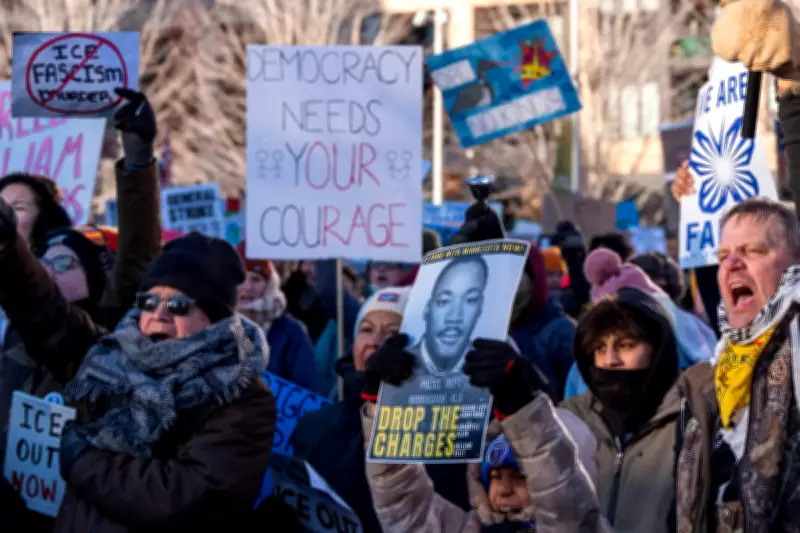
The killings of Pretti, a Veterans Affairs hospital ICU nurse, and Good, a poet, mother and wife, quickly became rallying cries for Minnesotans protesting increased federal law enforcement presence. Following their deaths, administration officials from Homeland Security Secretary Kristi Noem to President Donald Trump labeled them as far-left radicals with malicious intent.
Pretti's family denounced these claims as "sickening lies," noting videos showed him holding his phone, not a gun, when tackled by federal agents before being shot. Good's family remembered her as "the beautiful light of our family" who "brought joy to anyone she met." While the Justice Department has announced a civil rights probe into Pretti's killing, officials haven't retracted claims that both were extremists intending to harm federal agents.
Frustration Over Selective Outrage
Some Black activists and police reform advocates expressed frustration that outrage over the Pretti and Good cases often ignored similar dynamics when victims were Black. Melina Abdullah, co-founder of Black Lives Matter Grassroots, clarified that Black racial justice organizers do mobilize when white people die at the hands of law enforcement, mourning Pretti and Good while noting "what they suffered is what Black people suffer every single day."
Justin Hansford, a Howard University law professor, suggested the Minneapolis shootings should remind all Americans that injustice disproportionately impacting Black people can affect them too, noting "Black folks were always the ones whose experience signaled to the rest of the country what was soon to come."

Shared Trauma and Narrative Control
Tiffany Crutcher, twin sister of Terence Crutcher who was killed by Tulsa police in 2016, couldn't watch videos of the Minneapolis shootings, finding authorities' comments re-traumatizing. She recalled how law enforcement made snap judgments about her brother, who was unarmed when shot, with video footage capturing an operator saying he "looks like a bad dude."
"In our trauma and shock, we had to control the narrative about who Terrence was," Tiffany said. "While we're grieving and mourning, at the same time, we have to rally and let the world know that our loved one did not deserve to die." She believes the Pretti and Good shootings are helping people recognize unequal justice for police killing victims, noting a shift in public perception toward law enforcement narratives.
"Our voice is all that we have," she concluded. "And we made a conscious decision that we were going to utilize our voice and get ahead of the harmful narratives."