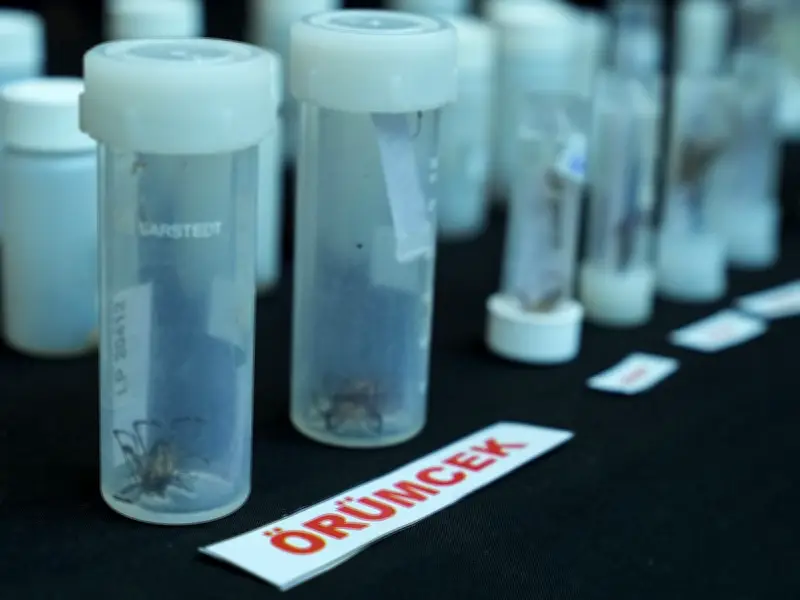
Customs agents are increasingly intercepting illegally smuggled spiders as a bizarre 'Pokemon-style' collecting craze sweeps the UK, with arachnids fetching up to £500 each on the black market. The trade is part of a global illegal wildlife trade worth £17 billion, according to authorities.
Surge in Seizures and Arrests
Border Force reports that illegal animal smuggling has skyrocketed by 73% since 2024, with arachnid trafficking on the rise since 2023. In May 2026, Radoslaw Szymanski, 35, of Northern Ireland, pleaded not guilty after police allegedly intercepted him with 2,000 live spiders at a ferry terminal in Birkenhead. Officers claim he lacked proper paperwork to import them for commercial sale.
Szymanski, believed to run 'Creatures From The North' — one of Britain's largest spider-selling websites — faces trial next year for allegedly attempting to import tarantulas protected under the Convention on International Trade in Endangered Species (CITES). Violations can result in up to seven years in prison.

Collector Mentality: 'Like Pokemon'
Online forums are rife with enthusiasts sharing tips. On one tarantula board, a former customer wrote: 'I don't condone the illegal practices going on in this hobby (smuggling, brown boxing etc) but there will be no moral outrage from myself about it either. Others will feel differently I'm sure and that is cool. Regardless, the smugglers will keep on smuggling, the buyers will keep on buying and every few years a dealer will get hit hard by the law. As long as there is a hobby, this wheel will keep turning.'
Spider expert Alice Hughes told the BBC: 'These forums show that people collect spiders a bit like people collect Pokemon – they want to catch 'em all.' Dr Tim Cockerill, a fellow of the Royal Entomological Society, told The Sun that spider fans suffer from 'stamp collector syndrome'. He said: 'In the UK, spider collecting is a multi-million pound industry and it's a really popular hobby. The worst thing for spiders is that because they are quite robust animals they can survive most conditions. So their evolution that has engineered their success is sort of their downfall when it comes to being smuggled. A tarantula can be perfectly happy in a fish tank in a way, as long as they're kept warm enough and fed.'
Ecological and Ethical Concerns
Biologists warn that removing spiders from the wild creates a dangerous ecological domino effect. Dr Sara Goodacre from the University of Nottingham said: 'People need to understand you can't just take something from the wild because it's unique, looks beautiful and you can make money from it. You could cause damage to the rest of the ecosystem by removing that creature when you didn't need to and that can have knock on effects. The natural world relies on every bit in the ecosystem, those spiders were doing an important job and now they can't.'
Dr Goodacre blasted the ethics of modern collectors, stating: 'We can't just go round raiding other parts of the globe like the Victorians did. Can we be better than that please? Referring to spiders like Pokemon is such a great way to put it. People want the rarest Pokemon. I want to take their heads and knock them together and ask what they're teaching the next generation about just taking things. Often these people are taking animals knowing most won't reach the other end of the journey. It shouldn't be acceptable to do that. These are creatures confined to a small place, being squashed, having to deal with humidity and temperature changes. All these things will stress the spiders out, just so someone can make a quick buck at the other end.'
Government Response
Globally, wildlife crime is a massive £17 billion industry, trailing only firearms, drugs, and human trafficking. Department for Environment, Food and Rural Affairs Minister Mary Creagh said: 'The illegal wildlife trade is vile and destroys the natural world. By tackling wildlife crime we're sending a clear message to the criminal gangs that this government will strain every sinew to bring those involved to justice.'