Inside Andrew's Custody: Police Station Conditions Revealed After 11-Hour Detention
Footage from inside the police station where Andrew Mountbatten-Windsor was held provides a revealing glimpse into the conditions the shamed former prince likely experienced during his custody. The former Duke of York was questioned at the Aylsham Police Investigation Centre for eleven hours yesterday following his arrest on suspicion of misconduct in public office.
The Custody Process: Standard Procedure for All
While specific details of Andrew's treatment have not been officially released, standard police procedures indicate his photographs, fingerprints, and DNA swabs would almost certainly have been taken. He was probably offered a cup of tea and one phone call, receiving treatment identical to most individuals taken into custody.
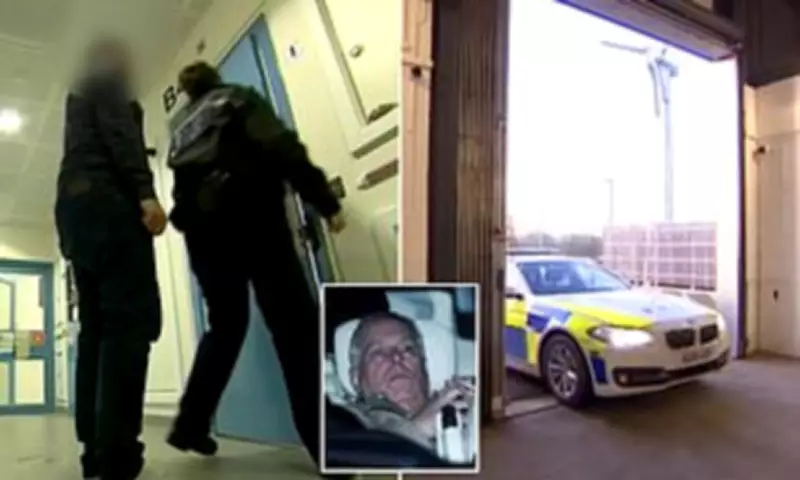
A clip filmed at Aylsham police station in 2017 offers fresh insight into the custody conditions Andrew likely faced when detained there on his sixty-sixth birthday. Originally created by BBC Look East to explain how police handle drink-driving suspects, the process depicted is remarkably similar for anyone held under arrest.

From Arrival to Cell: A Detailed Journey
The footage begins with a police car entering the station through a large security gate. The suspect is then escorted to the front desk to speak with a custody sergeant before being placed in a small cell. These cells are typically fitted only with a bed featuring a thin blue mattress and pillow before the heavy door slams shut.
Built in 2011 to replace an outdated former station, the Aylsham Police Investigation Centre is a functional, high-capacity facility containing specialised interview rooms and a comprehensive suite of custody cells. Yesterday, retired Metropolitan Police sergeant Graham Wettone, author of How To Be A Police Officer, described the likely conditions during Andrew's stay.
'It'll be no bigger than a box-room in a three-bed semi,' Wettone told the Daily Mail. 'There's no facility for any preferential treatment in any custody suite I've ever been in. You can't have an upgraded room, you can't get upgraded meals - you get what's there. Microwaved.'
The Arrest and Initial Procedures
Andrew was arrested shortly after 8am yesterday when police descended on Wood Farm in Sandringham, Norfolk, where he has been living for the past fortnight. Although he has since been released from custody, his ordeal would have begun with transportation to an unspecified location for questioning.
First, he would have been brought before the custody sergeant at the police station. The arresting officer would have explained the reason for arrest - suspicion of misconduct in public office - while stating the time and location of arrest. Andrew would have been asked if he understood why he was detained before having his rights read to him.
These rights include access to a solicitor and free legal advice, along with the right to have somebody informed of his arrest, typically a next-of-kin. Andrew would have been entitled to speak with the duty solicitor if unable to summon his own counsel.
Search and Assessment Procedures
Following this, he would have been searched and given a medical and welfare assessment. Andrew would have been asked about medication usage, physical problems, and a series of questions regarding potential mental health issues. He would have also undergone a thorough search, although a strip search would unlikely have been necessary given the nature of the alleged offence.
Likely confiscated items would have included belts, ties, and shoelaces for his protection and that of police staff. 'Even if they pose no risk, I took the shoelaces off every single person in custody when I was a custody officer,' Wettone explained. 'If you haven't met them before, they are in the box of being an unknown risk. The only risk you can assess is because of their answers to you, which might not be true.'

The Stark Reality of Custody Cells
While some suspects are ordered to change into paper suits, Andrew would unlikely have faced this requirement as forensic evidence would not have been necessary for this case. The cell itself would have been bare, with Wettone noting: 'He's got a toilet and a mattress on the bed. There's nothing in there at all.'
The bed is actually a bench about knee high with a vinyl-covered mattress approximately three inches thick. He would also have been given a blue blanket for warmth. The toilet would be partially obscured by a half-height wall offering minimal privacy, though modern custody suites typically feature CCTV monitoring.
Then the heavy door would have slammed shut behind him. 'They make a huge, loud bang when they go across,' Wettone described. 'It's a lonely experience. It's quite levelling, because the door slams and you're in there on your own, four walls to look at. There's no entertainment or anything. You haven't got your phone with you. You've normally got nothing to read apart from the Codes of Practice if you want something to read. The cells are bare, nothing at all. You are sitting there in just your clothes.'
Royal Family Response
Andrew's elder brother King Charles has stated 'the law must take its course' after expressing his 'deepest concern' over Thursday's arrest. Charles revealed the police would have his 'wholehearted support and co-operation' after his younger brother was held on suspicion of misconduct in public office.
The Prince and Princess of Wales also support the King's unprecedented statement following the arrest of William's uncle Andrew at Sandringham. In a statement released by Buckingham Palace at midday, the King said: 'I have learned with the deepest concern the news about Andrew Mountbatten-Windsor and suspicion of misconduct in public office. What now follows is the full, fair and proper process by which this issue is investigated in the appropriate manner and by the appropriate authorities. In this, as I have said before, they have our full and wholehearted support and co-operation. Let me state clearly: the law must take its course. As this process continues, it would not be right for me to comment further on this matter. Meanwhile, my family and I will continue in our duty and service to you all.'