Toronto's Tow Truck Turf Wars: A Violent 'Well-Known Secret' Exposed
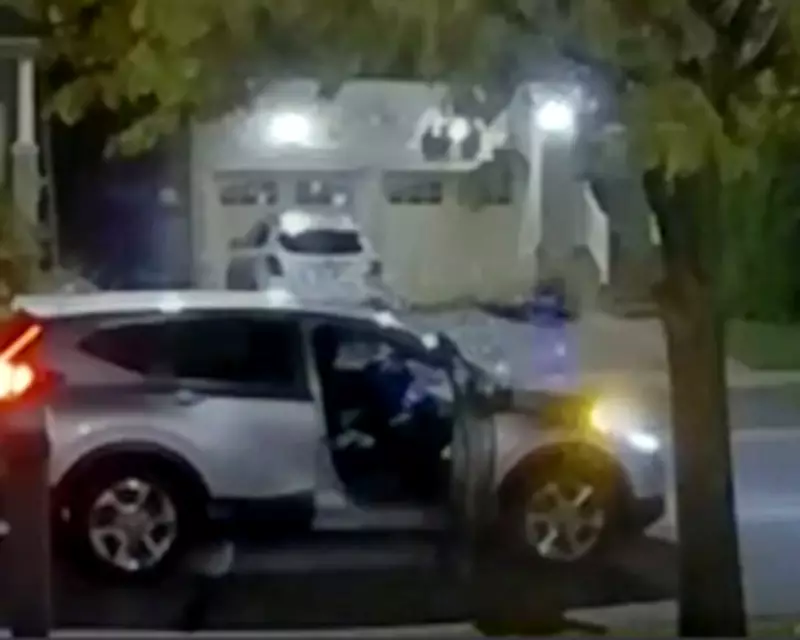
When Cameron relocated his family to a quiet suburb north of Toronto last year, neighbours assured him it was one of the safest streets around. The area boasted cream-brick houses with manicured lawns, where children played freely in summer and built snow tunnels in winter. However, this idyllic vision was shattered when a house across the street became the target of four shootings within five months. The most recent incident occurred in early February, as Cameron was leaving for work. Moments after his children had departed for school, gunfire ripped into the neighbour's garage, and a dark SUV sped away into the distance.
"Whoever was doing this was trying to send us a message, and they did," Cameron remarked, peering cautiously from his garage. "This street is now empty, like a ghost town."
Police Link Violence to Towing Industry
Authorities state that this daylight shooting is the latest in a string of violent episodes connected to Toronto's towing sector, an industry long plagued by allegations of organised crime involvement and aggressive turf battles. This year alone, nearly two dozen vehicles have been set ablaze in attacks on tow truck repair sites. In June of last year, Toronto police investigating a towing network dubbed "The Union" laid over 100 charges, including drug trafficking, extortion, and 52 counts of conspiracy to commit murder. In the nearby municipality of Peel, investigators seized more than $4 million in assets, such as bulletproof vests, 586 rounds of ammunition, and 18 tow trucks.

A recent police corruption investigation, known as Project South, has raised serious allegations of collusion between officers and organised crime figures tied to towing networks and drug trafficking. Investigators claim that serving officers leaked sensitive information to hitmen and even assisted in a plot to murder a corrections officer at a maximum-security jail. The probe also provided an explanation for the shooting on Allison Ann Way: court records indicate that a civilian charged in the investigation, Elwyn Satanowsky, is accused of arranging shootings on the street and discharging a firearm recklessly.
How Towing Fuels Criminal Activity
Lead investigators have asserted that Satanowsky, who had connections to the towing industry, obtained information from police officers to facilitate criminal acts. Sonya Shikhman, Satanowsky's lawyer, declined to comment on the charges or his affiliation with the towing sector. On 6 March, a judge denied Satanowsky bail, though none of the charges have been tested in court. Police noted that the house targeted in the Allison Ann Way attack was linked to Alexander Vinogradsky, a towing boss and alleged crime lord, who was shot dead in a North Toronto shopping plaza in 2024. Vinogradsky himself had been accused of ordering targeted assassinations of rivals.
These allegations have intensified scrutiny of the rules governing accident towing, which experts say make the business particularly attractive to organised crime. What starts as a race to crash scenes has evolved into a sprawling pipeline of inflated repair contracts, insurance claims, and extortion, driving violence that extends far beyond the roadside. In much of the greater Toronto area, accident towing still operates on a "first on scene" basis, where first access can generate thousands of dollars, sparking fierce competition as rival groups monitor emergency calls and dispatch "chasers" to collisions. This race can sometimes cause secondary crashes, and fights at collision scenes are common.
Doug Murray, a veteran tow operator, explained that a single call can be worth over $10,000 once storage, repair work, and insurance claims are secured. "The more money involved, the more aggressive the competition becomes," he said. This aggression has manifested in arson, assault, and murder allegations. Investigators also allege that unscrupulous towers have defrauded insurers by staging crashes in partnership with complicit auto-body shops. According to the insurer Aviva, the number of staged crashes in Canada rose by nearly 400% in 2025 compared to the previous year.

Impact on Motorists and Youth Exploitation
The initial tow often marks the beginning of a chain of fees and kickbacks. An unwitting driver, still shaken from a crash, may be directed toward repair shops, car rental agencies, injury lawyers, and even physiotherapists. Each recommendation can yield a lucrative referral fee for the operator, Murray noted. Ultimately, motorists bear the costs through inflated insurance premiums. Another company owner stated that criminal groups operate with coordinated radio networks and ruthless internal hierarchies, outmatching legitimate providers. "As long as 'first on scene' remains the system, the violence will persist," Murray warned.
Efforts to curb the violence have focused on reforming how towing jobs are assigned. On Ontario's major controlled-access highways, business operates differently under new legislation, where the province contracts accredited providers dispatched through a vetted system, limiting competition at collision points. Industry experts say that while these reforms have reduced clashes on highways, flare-ups have condensed to urban areas, where collision towing remains less regulated.
Gary Vandenheuvel, head of the Professional Towing and Recovery Association of Ontario, argued that the highway model shows how tighter oversight can help reduce criminal infiltration. "The current system clearly isn't working. We need to make it safer for towers and members of the public," he said. Vandenheuvel described most of the city's towers as legitimate, attributing the violence to a small number of "bad actors".
Global Patterns and Youth Involvement
Yvon Dandurand, a criminologist specializing in international organised crime, noted that the dynamics in the greater Toronto area are "far from unique", pointing to similar patterns in cities like Melbourne, Johannesburg, and Cape Town, where towing operators have been involved in shooting and intimidation campaigns. In the United States, cities including Detroit, Miami, and New York have witnessed comparable turf wars. In a 2021 case, three former New York City police officers pleaded guilty to accepting bribes from towers and using a database to lead businesses to crash victims.
In Toronto, however, the consequences are not evenly distributed. Police and community advocates warn that young people are being ensnared into these networks. Among those arrested in Project South were two individuals under 18, while on 24 March, a 21-year-old was arrested in connection with a separate turf war after nearly 10 months on the run following a mass shooting at a pub. All 10 suspects were aged between 15 and 22. For towing gangs, roles such as enforcers and "chasers" are often filled by teenagers serving at the lowest rung of the hierarchy.
Marcell Wilson, a former gang member and founder of the One by One Movement, which supports young people affected by street violence, stated that youth are treated as expendable labour within organised crime groups. He described Project South as reflecting a broader "well-known secret". In a statement, a Toronto police spokesperson expressed concern: "It's always a concern for police when young people become involved in criminal activity. Organized crime groups often target young people because they are more vulnerable to manipulation, may be seeking money or belonging, and are sometimes perceived by offenders as less likely to attract the same level of scrutiny or consequences as adults."
Wilson emphasised that the links between corruption, organised crime, and youth violence have long been visible. "Guns are not manufactured in the projects," he said. "Follow the chain – how does it get there?"