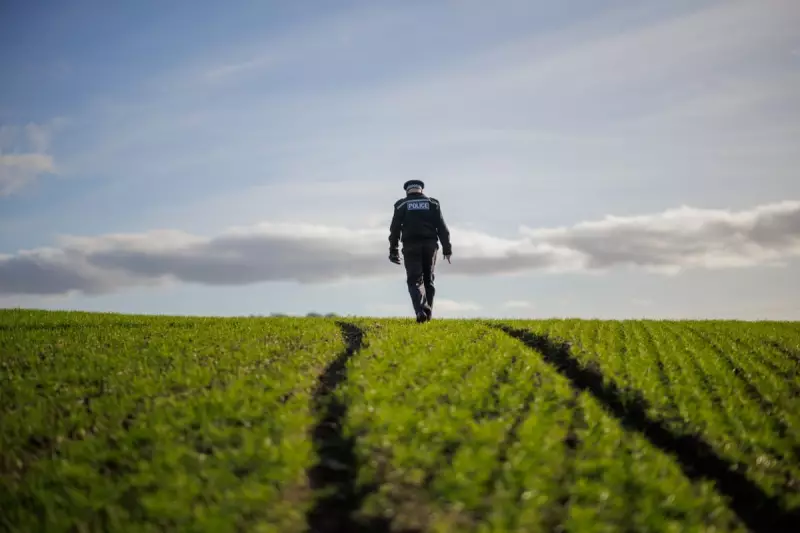
On a cold, bright afternoon in Wiltshire's Vale of Pewsey, a scene of rural tranquillity masks a growing epidemic of violence. While brown hares nibble in fields of winter barley, deep tyre tracks gouged through the crops tell a different story—one of criminal gangs, illegal gambling, and terrorised landowners after dark.
A Daily Battle in the Countryside
This picturesque corner of the West Country is a hotspot for hare coursing, a brutal activity where gangs use dogs—typically greyhounds or lurchers—to chase and kill hares. Bets are placed on how many turns it takes for a dog to catch its prey, with some chases livestreamed for a global gambling audience. Inspector Andy Lemon, Wiltshire Police's tactical lead for rural crime, fears the escalating violence will soon lead to serious harm. "I fear it's only a matter of time before a farmer or landowner here is seriously injured defending their property," he warned, urging them not to take matters into their own hands.
The statistics paint a stark picture of a crime wave. Over the past year, hare coursing and poaching offences in Wiltshire have risen by more than 20%. Since January 2025, police have made 30 arrests—a staggering 500% increase compared to the whole of 2024. Yet, many more offenders evade capture.

Gangs, Gambling, and Global Links
Gangs travel from across the UK to target Wiltshire, where post-harvest open fields provide the perfect, exposed playground for their dogs. "We think hare coursing is probably taking place somewhere in the county every day," stated Inspector Lemon. The criminals use networks of paths and byways, accessing remote spots with 4x4 vehicles and proving adept at disappearing. "When they go off road, it can be like looking for a needle in a haystack," Lemon admitted.
The crime's roots, however, extend far beyond local fields. Philip Wilkinson, the Police and Crime Commissioner for Wiltshire and Swindon, describes coursers as "enmeshed in international criminal networks." He has witnessed livestreams entering China and seen intelligence linking participants to the theft of high-value farm equipment, which is often smuggled to Eastern Europe. "What we're seeing is the ends of the tentacles," he said. "If you swim upstream through those networks, if you go far enough, you get to China and eastern Europe. It's all overlapped and linked."
Farmers Under Siege and a Conservation Irony
For those living and working on the land, the impact is relentless and deeply personal. One Vale of Pewsey farmer described how his land was targeted ten times in a single month. "We've spent an absolute fortune on ditching and fencing, extra CCTV and lighting," he said. His nightly ritual involves driving the farm's perimeter to check security, a task that worries his wife every time he leaves. Defences like concrete-filled troughs and fallen trees across gates are often simply smashed through.
The consequences are severe and sometimes sinister. Incidents include:
- A farm worker injured after being knocked down by a car.
- A barn set alight in retaliation.
- Cows killed on a road after fencing was destroyed.
- A video circulated of a farmer being surrounded and rammed by vehicles in his own field.
- Animal corpses, including lines of dead hares, dumped as macabre warnings.
Ironically, one farmer pointed out that successful conservation efforts have boosted hare populations, which in turn has attracted more coursers. "I've heard of some farmers thinking of shooting hares to stop hare coursing, which is so sad," she lamented.
The RSPCA's David Bowles emphasised the inherent cruelty, stating the activity ends with dogs ripping hares to bits. Although banned under the 2004 Hunting Act, with strengthened sentences recently introduced, enforcement is a constant challenge. However, Bowles noted that coordinated action between police, the RSPCA, the NFU, and the Countryside Alliance is showing "the first signs of the crackdown actually starting to work during 2025."
A grim side-effect is the abandonment of dogs. Wiltshire Council reported collecting 20 lurcher-type dogs in just three months in 2025, many underweight or injured, with only three claimed by owners.

As Inspector Lemon left the Vale of Pewsey, his radio crackled to life with a new alert: dogs found in a car on Salisbury Plain. "Probably hare coursing," he said. The daily hunt for the hunters was beginning once more.