Sheffield Activists Reject 'Jew Hunt' Allegations in Contentious Doorstep Campaign
Activists from the Sheffield Apartheid-Free Zone (AFZ) have firmly denied accusations that they engaged in what critics labeled a 'Jew hunt' while conducting door-to-door campaigns urging residents to boycott Israeli products. The group maintains they merely handed out informational leaflets and did not intimidate anyone during their outreach efforts.
Confrontation Escalates to Physical Altercation
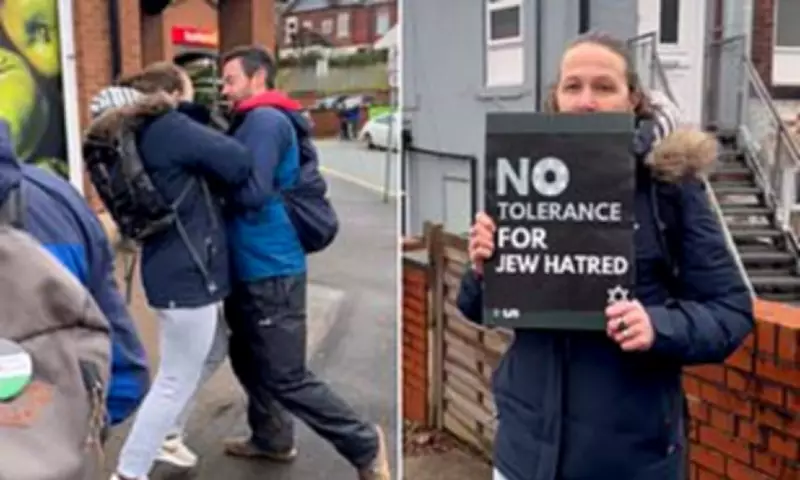
The situation turned volatile last Sunday when campaigner Jean Hatchet and her partner intercepted AFZ members, including Jon Cowley, during their canvassing activities. Ms. Hatchet, who is not Jewish, confronted the activists after being alerted to their campaign through social media platforms. During the heated exchange, Ms. Hatchet and her partner repeatedly shouted 'Jew Hunt' at the three male activists, with one man allegedly headbutting Ms. Hatchet's partner during the confrontation.
Mr. Cowley described the accusations as a 'conspiracist fantasy,' stating: 'The only people we're interested in are those who are generally supportive of Palestine but not yet involved and don't know what they can do to help. If someone isn't interested in the boycott, we say "sorry to bother you" and move on.' He emphasized that the group never asks about religion and does not aim to persuade self-identified Zionists.

Police Investigation Underway
South Yorkshire Police have confirmed they are investigating multiple reports of assault from the incident in Woodseats, Sheffield. Authorities are also examining whether video footage circulating on social media has been edited. NPT Inspector Amy Mellor stated: 'I am aware that videos about yesterday's incident in Woodseats are circulating on social media, and that some of these may have been edited. Our officers are working hard to understand the full circumstances.'
The police have increased patrols in the area to reassure concerned residents following the altercation. Inspector Mellor added: 'I know that residents may be concerned, and I would like to reassure you that our officers have been in the area over the weekend and will be back today to provide reassurance to the community.'
Broader Context of Boycott Campaigns
The Sheffield AFZ represents one of numerous grassroots organizations that have emerged recently encouraging consumers to avoid Israeli businesses amid the ongoing conflict between Israel and Hamas in Gaza. These groups advocate for economic pressure through boycotts, distributing materials that argue: 'When we choose not to buy Israeli goods, it hits them where it hurts most - their economy. Boycotts have worked before. They were a powerful factor in ending South African apartheid and together we can make them a success again.'
However, critics express concern that such campaigns may inadvertently foster antisemitism or create fear among Jewish residents when activists appear at their doorsteps. Jonny Feldman of Sheffield Jews Against Israeli Apartheid acknowledged: 'I accept that that's what they may feel but they only need to tell us to go away and we will go away.'
Conflicting Accounts and Community Impact
Ms. Hatchet provided a different perspective, claiming the activists were 'targeting a specific set of people [Jews] even if they weren't naming them.' She suggested the group might be recording addresses of residents who decline to support their boycott, though no evidence supports this claim. Ms. Hatchet argued: 'It makes no real difference what they think they are doing. They are taking addresses of people who don't agree with their point of view.'
AFZ activists described their typical approach as asking residents to sign pledges boycotting Israeli-grown fruits and vegetables while offering window posters for display. A group member noted: 'We often find people are already boycotting and delighted that people are coming round and asking about it. The online response doesn't reflect the one we get on the street.'
Mr. Cowley reflected on the incident's aftermath: 'We hoped if we kept quiet and did nothing, it would die down. But clearly it won't.' The confrontation has highlighted deepening community tensions surrounding Middle East politics and raised questions about appropriate protest methods in residential neighborhoods.