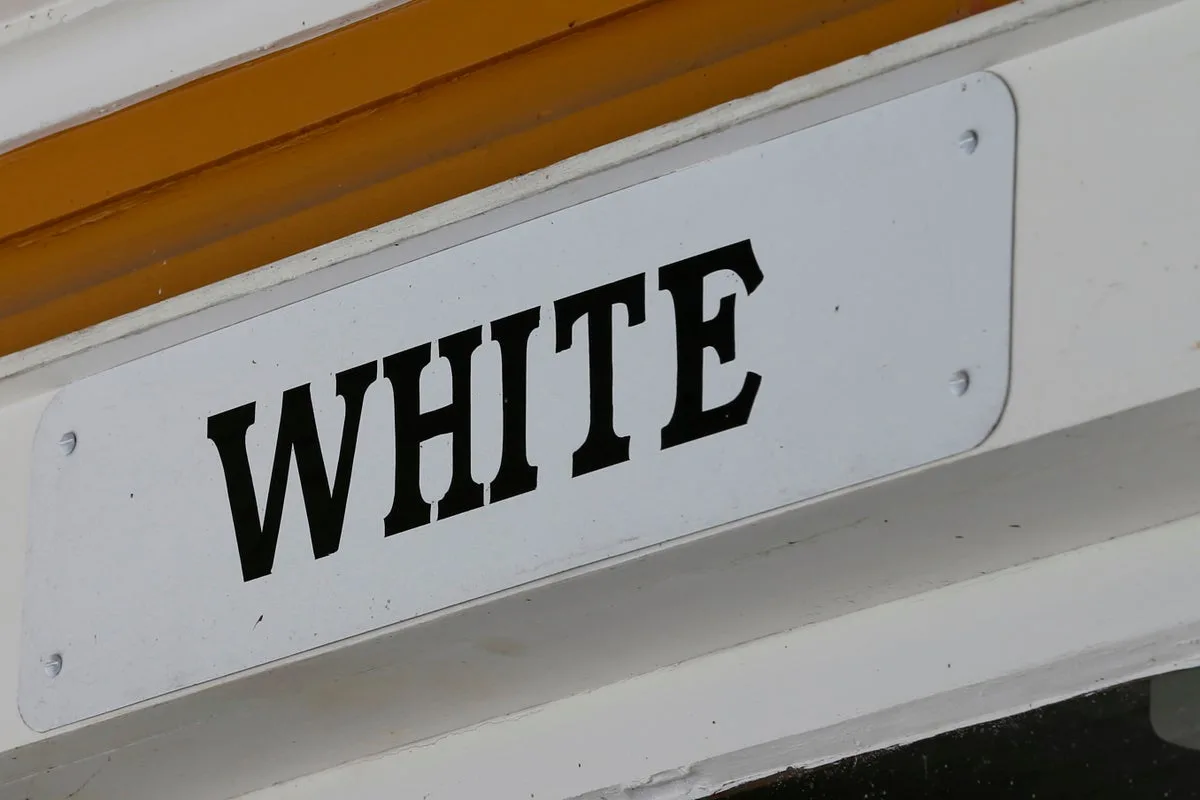
Signs reading “No dogs, no Negros, no Mexicans,” “Colored served in rear,” and “For whites only” once hung in establishments across the American South. They served as daily reminders of the subordinate status of Black people, who lived alongside but separate from white Americans.
After the Civil War and the collapse of Reconstruction, the Jim Crow system of public etiquette and laws regulated the free movement of both Black and white people for generations. This system was underpinned by beliefs that Black people were inferior in intelligence, morality, and behaviour, and that racial mixing would destroy the nation's white purity.
Spatial segregation was first culturally accepted, then enforced violently or through threat of re-enslavement via incarceration. The 1896 Supreme Court decision Plessy v. Ferguson established the “separate but equal” doctrine, making segregation signs more statutory. Railway cars, buses, water fountains, restrooms, hotels, lunch counters, and swimming pools were among facilities segregated by signage, with Black people forced to use substandard versions.
The Civil Rights Act of 1964 ended legalised racial separatism, though many in the South resisted desegregation. Steven Reich, a history professor, says one lasting impact is evident in the modern workforce: segregation divided the working class, compelling white workers to identify more with employers than Black co-workers, a divide that continues to stifle opportunities for worker organisation on common issues like diversity and inclusion.