US Synagogue Attack: Armed Man Identified After Vehicle Rampage at Michigan Temple
Authorities have named the armed individual who deliberately drove his vehicle into a United States synagogue filled with children before being fatally shot at the scene. The man has been identified as Ayman Mohamad Ghazali, a 41-year-old citizen originally from Lebanon, according to official statements released following the violent incident.
Targeted Violence Against Jewish Community
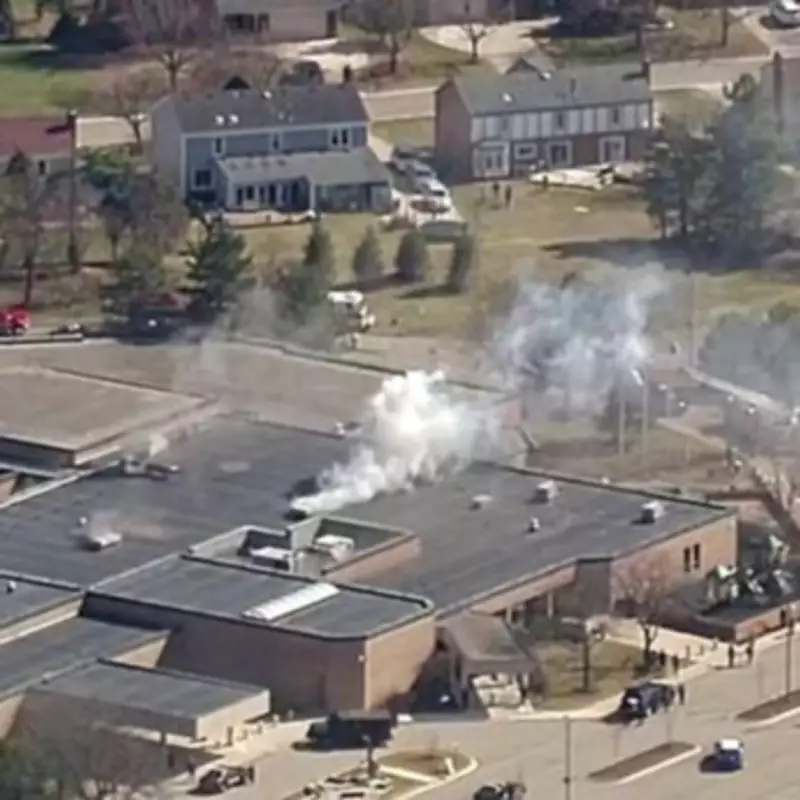
The attack occurred on Thursday, March 12, at Temple Israel in West Bloomfield Township near Detroit, Michigan. Ghazali drove his vehicle through a hallway of the synagogue, causing the car to subsequently catch fire. Jennifer Runyan, the special agent in charge of the FBI’s Detroit field office, explicitly labeled the crime as a "targeted act of violence against the Jewish community." The FBI is currently leading the investigation into the assault at one of the nation's largest Reform synagogues, though a specific motive remains undetermined at this time.
Oakland County Sheriff Mike Bouchard emphasized that "what drove this person into action has to be determined by the investigation," highlighting the ongoing nature of the inquiry. Remarkably, none of the synagogue’s staff, teachers, or the 140 children present at its early childhood centre sustained injuries during the terrifying episode.

Immediate Response and Security Measures
Security officers at the temple "engaged the individual and neutralized the threat," according to West Bloomfield Police Chief Dale Young. Ghazali was found deceased inside his vehicle following the confrontation. A security officer was struck by the vehicle and rendered unconscious but fortunately did not suffer life-threatening injuries. Additionally, approximately 30 law enforcement officers required treatment for smoke inhalation after responding to the scene.
Cassi Cohen, director of strategic development at Temple Israel, was standing near the hallway where the crash occurred. She described hearing a loud bang, immediately gathering staff members, and securing herself in her office. "When I heard the crash, I knew it was bad," Cohen recounted. She noted that a classroom housing children as old as four and more than thirty staff members was located perilously close to the impact site.
Community Preparedness and Emotional Aftermath
Cohen credited the synagogue's safety protocols, stating "thankfully, we have had many active shooter drills and our staff is prepared for these situations." Following authorities clearing the building, around a dozen parents urgently collected their children, while other families were reunited at a nearby Jewish Community Center.
Rabbi Arianna Gordon from Temple Israel expressed profound gratitude toward the security team, law enforcement, and early childhood teachers for ensuring the children's safe evacuation and reunion with parents, calling them the "true rock stars of the day."
Personal Accounts and Broader Context
Allison Jacobs, whose 18-month-old daughter attends Temple Israel’s day care, received a reassuring message from a teacher confirming the children's safety before fully comprehending the incident. "There are no words. I was in complete and utter shock," Jacobs told the Associated Press. "I was hoping that it was a false report." She reflected on the broader global context, mentioning "this morning I was mourning the loss of the school that got hit in Iran," illustrating the pervasive nature of such tragedies.
Investigators revealed that Ghazali entered the United States in 2011 on an immediate relative visa as the spouse of a U.S. citizen and was granted citizenship in 2016, according to Department of Homeland Security records. The attack has left the local community and authorities grappling with the shock while emphasizing the importance of vigilance and preparedness in places of worship.