Berlin's Gay Muslim Influencer Hosts Inclusive Ramadan Iftar, Advocates for Interfaith Acceptance
Ali Darwich, a 33-year-old gay Muslim influencer based in Berlin, recently hosted a groundbreaking Ramadan iftar dinner, bringing together a diverse group of friends to break the fast while championing acceptance across religious and identity lines. The German national of Palestinian and Lebanese descent, known on Instagram as @alifragt, has cultivated a rapidly growing following by highlighting the challenges faced by queer Muslims and advocating for greater tolerance and inclusiveness within religious communities.
A Message of Unconditional Acceptance
"Tonight we want to send a message that no matter where a person comes from, no matter who that person loves, no matter how queer that person is, they cannot be too queer ... because they are exactly as they should be," Darwich declared, smiling warmly at the fifteen guests gathered around the table as sunset descended over Berlin. The group represented a rich tapestry of backgrounds, including Muslims and Christians, Germans and immigrants, alongside both gay and straight individuals.
"I am a believer, I believe in God, and I find Islam beautiful, just like Christianity or Judaism and many other religions," Darwich explained. However, he emphasised that acceptance remains challenging for homosexual individuals across multiple faith traditions, not exclusively within Islam. This struggle occurs against a troubling backdrop of escalating violence targeting LGBTQ+ people and establishments throughout Germany, including in historically tolerant Berlin.
Rising Anti-LGBTQ+ Violence in Germany
According to the latest available data from 2024, compiled by the Association of Counseling Centers for Victims of Right-Wing, Racist and Antisemitic Violence, Germany witnessed a concerning 40% increase in violence against LGBTQ+ individuals across twelve of its sixteen federal states compared to the previous year. This alarming trend underscores the urgent need for initiatives promoting safety and inclusion, such as Darwich's iftar gathering.
Addressing Loneliness and Family Estrangement
In one poignant Instagram video, Darwich sits alone at a table during Ramadan, discussing the profound loneliness many queer Muslims experience when shunned by their families. He describes how this isolation becomes particularly painful during holidays traditionally centered on togetherness and community.
Darwich passionately appeals to people to open their hearts and homes to queer Muslims, ensuring they do not face iftar meals in solitude. To his gay followers, he offers a powerful affirmation on social media: "You deserve to break your fast surrounded by people who accept you — fully and without conditions."
Personal Journey and Familial Reconciliation
Darwich's own coming out journey several years ago proved immensely difficult. When he first confided in his mother, she initially refused to believe him, then wept, leading to a six-month period of silence between them. Many extended family members also reacted with shock and distance.
"From one day to the next, I was no longer invited. Not only to Ramadan, but also to family celebrations, and that was a very difficult time for me," Darwich revealed in a recent interview with The Associated Press. Although he and his mother have since reconciled and now maintain a positive relationship, that period of estrangement was profoundly challenging.
The Vital Role of Chosen Family
During that trying time, Darwich found tremendous support from friends who stepped into the role of chosen family, offering unwavering acceptance and encouragement. This experience highlighted the critical importance of community support for individuals facing familial rejection.
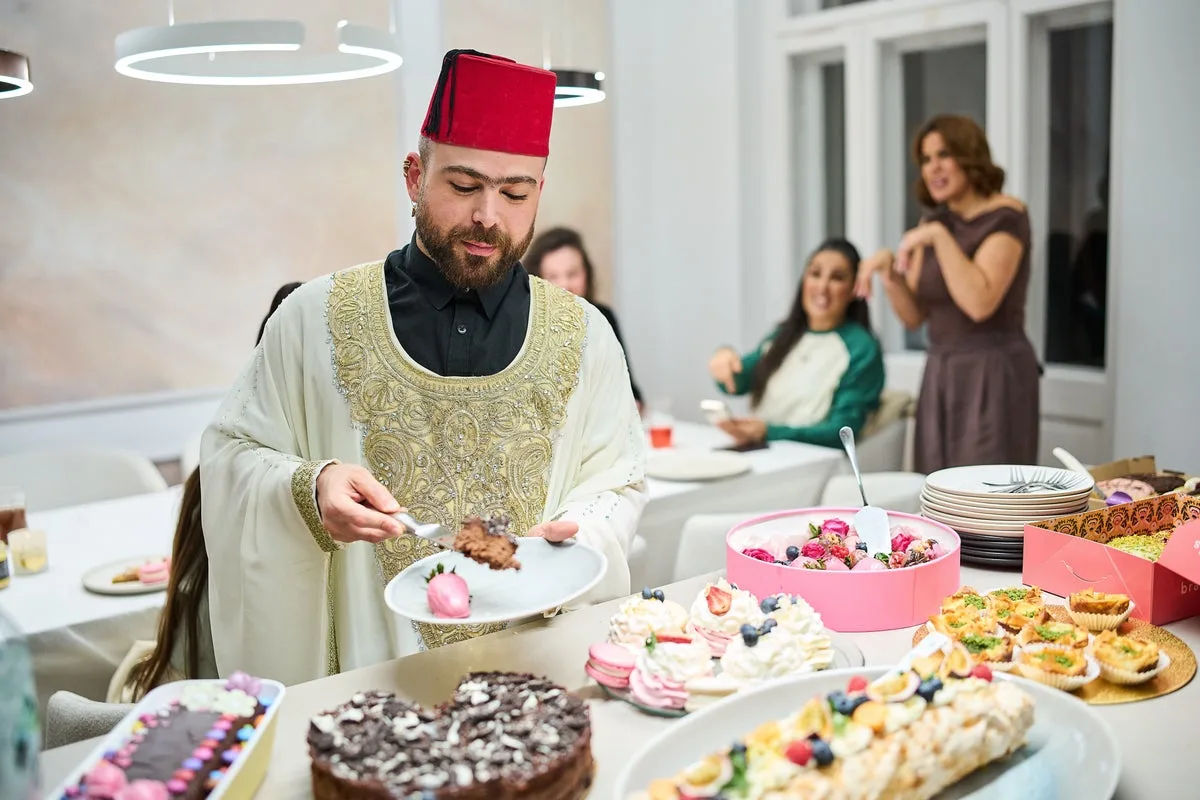
For this week's inclusive iftar in Berlin, Darwich's friend Randa Weiser, a 40-year-old German-Palestinian influencer known online as @randa_and_the_gang, generously opened her home. Weiser prepared an elaborate feast featuring freekeh soup, fragrant yellow rice with almonds, raisins and cardamom, grilled chicken drumsticks, and an assortment of traditional sweets.
A Colourful Gathering of Diverse Backgrounds
"It's an absolute colourful mix tonight," Weiser remarked, noting the diverse origins of the guests. While most attendees were German residents, their family roots spanned numerous countries including Jordan, Lebanon, Morocco, Turkey, Chechnya, Syria, Iran, and Peru.
Weiser acknowledged receiving some negative feedback on Instagram after announcing her plans to host an inclusive iftar, but reported that the majority of her followers expressed support, affirming that "you can be Muslim and gay or lesbian."
Solidarity and Social Media Advocacy
As guests, many of whom are influencers themselves, enjoyed Weiser's culinary offerings, they simultaneously captured videos and shared them across their social media platforms, amplifying the event's message of inclusion.
Among the attendees was Darwich's close friend Haidar Darwish, a Syrian-born belly dancer and artist who arrived in Germany in 2016. Darwish, who goes by @thedarvishofficial on Instagram, attended in a striking red fez and a white, gold-embroidered gallabiyah.
"The hate and crimes against women, Muslim people, Jewish people also, and queers and trans siblings of mine have increased," Darwish observed. "But no matter how much the others will show us hate, we can show more love only if we are believing in ourselves." He added that resilience is possible with "the help of our allies and friends and people that have our backs."
This Berlin iftar stands as a powerful testament to the growing movement for intersectional acceptance, demonstrating how shared meals can foster dialogue, challenge prejudices, and build bridges across diverse communities during sacred times like Ramadan.