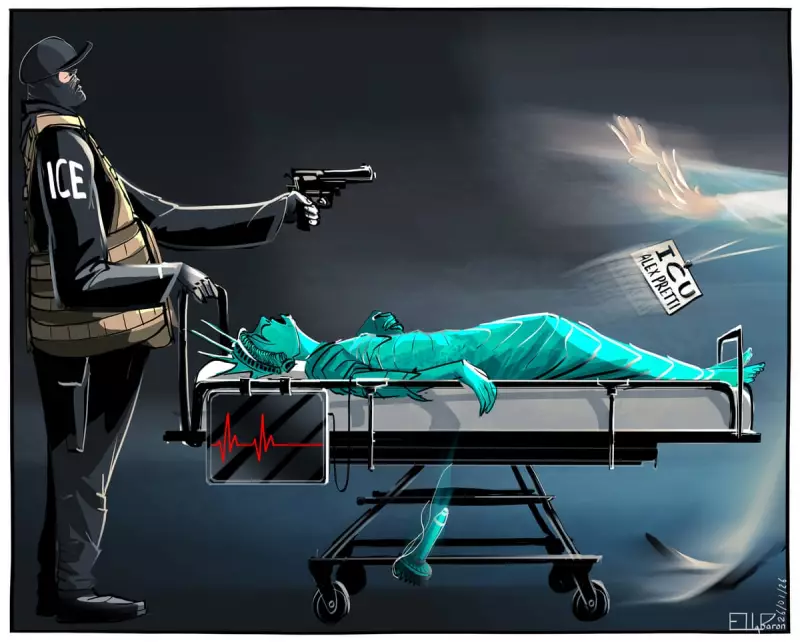
A recent cartoon by artist Ella Baron, focusing on the tragic killing of Alex Pretti in Minneapolis, has become a focal point for intense public and media debate. The artwork, which portrays the incident in a stylised and provocative manner, has drawn attention to broader issues of urban violence, artistic expression, and social justice in the community.
Artistic Response to a Violent Incident
Ella Baron's cartoon, published in late January 2026, uses visual metaphor and stark imagery to comment on the death of Alex Pretti, a case that has resonated deeply within Minneapolis. The piece is characterised by its bold lines and emotive symbolism, aiming to provoke thought and discussion rather than merely report facts. By depicting the killing in this artistic format, Baron challenges viewers to reflect on the human cost of violence and the societal factors that contribute to such events.
Reactions and Controversy in Minneapolis
The cartoon has elicited a wide range of responses from residents, activists, and officials in Minneapolis. Some praise it as a powerful tool for raising awareness and fostering dialogue about crime and its impacts on the city. Supporters argue that art can serve as a catalyst for change, highlighting neglected issues in a way that traditional news might not.

However, critics have voiced concerns, suggesting that the depiction could be seen as sensationalising a sensitive tragedy or oversimplifying complex social problems. There are debates over whether such artistic interpretations respect the victims and their families, with some calling for more nuanced approaches to addressing violence through creative mediums.
Broader Implications for Art and Society
This incident underscores the ongoing tension between artistic freedom and social responsibility. Ella Baron's work joins a long tradition of cartoons and visual art being used to comment on current events, but it also raises questions about the boundaries of expression in the context of real-world violence. In Minneapolis, a city with a history of grappling with issues of policing and community safety, the cartoon has tapped into deeper conversations about how art can influence public perception and policy.
Experts note that such artworks can amplify voices from marginalised communities, offering alternative perspectives on events that might otherwise be dominated by official narratives. Yet, they also caution that without careful consideration, art risks alienating those directly affected by the tragedies it depicts.
Looking Ahead: The Role of Cartoons in Public Discourse
As the discussion continues, Ella Baron's cartoon on the killing of Alex Pretti is likely to remain a reference point in debates about the intersection of art, violence, and civic engagement. It highlights how visual media can shape public discourse in Minneapolis and beyond, prompting reflections on how society processes and responds to acts of violence.
Moving forward, this case may influence how artists and publishers approach sensitive subjects, balancing creative expression with ethical considerations. The ongoing dialogue in Minneapolis serves as a reminder of the power of art to both unite and divide, depending on its execution and reception.