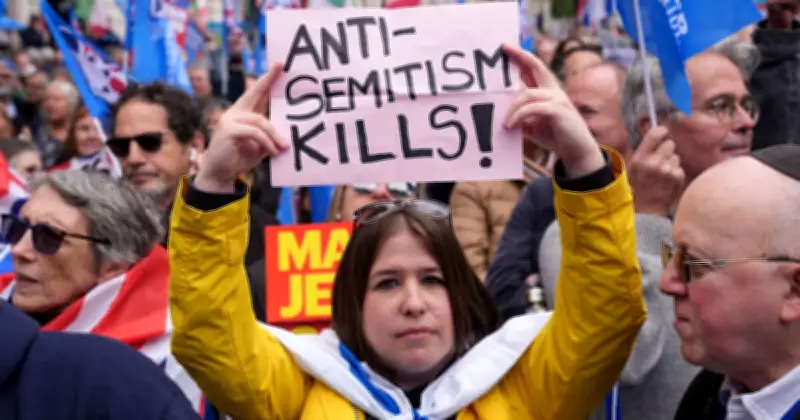
Antisemitic incidents in Britain have reached near-record levels, with 3,700 recorded in 2025 and a further 1,926 in the first six months of 2026, according to the Community Security Trust (CST). The 21% increase on the previous year has prompted fears among British Jews that the hatred they face today echoes the dark days of post-war fascism.
The CST figures include physical assaults, threats, attacks on Jewish property and the intimidation of children on their way to school. In October 2025, two Jewish congregants died in a terrorist attack on Heaton Park Synagogue in Manchester on Yom Kippur, and arson attacks on synagogues and Jewish communal buildings have continued since.
History Repeating: The 43 Group's Fight
Eighty years ago, Jewish ex-servicemen returning from the Second World War found fascists holding public meetings and spreading antisemitic propaganda on the streets of London. In April 1946, 43 people attended the inaugural meeting of the 43 Group at Maccabi House, a Jewish sports club in Hampstead, determined to prevent British fascism from gaining a foothold.
The threat was embodied by Oswald Mosley, whose British Union of Fascists had terrorised Jewish neighbourhoods in the 1930s. Although Mosley was initially less visible after the war, his followers were reorganising under various banners, exploiting public discontent over housing shortages, austerity and immigration.
Confrontational Tactics and Lasting Legacy
The 43 Group organised squads to disrupt fascist meetings across London, with former commandos and boxers overturning speakers' platforms and breaking up rallies. Intelligence operatives infiltrated fascist organisations, and the Group expanded beyond London, attracting more than a thousand members. Among its recruits was a teenage Vidal Sassoon, later a celebrated hairdresser.
The Group's activities were controversial, even within the Jewish community, with some questioning whether violent confrontation was justified in a democracy. By 1950, the 43 Group had severely disrupted attempts to revive organised fascism in Britain and formally disbanded.
Modern Antisemitism and the Lesson for Today
Since the Hamas attacks on Israel on 7 October 2023 and the subsequent war in Gaza, antisemitism in Britain has risen dramatically. Jewish people have been held collectively responsible for the actions of the Israeli government, while conspiracy theories have circulated across social media. Jewish schools and synagogues now require extensive security.
There are important differences between 1946 and 2026, including legal protections against racial and religious hatred that were unavailable to the Group's founders. Their reliance on physical confrontation is not a model for the present, but their central conviction remains relevant: antisemitism must never be allowed to become an accepted feature of public life. The responsibility for confronting Jew-hate belongs to British society as a whole, and to the institutions entrusted with protecting its citizens.