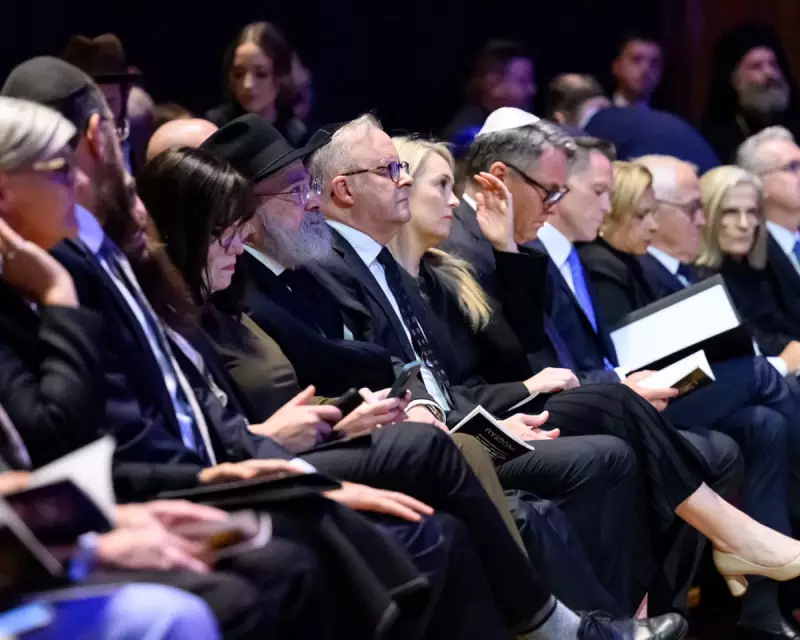
At 7.01pm on Thursday evening, a profound silence descended upon the Sydney Opera House as 1,500 mourners gathered to honour the victims of the Bondi terror attack. Television stations paused their coverage, and gatherings across Australia fell still, marking a national day of mourning six weeks after the horrific event.
A Solemn Tribute to Lives Lost
Six weeks after 15 people were gunned down celebrating the first night of Hanukah in Bondi, in the worst terror attack on Australian soil, the nation continues to grapple with the weight of its loss. The local Chabad of Bondi’s theme for the official national service at the iconic Opera House was one of hope: “Light Will Win”.
On the main stage, typically reserved for theatre, music, and dance, 15 candles representing the victims were lit by family members and survivors. Among them were Larisa Kleytman, whose husband Alex survived the Holocaust only to be killed at age 87, and Valentyna Poltavchencko, whose daughter Matilda was the youngest victim at just 10 years old.

Acts of Remembrance and Resilience
Outside the Opera House, orthodox Jewish mourners offered tefillin—small black leather cubes with biblical parchment scrolls—to others, while inside, a surprise appearance moved the crowd. Leibel Lazaroff, a 20-year-old pianist and survivor of the shooting, performed a song just hours after being discharged from hospital, marking his first public performance since the attack.
The presence of heavily armed police, snipers on the roof, and circling helicopters served as a stark reminder that Sydney remains on high alert. Yet, amidst the security, the community focused on healing through traditions like laying stones of remembrance at Bondi Pavilion, adhering to Jewish customs.
Political Apologies and Unity Messages
Prime Minister Anthony Albanese addressed the memorial service with a heartfelt apology, drawing cheers from the audience. “Tragically, we are gathered here because on the 14th of December, everything changed. And for that, I am sorry,” he said. “I am deeply and profoundly sorry that we could not protect your loved ones from this evil.”
Albanese emphasised that Bondi is not just a beach but part of Australia’s promise to the world—a welcoming embrace for all. His speech came after facing criticism over the government’s response to the attack, including delays in establishing a royal commission into antisemitism.
Reclaiming Spaces from Hate
Senior Rabbi Yehoram Ulman of the Chabad of Bondi, who lost his son-in-law in the attack, spoke of resilience. “The Jewish response to violence and to tragedy is not to pull away from society, but to contribute more to it, to heal it,” he stated. He highlighted how the community has returned to the Opera House, a site of past protests, with heads held high.
Opposition leader Sussan Ley and NSW Premier Chris Minns echoed this sentiment, referencing the 2023 pro-Palestine protests at the Opera House. Ley noted, “Tonight, how good it is in January 2026 that we take back the Opera House for all Australians.” Minns added that the venue should be a place of peace and unity, not hate.
Community Healing and Future Reflections
The 22nd of January was chosen for the day of mourning to coincide with the shloshim, the one-month mark following a death in Jewish tradition. Premier Minns explained that this period allows for searching for meaning and asking difficult questions as the community begins to heal.
Australians have been encouraged to perform mitzvah—small acts of kindness—in their mourning, from cooking meals for strangers to helping neighbours. This collective effort underscores a national commitment to unity and support in the face of tragedy.
As tourists and locals slowly return to Bondi Beach, the memory of the attack lingers in debates over security and memorials. Yet, the message from the Opera House service remains clear: in the darkest times, light and community will prevail.