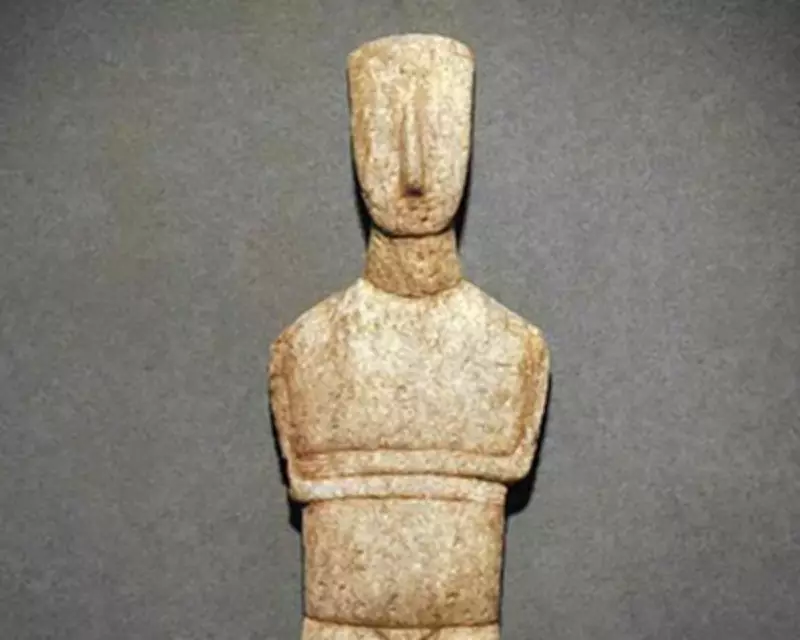
A fraudster who attempted to sell counterfeit ancient statues to Sotheby's was caught after the accompanying paperwork was found to have been produced using printing methods that were 25 years too modern, a court has heard.
The Attempted Sale
Andrew Crowley, 46, of Longwell Green, Gloucestershire, asked the auctioneers to value three Cycladic figures and one Anatolian stargazer statuette that he claimed to have inherited from his grandfather, Southwark Crown Court in London was told on Friday.
Prosecutors alleged that, if genuine, the items collectively would have been worth approximately £680,000 based on previous sales. However, Judge Rimmer stated that this estimate depended on multiple hypotheticals and therefore reduced the value to £340,000.

The Bogus Paperwork
Crowley presented spurious invoices for the statues that purported to be written in 1976, using a typewriter on paper embossed with an antique dealer's logo and a nine-pence stamp. However, his forgery was uncovered when forensic scientists found the documents were made using printing methods invented in 2001. Sotheby's experts also identified spelling mistakes, including errors in the supplier's title.
Handing Crowley a two-year suspended sentence, the judge remarked: 'It was a crude attempt because Sotheby's rumbled, to use the vernacular, or spotted, these documents as bogus fairly early on.'
Inheritance and Belief
The judge accepted that Crowley inherited the statues from his grandfather and did not at any point believe they were counterfeits. The Cycladic statues were each about 30cm (12in) tall and weighed approximately 1kg, according to police. Legitimate Cycladics were made in the Cyclades islands in Greece during the Bronze Age, about 3,000 years ago. Therefore, 'the offending and dishonesty in this case must turn around the paperwork,' the judge said.
Admission and Sentence
Crowley previously admitted dishonestly making a false representation to Sotheby's auction house with the intention of making a gain between 4 November 2022 and 27 July 2023. He was also ordered to complete 200 hours of unpaid work and pay £1,630 in costs over three months.
Police and Industry Response
DC Ray Swan, who led the Metropolitan Police's investigation, said in a statement: 'This case also highlights the crucial role played by industry experts in helping to protect the integrity of the London art market. Sotheby's staff acted responsibly and swiftly in raising their concerns, and their cooperation was instrumental in preventing a significant fraud.'
A spokesperson for the auctioneers praised the force's 'meticulous and superbly executed investigation that has helped prevent fraudulent material entering the market.'