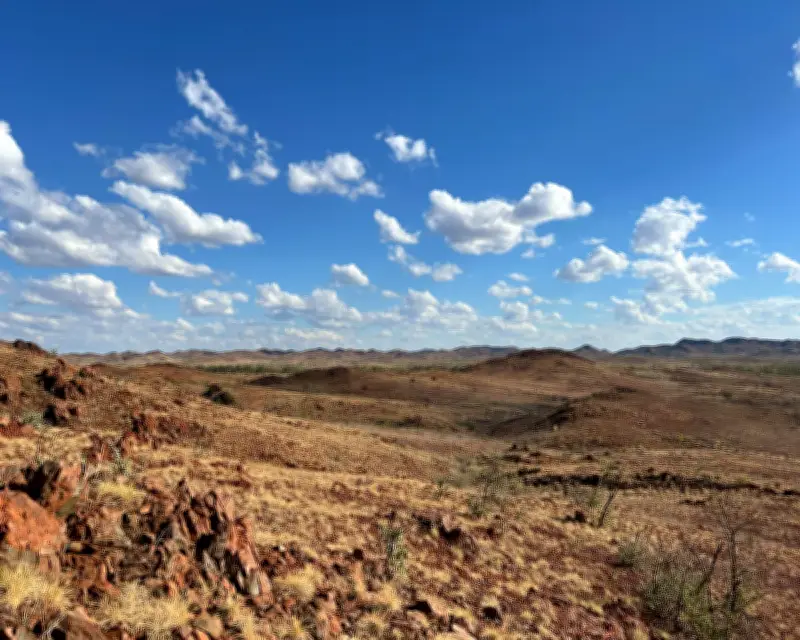
Scientists in Australia have found definitive evidence of the world's oldest known meteorite strike, dating back three billion years, in a remote part of Western Australia. The discovery, made by researchers at Curtin University, confirms an impact crater in the Pilbara region's North Pole Dome as the oldest on Earth, surpassing the previous record-holder, Yarrabubba, also in Western Australia, which is 2.2 billion years old.
Rare Geological Archive
Prof Chris Kirkland, a geologist from Curtin's Timescales of Minerals Systems Group and lead author of the study published in the Geology journal, described the well-preserved rock formations as an extremely rare and globally significant archive of geological time. "There's very few places that are these deep time capsules that let us peer into the formative processes on our planet. That's why they're quite special," he said.
The ancient rocks record the event that occurred during the Archean eon, a period 4 to 2.5 billion years ago, when tectonic plates were beginning to form and early life was emerging. The preserved shatter cones—rare geological features formed by the impact—provided key evidence.
Innovative Dating Techniques
The researchers employed two separate methods to determine the age of the meteorite strike. First, they analyzed the age of zircon crystals embedded in basalt rock. These tiny grains were recrystallized in the intense heat of the impact, forming unusual skeletal patterns typically found only in impact craters on the moon. Using an Australian-designed instrument called the Sensitive High-Resolution Ion MicroProbe, the team measured the age of the zircon crystals, determining that the shape-changing shock occurred about three billion years ago.
Separately, scientists analyzed the age of apatite, a calcium phosphate mineral that grew in rock fractures created by heat and hot fluids after the impact. The results from both methods were consistent, providing a robust timeline for the event.
Earth's Ancient Environment
At the time of the meteorite impact, Earth was vastly different from today. Kirkland noted that it was mostly a "water world" with few pieces of continental crust. The sun would have been dimmer, the moon closer, and early life existed in the form of stromatolites, a type of cyanobacteria similar to algae.
Associate Prof Bruce Schaefer, a geochemist at Macquarie University who was not involved in the study, highlighted the significance of the find. "To be able to find evidence of those same impact events on Earth is really exciting. We know it must have happened, but to actually see it, and put your hands on it, is very significant," he said.
Detective Story of Geological Evidence
Schaefer praised the researchers' innovative combination of techniques, calling it "a real detective story." He noted that the simultaneous resetting of zircon and apatite ages provided powerful evidence of the impact. "The apatite and the zircon together is what's, if you like, the smoking gun," he said.
Earth was continuously pummelled by meteorites during the Archean, with impacts still visible on the moon's surface. However, on Earth, these traces have been mostly erased by erosion, subduction, and plate tectonics. The discovery in the Pilbara region offers a rare glimpse into the violent processes that shaped the early Earth.