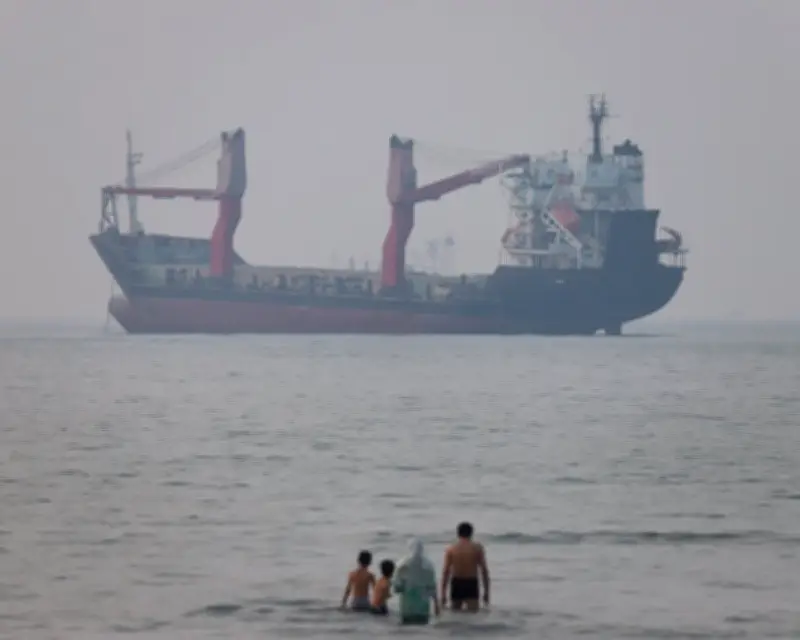
Europe is studying proposals that may allow the charging of navigation fees in the Strait of Hormuz, provided the tolls are not compulsory and have the backing of the UN agency regulating maritime transport. Britain’s deputy prime minister, David Lammy, said imposing compulsory tolls would be disastrous, but some cabinet colleagues acknowledged that payment systems for specific navigation services are permissible in waterways like the Strait of Malacca and the English Channel.
US Demands Iran Guarantee Safe Passage
US officials have demanded Iran make a public statement declaring the Strait of Hormuz open and that ships using the vital corridor will not be attacked. The officials blamed power struggles inside Tehran for difficulties in reaching and adhering to a deal. Iran insists its leadership is united on strait issues.
Donald Trump reiterated on social media that he viewed the interim ceasefire deal as “over” but said the US would continue talks for a permanent end to the war. He later made fresh threats against Iran, writing, “1,000 missiles are locked and loaded and aimed at the Islamic Republic of Iran,” and adding that the US military would “completely decimate and destroy all areas of Iran — PRAISE BE TO ALLAH!”
Iran’s New Supreme Leader Vows Revenge
Trump’s comments came after the funeral of the late supreme leader Ayatollah Ali Khamenei, during which there were calls for the US president to be killed. Iran’s new supreme leader, Mojtaba Khamenei, vowed to avenge his father’s killing, stating in a written declaration that revenge “is the will of our nation and must certainly be carried out.”
A proposal for the strait, adapting principles from the Strait of Malacca, has been developed by Oman in conjunction with British lawyers. Muscat has offered to send legal experts to Tehran to explain the plan in detail. Iranian state media reported that Foreign Minister Abbas Araghchi would travel to Oman on Saturday for talks focused on the Strait of Hormuz and shipping safety.
Regional Pressure on Iran
The Turkish foreign minister, Hakan Fidan, expressed hope that a solution could be reached this weekend between Iran and Oman. However, Araghchi accused the US of violating the memorandum of understanding (MoU) by stopping waivers that allowed Iran to sell oil in US dollars, a move Washington made after attacks on vessels in the strait.
Oman controls most navigable waters in the strait and opposes a compulsory toll. Qatar’s foreign ministry spokesperson, Majed al-Ansari, warned that granting Iran sovereignty over the strait in a way contradicting international maritime law would make regional states “hostages to whatever radical element that wants to take over the strait at any time.”
One diplomat noted divisions within Iran: “There are sections of the IRGC that say the US launched an unlawful attack on them in February, so why should they bother with the international law of the sea? Others want to cooperate.”
Oman’s Alternative Scheme
The Iranian embassy in London expressed interest in proposals from the Energy Policy Research Group, which argued that a transparent service fee embedded within an inclusive regional order would incentivize cooperation, not a crude toll. At an IMO council meeting, Oman’s delegate Khamis bin Mohammed Al Shamakhi stated that transit passage through straits used for international navigation is guaranteed under international law and does not support imposing transit fees. However, he added that Oman sees value in exploring voluntary arrangements for navigational support services to enhance safety, security, and environmental protection.
Behind these remarks is detailed work by Oman on the governance of the Strait of Malacca. A report to the IMO council noted that more than 120,000 vessels transit the Malacca strait annually, and the cooperative mechanism has evolved into a structured platform addressing emerging risks, technological developments, and environmental priorities.
Diplomatic Tensions at IMO
At the London meeting, an alliance of Gulf and European states pressed for a resolution condemning Iran for seeking to control the strait by attacking ships. The motion was not supported by Russia or China. Russia said it ignored root causes of the crisis, while China described the text as one-sided and beyond the IMO mandate.
The motion came after the US hit more than 150 targets in southern Iran this week to destroy Iran’s ability to harass shipping. Iran responded by hitting US bases in Kuwait and Bahrain. One diplomat cited two reasons for renewed fighting: disputed control of the strait during reopening and long-term management, including whether the Malacca model would be acceptable to Iran.
MoU Commitments and Disputes
Clause 5 of the MoU committed Iran to ensure safe passage of commercial vessels through the strait with no charge for 60 days. Once obstacles were removed, traffic would be reinstated within 30 days. The US claimed the MoU did not permit ships to pass only with Iran’s permission or on specified routes. The MoU also committed Iran to hold talks with Oman on a long-term plan.
The IRGC navy claimed it had met its MoU commitments. The IMO secretary general, Arsenio Dominguez, believed he had secured Iran’s agreement to a southern route for evacuating stranded sailors, but Tehran rescinded approval. The US continued encouraging commercial traffic to use the southern route; US Central Command claims since early May, US forces have helped facilitate the transit of more than 800 commercial vessels and 380 million barrels of crude oil.
Diplomats are examining whether Tehran insists all ships use the northern route near Iran or simply requires permission from Iran’s Persian Gulf Strait Authority to use the southern route.